What I'm Learning About Letting Go (And What You Might Need to Hear)
ABOUT THIS EPISODE
Justin reflects on selling a building that held 16 years of ministry and asks a hard question: how do you honor the past without idolizing it? This conversation explores letting go, trusting God with what’s next, and why staying stuck can quietly stall your recovery and faith.
KEY TAKEAWAYS
- •Memorials are meant to remind you what God did so you can trust Him with what is next, not to keep you frozen in place.
- •Romanticizing Egypt makes you forget the slavery and cling to what once held you captive.
- •Honoring the past produces gratitude, idolizing the past produces stagnation.
- •Letting go is active work, you acknowledge what was, release what is ending, and trust God with what you cannot see.
- •Sometimes what feels like loyalty is actually fear that your best days are behind you.
- •If you keep staring at old stones, you will miss the new thing God is already starting.
SHOW NOTES
Sixteen years of ministry happened in one building. Hundreds of lives changed. And now it is empty.
That kind of moment forces you to face something deeper than logistics. It forces you to ask whether you are honoring the past or quietly worshiping it. If you are rebuilding life after addiction, this question is not theoretical. It is personal.
Memorials Are Not Meant to Be Addresses
In Joshua, God tells Israel to stack stones as a memorial. When their children ask what those stones mean, they are supposed to tell the story. Remembering matters. Testimony matters. What God did in your addiction recovery matters.
But those stones were never meant to become a permanent home.
They were reminders. Look what God did here so you can trust Him over there.
If you are a few months or a couple years sober and thinking, life after rehab what now, this is where many people stall. You keep replaying the moment you got clean. You talk about the breakthrough. But you stop moving forward.
That is not honoring the past. That is camping there.
Stop Romanticizing Egypt
Israel kept looking back at Egypt and talking about the food. They forgot the slavery.
You can do the same thing. You can romanticize a relationship that nearly destroyed you. You can miss the chaos of addiction because at least it felt familiar. You can cling to a version of yourself that no longer fits.
If sobriety is not the same as peace right now, it might not be because God left. It might be because you are staring at old stones instead of paying attention to the new thing He is doing.
Three Active Steps to Let Go
Letting go is not passive. It requires work.
First, acknowledge what was. If it mattered, say it mattered. If God moved, admit He moved. Do not minimize the season you are leaving.
Second, release what is ending. Stop trying to resurrect what is clearly done. Not every ministry method, relationship, or identity is meant to last forever.
Third, trust God for what is next. This is the hardest part of faith-based recovery. You do not get a full blueprint. You get trust.
There is probably something you already know you need to release. A method. A memory. A mindset. Maybe even the belief that your best days are behind you.
Build your memorial. Be grateful. Then move.
If this hits close to home, sit with the full conversation and ask yourself what you have been holding onto.
Read Transcript
Honoring the Past Without Idolizing It
I'm sitting in an empty building. Sixteen years of ministry happened here. Hundreds of lives changed. Countless stories. And now it's empty. We're selling it. We're moving on.
And that's raised a question for me: How do you honor the past without being stuck in it? How do you remember what God did without worshiping the memorial, without idolizing it?
There's this tension in scripture between remembering the past and pressing toward the future. On one hand, God tells Israel to build memorials, to stack stones. "Remember what I did for you." In Joshua chapter 4, after crossing the Jordan, God tells them to take twelve stones and build a memorial. And when your children ask, "What do these stones mean?" tell them what God did here.
Memorials matter. Remembering matters.
But here's what Israel wasn't supposed to do: they weren't supposed to camp out at the stones and worship them. These stones were meant to say, "Look what God did here so that we can trust him going over there." Not, "Let's stay here forever."
And then there's Isaiah 43:18-19. You know the scripture that says to forget the former things? "Do not dwell on the past. See, I am doing a new thing. Now it springs up. Do you not perceive it? I am making a way in the wilderness and streams in the wasteland."
That's a wild verse. God is literally saying to them, "Don't forget what I did, but don't get so fixated on it that you don't see what I'm doing right now."
See, the Israelites had a problem. They kept looking back on Egypt. They kept romanticizing the past. "We had leeks and onions back there." Yeah, but you also had slavery. They were so attached to what was that they couldn't see what God was doing next.
The Tension Between Honoring and Idolizing
So here's the tension: How do you honor the past without idolizing it?
Honoring the past looks like saying, "God moved here. Lives were changed. I'm extremely grateful for that." Idolizing the past means saying, "The best days are behind us. Nothing will ever be as good as it was."
Honoring the past means building a memorial but keeping moving forward. Idolizing the past looks like camping out at the memorial and refusing to leave it.
One leads to gratitude. The other leads to stagnation.
For me, sitting in this empty building, this is a memorial moment. Hundreds of lives were changed here. I have so many testimonies and fond memories of things that happened in this building. Moments at the altar when we had chapel service here. Families restored. Lives transformed by the power of God.
It's been incredible. It's been amazing to think about. Our family built this together. And I am so grateful for all the memories I have here.
But I can't camp out here. I can't worship the location. I can't sit here and say that the only way to do this going forward is residential ministry and that's it forever. Because that's not honoring what God did. That's idolizing a method.
So I'm building my memorial. I'm remembering. I'm extremely grateful. But I'm also moving forward, because God's not done yet. He's doing a new thing. And if I'm too busy staring at the stones, I'll miss what he's doing right now.
What Are You Holding On To?
So let me ask you this question: What are you holding on to that God's asking you to let go of?
Maybe it's a job that used to bring you life but is absolutely draining you now. Maybe it's a relationship you need to walk away from because you know it's run its course. Maybe it's a version of yourself from ten years ago that you're still holding on to, but God's asking you to let go of it. Maybe it's a ministry, a method, or a dream that you're clinging to because you're afraid of what comes next.
So here's the question: Are you honoring it, or are you really just idolizing it? Are you grateful for what it was, or are you refusing to move because you're afraid that your best days are behind you?
Three Steps to Let Go
Here's the deal: Letting go isn't passive. It's actually one of the most active things we can do. You're not saying, "Oh well, I guess it's over. I guess we just quit here."
It actually requires you to do three things.
Number one: Acknowledge what was. Just because you're moving forward from something doesn't mean you can't acknowledge the good that happened in the season behind you. Don't pretend it didn't matter. This building? It mattered. There's so many rich memories here that I'll never forget. Don't minimize it. Be willing to say, "Yeah, that was real. God showed up, and I'm so grateful that he did."
Number two: Release what's ending. Stop trying to resurrect it. Stop trying to force it to work. If it's done, it's done.
Number three: Trust God for what's next. This is the hardest part, because you don't know what's next. But God does. Isaiah 43:19 again: "See, I am doing a new thing. Now it springs up. Do you not perceive it?" The new thing is already starting. You just have to trust it.
Build Your Memorial and Move Forward
So here's my challenge to you: Build your memorial. Remember what God did there. Be grateful. But don't camp out there. Don't worship the stones. Don't idolize the past. Because God is doing a new thing, and if you remain stuck in what was, you're going to miss out on what's coming next.
For me, that means selling this building. It means going back to our roots with community-based recovery ministry and starting to do the work of building something new.
For you, I don't know what that looks like. But I'm willing to bet there's something God is asking you to release that you're still holding on to.
So let go. Build a memorial. Because the mission continues. It just may not be in the same building you've been living in.
It's time to step forward.
HOST
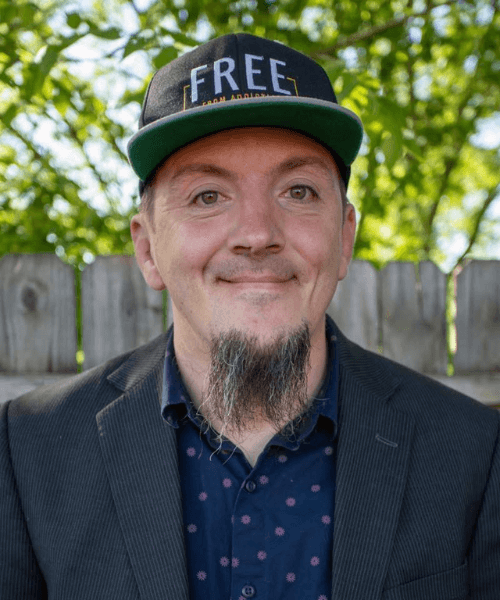
Justin Franich
Executive Director of Shenandoah Valley Teen Challenge with 20+ years helping families navigate the journey from addiction to restoration. Learn more.
Support Justin's work