The 5 Best Bible Verses About Forgiveness
If you need one right now and don’t have time to scroll, start here.
Psalm 103:12
“As far as the east is from the west, so far has He removed our transgressions from us.”
Ephesians 4:32
“And be kind to one another, tenderhearted, forgiving one another, even as God in Christ forgave you.”
Colossians 3:13
“Bearing with one another, and forgiving one another, if anyone has a complaint against another; even as Christ forgave you, so you also must do.”
1 John 1:9
“If we confess our sins, He is faithful and just to forgive us our sins and to cleanse us from all unrighteousness.”
Matthew 6:14-15
“For if you forgive men their trespasses, your heavenly Father will also forgive you. But if you do not forgive men their trespasses, neither will your Father forgive your trespasses.”

Bible Verses About Forgiveness
When you need God to forgive you, when you can’t forgive yourself, when someone hurt you and never apologized, and when forgiveness feels impossible.
I’ve been on both sides of forgiveness.
I’ve been the guy sitting across the table from his family, knowing full well that no apology was going to undo what addiction did. I watched my mom hold it together while her son fell apart. I watched relationships I destroyed stay broken long after I got clean. And I needed God to forgive me for things I could barely say out loud.
But I’ve also been the guy holding onto something somebody else did to me. Replaying it. Building a case in my head. Telling myself I’d forgiven them while my chest still tightened every time their name came up.
If you searched “bible verses about forgiveness” tonight, you’re probably carrying one of those two things. Maybe both. Either you did something you can’t take back, or someone did something to you that you can’t release. These verses are for both.
This isn’t a list you skim and forget. Every verse on this page comes with what I’ve learned from actually living with it. Some of that was learned in a Teen Challenge program where forgiveness wasn’t optional. Some of it was learned the harder way, in real relationships where I had to choose whether to stay bitter or stay free.
For the full list of scripture-based resources, visit our Christian Recovery Resources page.
When You Need God to Forgive You
The starting point for a lot of people, and the hardest one to believe
This is the starting point for a lot of people, and it’s the hardest one to believe. Not because the theology is complicated. Because the guilt is loud.
You know what you did. You know who it hurt. You know that getting clean or getting your act together doesn’t rewind the clock. And so you come to God with this pile of wreckage and think, “There’s no way this is covered.”
It is. That’s not a motivational poster. That’s the gospel.
Psalm 51:1-2
“Have mercy upon me, O God, according to Your lovingkindness; according to the multitude of Your tender mercies, blot out my transgressions. Wash me thoroughly from my iniquity, and cleanse me from my sin.”
David wrote this after the worst season of his life. Adultery, murder, a cover-up that unraveled in front of everyone. And the first thing out of his mouth wasn’t an excuse. It was, “Have mercy on me.” I think about that when I look at my own story. My first instinct when I got caught in addiction was always to explain, minimize, deflect. David just asked God to clean what he couldn’t clean himself. That’s where forgiveness starts. Not with a defense. With an honest request.
Psalm 103:10-12
“He has not dealt with us according to our sins, nor punished us according to our iniquities. For as the heavens are high above the earth, so great is His mercy toward those who fear Him; as far as the east is from the west, so far has He removed our transgressions from us.”
East and west never meet. That’s the point. God didn’t put your sin on a shelf where He can pull it down when He’s disappointed in you. He removed it to a place that doesn’t have a return address. I spent years after getting clean waiting for God to bring up my past. He never did. The only one who kept bringing it up was me.
1 John 1:9
“If we confess our sins, He is faithful and just to forgive us our sins and to cleanse us from all unrighteousness.”
This verse has a condition and a promise. The condition is confession. Not perfection. Not a payment plan. Confession. And the promise isn’t just forgiveness, it’s cleansing. There’s a difference. Forgiveness deals with the guilt. Cleansing deals with the residue. I’ve known people who believed God forgave them but still walked around feeling contaminated. That’s not what this verse says. He forgives and He cleans. Both.
Isaiah 1:18
“‘Come now, and let us reason together,’ says the Lord. ‘Though your sins are like scarlet, they shall be as white as snow; though they are red like crimson, they shall be as wool.’”
God’s not scared of how bad it was. That’s what this verse tells me. Scarlet doesn’t wash out. Crimson is permanent. And God says, “Bring it anyway.” The people I’ve worked with in recovery who have the hardest time believing forgiveness are always the ones who think their sin is a special category. Too dark. Too repeated. Too intentional. God says scarlet becomes snow. He didn’t say, “Unless it’s really bad.”
“God’s not scared of how bad it was. Scarlet doesn’t wash out. And God says, bring it anyway.”
Micah 7:18-19
“Who is a God like You, pardoning iniquity and passing over the transgression of the remnant of His heritage? He does not retain His anger forever, because He delights in mercy. He will again have compassion on us, and will subdue our iniquities. You will cast all our sins into the depths of the sea.”
The depths of the sea. Not a shallow creek where it floats back up. The depths. Corrie ten Boom used to say God puts a “No Fishing” sign over that spot. I love that image because we’re fishermen by nature. We keep trying to haul our forgiven sin back to the surface to examine it one more time. God threw it in the deep end on purpose.
Romans 8:1
“There is therefore now no condemnation to those who are in Christ Jesus, who do not walk according to the flesh, but according to the Spirit.”
No condemnation. Not reduced condemnation. Not condemnation-on-probation. None. This was the verse that broke through for me in my first year at Teen Challenge. I could quote it before I believed it. It took months of living in community with other men who were learning the same thing for it to actually land in my chest instead of just sitting in my head. If you’re in Christ, the verdict is in. It’s not guilty. Whatever voice is telling you otherwise isn’t God’s.
If you’re wrestling with what repentance actually looks like alongside forgiveness, we go deeper in Bible Verses for Forgiveness and Repentance.
When You Can’t Forgive Yourself
The war you fight with yourself after God already said yes

This is different from asking God. This is the war you fight with yourself after God already said yes.
I’ve met people who can quote Romans 8:1 from memory and still punish themselves every single day. They believe God forgave them intellectually, but they live like they’re still on trial. They replay the worst thing they ever did on a loop. They disqualify themselves from good things because they feel like they don’t deserve them. And in a twisted way, they think refusing to forgive themselves is humility. It’s not. It’s calling God a liar.
A friend of mine said something that wrecked me: “How could we offer forgiveness to others if we’ve never received it ourselves?” And I don’t think he meant received it from God. I think he meant received it all the way. Let it into the places we keep locked.
Philippians 3:13-14
“Brethren, I do not count myself to have apprehended; but one thing I do, forgetting those things which are behind and reaching forward to those things which are ahead, I press toward the goal for the prize of the upward call of God in Christ Jesus.”
Paul wrote half the New Testament and still said, “I haven’t arrived.” But he also said he’d made a decision about the past: he wasn’t going back for it. Forgetting here isn’t amnesia. It’s a refusal to let yesterday define the direction you’re walking today. I still remember what addiction cost me. I just don’t let it decide what tomorrow looks like.
Isaiah 43:18-19
“Do not remember the former things, nor consider the things of old. Behold, I am doing a new thing, now it shall spring forth; shall you not know it? I will even make a road in the wilderness and rivers in the desert.”
God’s telling you to stop staring in the rearview mirror while He’s building something in front of you. Rivers in the desert. Roads where there’s no road. That’s what God does with a life that’s been surrendered. But you’ll miss it if you’re still living in the chapter that already ended.
2 Corinthians 5:17
“Therefore, if anyone is in Christ, he is a new creation; old things have passed away; behold, all things have become new.”
This verse isn’t aspirational. It’s a statement of fact. If you’re in Christ, the old version is gone. Not improved. Not under renovation. Gone. New. The reason self-forgiveness is so hard is that we keep trying to fix the old person instead of living as the new one. You can’t forgive the old you into being acceptable. Jesus already made a new you. Live there.
Psalm 32:5
“I acknowledged my sin to You, and my iniquity I have not hidden. I said, ‘I will confess my transgressions to the Lord,’ and You forgave the iniquity of my sin.”
David again. And notice the sequence. He acknowledged it. He stopped hiding it. He confessed it. And God forgave it. The problem with self-unforgiveness is that we try to add a step God didn’t include. We confess, God forgives, and then we say, “But I still need to pay for it.” That’s not in the text. God’s math doesn’t require your suffering as a surcharge.
For a deeper dive into what Scripture says about releasing yourself, read Bible Verses About Forgiving Yourself.
When Someone Hurt You and Never Apologized
The one that makes people close their Bible

This is the one that makes people close their Bible.
Because the verses about receiving God’s forgiveness feel like a gift. But the verses about extending forgiveness to someone who hurt you and never even said sorry? Those feel like a robbery. Like God’s asking you to write off a debt that was real.
I get it. I’ve had people in my life who did real damage and never owned it. Never called. Never apologized. And some part of me kept waiting for the apology as a prerequisite for releasing them. But Jesus never made an apology a prerequisite. He made obedience the prerequisite.
We also have this tendency to catastrophize. We imagine the worst version of what somebody did, build a bigger case than what actually happened, and use that inflated version as justification to hold on. I’ve done it. I’ve taken a real grievance and turned it into a movie where I’m the victim of something way bigger than what actually occurred, just so I could feel justified staying angry.
Mark 11:25
“And whenever you stand praying, if you have anything against anyone, forgive him, that your Father in heaven may also forgive you your trespasses.”
Whenever you stand praying. Not when you feel like it. Not when they apologize. Whenever you pray. That means forgiveness isn’t a response to their repentance. It’s a condition of your relationship with God. I don’t love that. But I can’t pretend it says something different.
Luke 6:27-28
“But I say to you who hear: Love your enemies, do good to those who hate you, bless those who curse you, and pray for those who spitefully use you.”
Pray for the people who used you. Not pray that God deals with them. Pray for them. I’ve had staff members in ministry who stole from us while they were on payroll. They left, relapsed, called back needing help, and we let them back in. Most people would say that’s foolish. Maybe sometimes it was. But “pray for those who spitefully use you” doesn’t have a fine print section.
Romans 12:17-19
“Repay no one evil for evil. Have regard for good things in the sight of all men. If it is possible, as much as depends on you, live peaceably with all men. Beloved, do not avenge yourselves, but rather give place to wrath; for it is written, ‘Vengeance is Mine, I will repay,’ says the Lord.”
“As much as depends on you.” I hold onto that phrase because it acknowledges reality. You can’t force peace. You can only own your half. Some people won’t reconcile. Some people aren’t safe. But “as much as depends on you” means you’ve done your part. You’ve released it. You’ve extended what you could extend. What they do with it is between them and God.
Matthew 5:23-26
“Therefore if you bring your gift to the altar, and there remember that your brother has something against you, leave your gift there before the altar, and go your way. First be reconciled to your brother, and then come and offer your gift.”
This verse isn’t just about forgiveness. It’s about worship. God is saying that your unresolved conflict is blocking your connection to Him. You can write the tithe check. You can show up on Sunday. You can raise your hands during worship. But if you’ve got something against your brother that you haven’t dealt with, God’s rejecting the offering. The church will take your money. God wants your obedience.
“You can show up on Sunday and raise your hands during worship. But if you haven’t dealt with what’s between you and your brother, God’s rejecting the offering.”
Proverbs 20:22
“Do not say, ‘I will recompense evil’; wait for the Lord, and He will save you.”
The revenge fantasy feels productive. It feels like justice. But it’s just you carrying weight that God said He’d carry. I’ve wasted months mentally prosecuting people who wronged me, rehearsing the closing arguments, imagining the moment they realize what they did. And every single time, the only person who suffered during that trial was me.
Matthew 5:44
“But I say to you, love your enemies, bless those who curse you, do good to those who hate you, and pray for those who spitefully use you and persecute you.”
Sometimes what offends us in others is the thing we haven’t dealt with in ourselves. That’s hard to hear when you’ve been genuinely wronged. But I’ve noticed in my own life that the things that get under my skin the fastest are usually connected to something unfinished inside of me. Somebody can curse me out and I’ll walk away. But a minor comment that hits the wrong nerve? That’s the one I want revenge for. The disproportionate response is always a clue.
When Forgiveness Feels Impossible
For the ones who’ve tried and keep ending up back in the same anger
You’ve tried. You’ve prayed about it. You’ve told God you forgive them. And then three days later you’re right back in the same anger, the same replay, the same tightness in your chest.
That doesn’t mean forgiveness failed. It means forgiveness is a process, not a light switch.
I know a guy who genuinely believed he’d forgiven someone who hurt him deeply. Years later, he was in a room full of people doing a leadership exercise, sharing his life story out loud. When he got to that person’s name, he broke down crying. In front of everyone. And it hit him right there: he hadn’t actually let it go. He’d just buried it deep enough that he couldn’t feel it in his daily routine. But it was still there.
Sometimes forgiveness has to happen more than once for the same offense. Not because the first time didn’t count, but because the wound is deep and it surfaces in layers.
Matthew 18:21-22
“Then Peter came to Him and said, ‘Lord, how often shall my brother sin against me, and I forgive him? Up to seven times?’ Jesus said to him, ‘I do not say to you, up to seven times, but up to seventy times seven.’”
Peter thought he was being generous. Seven times is a lot. Jesus said four hundred and ninety. And I don’t think He was giving a literal count. I think He was saying, “Stop counting.” Forgiveness isn’t a quota you fill and then you’re done. It’s a posture you live in. Some offenses take seventy-times-seven forgiveness within your own heart before you’re actually free.
Luke 17:3-4
“Take heed to yourselves. If your brother sins against you, rebuke him; and if he repents, forgive him. And if he sins against you seven times in a day, and seven times in a day returns to you, saying, ‘I repent,’ you shall forgive him.”
This verse has a part people skip. Before the forgiveness, there’s a rebuke. Confrontation. You don’t just absorb the hit and move on silently. You address it. I’ve watched people do the “write a letter and burn it” thing and call that forgiveness. They do the private ritual, they feel a release, and they never actually talk to the person. That’s not love. That’s avoidance dressed up as spirituality. If your brother wrongs you, you go to them. That’s the hard part, but it’s also the loving part. Because letting someone sit in their sin to protect your own comfort isn’t grace. It’s neglect.
Ephesians 4:31-32
“Let all bitterness, wrath, anger, clamor, and evil speaking be put away from you, with all malice. And be kind to one another, tenderhearted, forgiving one another, even as God in Christ forgave you.”
“Even as God in Christ forgave you.” That’s the standard. Not “forgive as much as you feel comfortable.” Forgive the way you were forgiven. Completely. Freely. Without conditions. The bitterness and wrath Paul lists aren’t just emotions to manage. They’re things to put away. Actively discard. Like taking out the trash. You don’t manage trash. You remove it from your house.
Colossians 3:13
“Bearing with one another, and forgiving one another, if anyone has a complaint against another; even as Christ forgave you, so you also must do.”
“Bearing with one another” comes before “forgiving one another.” Paul knew that living in community with imperfect people requires tolerance before it requires forgiveness. You’re going to be annoyed. People are going to fail you. And you bear with it, and then you forgive through it. That’s not weakness. That’s the cost of doing life with other humans.
Matthew 6:14-15
“For if you forgive men their trespasses, your heavenly Father will also forgive you. But if you do not forgive men their trespasses, neither will your Father forgive your trespasses.”
This verse scares people and it should. Jesus is saying that your willingness to forgive others is directly tied to your ability to receive forgiveness from God. Not as a transaction. As a heart condition. A heart that refuses to extend mercy is a heart that hasn’t really understood what it received. I’ve spent too many years in recovery ministry to sugarcoat this one. If you’re asking God to forgive you while refusing to forgive someone else, something’s disconnected.
When Forgiveness Doesn’t Mean Going Back
Forgiveness and tolerance are two different things

Forgiveness and tolerance are two different things.
You can forgive someone completely and still not bring them back into your living room. Forgiveness releases the debt. It doesn’t rebuild the bridge. Sometimes the bridge shouldn’t be rebuilt. Sometimes the wisest, most loving thing you can do is forgive them and keep your distance.
This is where people get stuck. They think that if they’ve truly forgiven, they have to act like nothing happened. They have to let the person back in, trust them again, resume the relationship. That’s not what Scripture teaches. Scripture teaches forgiveness without conditions. It doesn’t teach trust without evidence.
I wrote about this more in Forgiveness Doesn’t Mean Tolerance, but the short version is: you don’t have to tolerate the arrogance, the manipulation, the chaos, or whatever pattern they brought into your life. But you do need to forgive them. Because you’ve been forgiven.
And if you’ve been told that real forgiveness means pretending it never happened, read Does the Bible Say to Forgive and Forget?
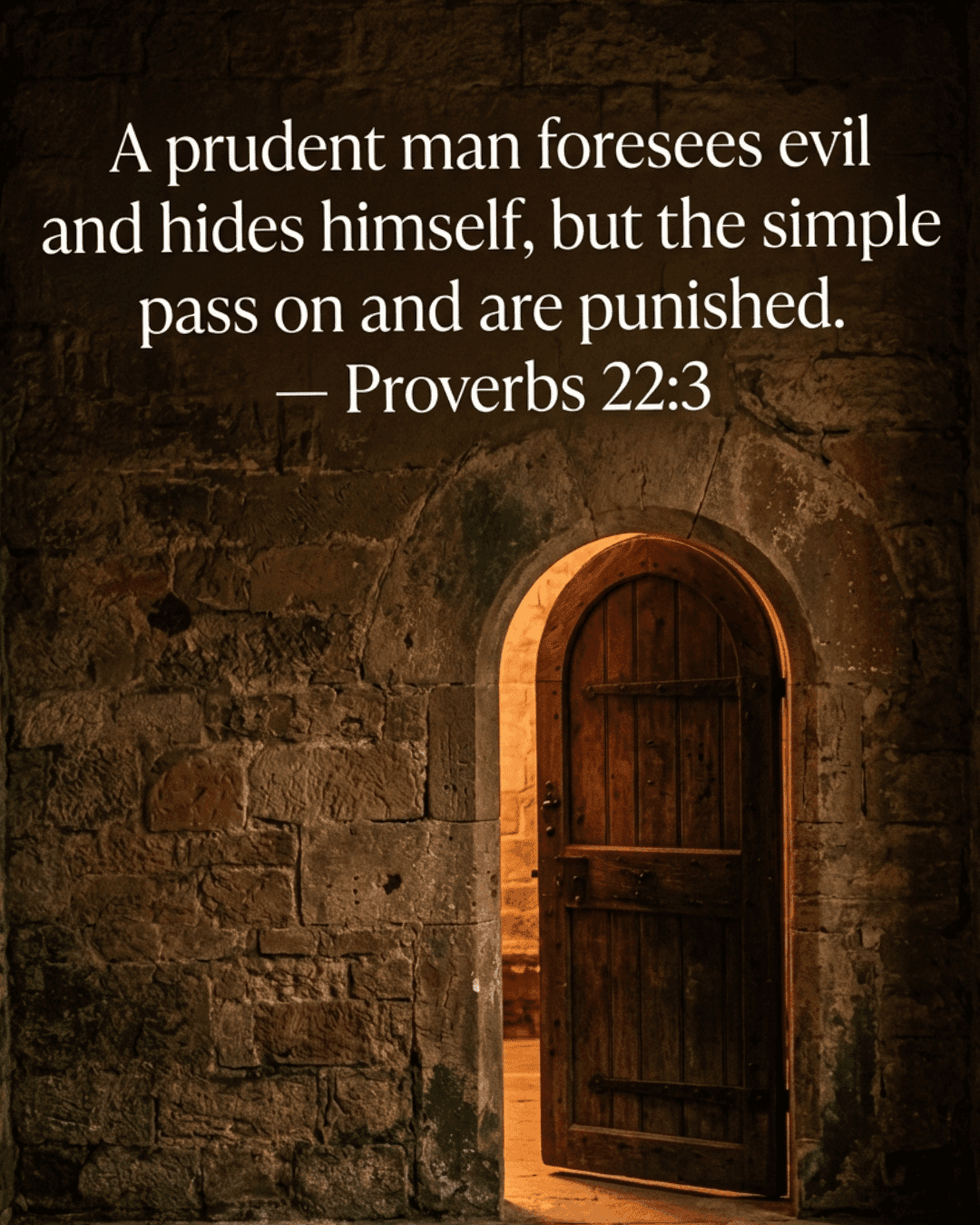
Proverbs 22:3
“A prudent man foresees evil and hides himself, but the simple pass on and are punished.”
Forgiveness doesn’t require you to be naive. A prudent person sees danger and takes precaution. Forgiving an abuser doesn’t mean inviting them to Thanksgiving. Forgiving a manipulator doesn’t mean handing them the keys again. Wisdom and forgiveness work together. One frees your heart. The other protects your life.
Matthew 10:16
“Behold, I send you out as sheep in the midst of wolves. Therefore be wise as serpents and harmless as doves.”
Harmless and wise. Both at the same time. You can be non-retaliatory and still be smart about who you let close. Jesus told His own disciples to expect wolves and to not be stupid about it. Forgiving someone doesn’t mean pretending they’re a sheep when they’ve shown you they’re a wolf.
2 Timothy 3:1-5
“But know this, that in the last days perilous times will come: For men will be lovers of themselves, lovers of money, boasters, proud, blasphemers, disobedient to parents, unthankful, unholy, unloving, unforgiving, slanderers, without self-control, brutal, despisers of good, traitors, headstrong, haughty, lovers of pleasure rather than lovers of God, having a form of godliness but denying its power. And from such people turn away!”
“From such people turn away.” Paul didn’t say forgive and reattach. He said turn away. There are people whose pattern of behavior disqualifies them from proximity. You can forgive them from a distance. You can pray for them without opening your door. Turning away isn’t unforgiveness. It’s obedience.
Proverbs 4:23
“Keep your heart with all diligence, for out of it spring the issues of life.”
Guard your heart. That’s not just about what you consume or what you think about. It’s about who you allow access. Some people, no matter how much you’ve forgiven them, are a threat to the peace God has built in you. Keeping your heart isn’t bitterness. It’s stewardship.
“Forgiveness releases the debt. It doesn’t rebuild the bridge. Sometimes the bridge shouldn’t be rebuilt.”
STAY CONNECTED
Get “The Middle” in Your Inbox
Short reflections on Scripture for people rebuilding their lives. No fluff. Just what’s real.
No spam. Unsubscribe any time.
When the Person Is Gone
For the conversations that never got to happen
Sometimes forgiveness doesn’t get a conversation. The person you need to forgive, or the person you wish you could ask to forgive you, isn’t here anymore. They died before it was resolved. Or the relationship ended in a way that closed the door permanently. And now you’re carrying something with no one to hand it to.
I don’t have a personal story for this one. But I’ve sat with people who do, and it’s one of the heaviest things I’ve seen someone carry. The regret of words never said. The anger at someone who can’t answer for it. The guilt of knowing you waited too long.
These verses won’t replace the conversation you never got to have. But they remind you that God is close to the brokenhearted, and that His grace covers the gaps our timing couldn’t.
If you’re carrying grief alongside this, our pages on Bible verses for grieving and Bible verses for losing a father go deeper into that specific weight.
Psalm 34:18
“The Lord is near to those who have a broken heart, and saves such as have a contrite spirit.”
Near. Not distant. Not watching from heaven waiting for you to sort it out. Near. When the conversation can’t happen and the relationship can’t be repaired on this side of eternity, God’s proximity is the only thing that holds you together. He’s close to the broken places. That’s where He does His best work.
Psalm 147:3
“He heals the brokenhearted and binds up their wounds.”
Binding a wound isn’t instant healing. It’s stabilization. It’s God saying, “I’m going to stop the bleeding first, and then we’ll work on the rest.” If you’ve lost someone and forgiveness is part of the mess you’re carrying, let God bind it. You don’t have to resolve it all at once.
2 Corinthians 1:3-4
“Blessed be the God and Father of our Lord Jesus Christ, the Father of mercies and God of all comfort, who comforts us in all our tribulation, that we may be able to comfort others with the comfort with which we ourselves are comforted by God.”
The comfort you receive now becomes the comfort you offer later. That’s the economy of suffering in God’s kingdom. Nothing is wasted. Not the grief. Not the unfinished business. Not the forgiveness that had to happen without the other person in the room. All of it becomes something God uses through you for someone else walking the same road.
When You Need to Reconcile with a Brother
For anyone who’s been in a church in the last few years

This one hits close to home for anyone who’s been in a church in the last few years.
I’ve watched people who sat in the same pew for decades, believed the same things, prayed for each other’s families, and then a political disagreement blew the whole thing up. COVID split churches. Elections ended friendships. People who used to be inseparable stopped talking over a difference of opinion. And most of them never reconciled because nobody wanted to go first.
That’s not a culture problem. That’s a Matthew 5 problem. Jesus didn’t give us an exemption for political disagreements. He said go deal with it before you bring your offering.
For a deeper look at what biblical reconciliation looks like in practice, read Biblical Steps to Restore Broken Relationships.
Matthew 5:23-24
“Therefore if you bring your gift to the altar, and there remember that your brother has something against you, leave your gift there before the altar, and go your way. First be reconciled to your brother, and then come and offer your gift.”
“First be reconciled.” Not after the service. Not when it’s convenient. Not when you feel ready. First. Before worship. Before the offering. Before the prayer. God’s priority order on this is aggressive. He’d rather you leave your gift at the altar and go make it right than sit through a whole service with unresolved conflict in your heart. That tells you something about what He values.
Matthew 18:15-17
“Moreover if your brother sins against you, go and tell him his fault between you and him alone. If he hears you, you have gained your brother. But if he will not hear, take with you one or two more, that ‘by the mouth of two or three witnesses every word may be established.’ And if he refuses to hear them, tell it to the church. But if he refuses even to hear the church, let him be to you like a heathen and a tax collector.”
There’s a process here and it starts private. Not on social media. Not in the group chat. Not in a passive-aggressive post that everyone knows is about them. You go to the person directly. And if they won’t hear it, there are escalation steps. But the goal at every step is reconciliation, not exposure. The goal is gaining your brother, not winning the argument.
Galatians 6:1
“Brethren, if a man is overtaken in any trespass, you who are spiritual restore such a one in a spirit of gentleness, considering yourself lest you also be tempted.”
Restore. Not punish. Not shame. Not post about it. Restore. And do it gently, knowing that you’re just as capable of the same fall. We act like our stuff doesn’t stink. We point at the speck in someone else’s eye and ignore the log in our own. And usually the reason we do that is because we’re afraid of being worked on ourselves. It’s easier to confront someone else’s sin than to sit still long enough for God to confront ours.
James 5:16
“Confess your trespasses to one another, and pray for one another, that you may be healed. The effective, fervent prayer of a righteous man avails much.”
Confess to one another. Not just to God. To each other. This requires the kind of relationships where you can say, “I have an issue with what you just said to me,” and the response isn’t going to be met with boxing gloves. It’s, “Let’s talk about it.” If you don’t have those people, that’s the first thing to build. A lot of the unnecessary conflict in our lives exists because we’re not careful about who we let in. We create friction with people who shouldn’t have been that close in the first place, and then we’re surprised when it goes sideways.
FAQ
Frequently Asked Questions About Forgiveness
What does the Bible say about forgiveness?
+
The Bible teaches that forgiveness is central to the Christian life. God forgives completely (Psalm 103:12, 1 John 1:9), and Jesus commands His followers to forgive others the same way they’ve been forgiven (Ephesians 4:32, Matthew 6:14-15). Forgiveness in Scripture isn’t about feelings. It’s about a decision to release someone from a debt, whether they’ve asked for it or not. Jesus modeled this on the cross when He forgave the people who were killing Him while they were still doing it (Luke 23:34).
Does the Bible say I have to forgive someone who isn't sorry?
+
Yes. Mark 11:25 says, “Whenever you stand praying, if you have anything against anyone, forgive him.” No conditions about the other person’s repentance. Forgiveness is between you and God before it’s between you and the person who wronged you. That said, reconciliation requires both parties. You can fully forgive someone and still not be in a restored relationship with them if they’re unwilling to do their part.
What if I've forgiven someone but I'm still angry?
+
That’s normal and it doesn’t mean the forgiveness didn’t count. Forgiveness is a decision. Emotions catch up at their own pace. Matthew 18:21-22 suggests forgiveness may need to happen seventy times seven, and sometimes that’s for the same offense within your own heart. The anger may surface in layers. Each time it does, you bring it back to God and choose again. That’s not failure. That’s the process.
Is it okay to forgive someone but not let them back in my life?
+
Absolutely. Forgiveness releases the debt. It doesn’t guarantee the relationship continues. Proverbs 22:3 says a prudent person foresees danger and protects themselves. Jesus told His disciples to be “wise as serpents and harmless as doves” (Matthew 10:16). You can forgive someone fully while still maintaining boundaries that protect your peace and your family. Forgiveness Doesn’t Mean Tolerance explores this further.
How do I forgive myself when I can't undo what I did?
+
Self-forgiveness is one of the hardest parts of recovery and the Christian walk. The truth is, you’re not the judge. God is. And if He says you’re forgiven (1 John 1:9), then holding yourself in contempt is disagreeing with His verdict. Philippians 3:13-14 shows Paul making a deliberate choice to stop looking backward and press forward. You can’t undo the past. But refusing to forgive yourself keeps you chained to it. Bible verses about second chances may help if that’s where you are.
What does the Bible say about forgiving someone who has died?
+
Scripture doesn’t address this scenario directly, but the principles still apply. Forgiveness frees your heart regardless of whether the other person is present to hear it. Psalm 34:18 promises that God is near to the brokenhearted. The conversation you never got to have on earth can be brought to God in prayer. He’s big enough to hold the pieces you couldn’t resolve. If grief is part of what you’re carrying, see our Bible verses for grieving page.
From the Podcast
Hear More on Forgiveness
From the Rebuilding Life After Addiction Podcast:
More Scripture for What You’re Going Through →
Keep Reading
If You Need More Than a Verse Right Now
If you’re searching for forgiveness because addiction tore something apart and you don’t know how to move forward, we can help you figure out the next step.

Justin Franich
Justin Franich is a Teen Challenge graduate who overcame a meth addiction and has been clean since 2005. He spent over a decade leading Christ‑centered recovery programs and now serves as Executive Director of Shenandoah Valley Adult Teen Challenge, helping families find the right path forward and supporting people as they rebuild life after addiction.
Read my story →