Addiction & Recovery
Aaron Gordon: Finding Identity, Overcoming Low Expectations
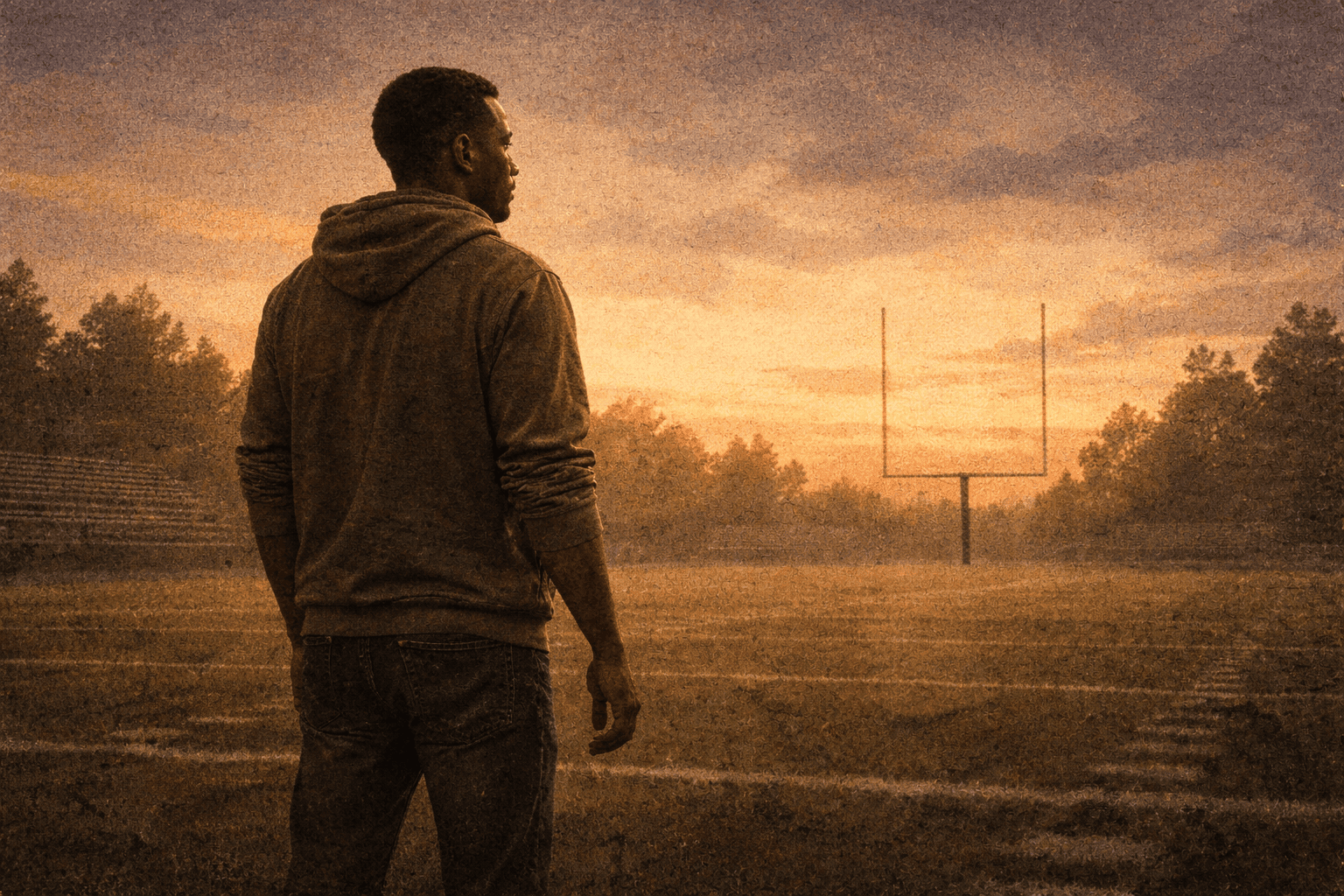
"A teenage Black male in Washington DC had a worse chance of seeing age 18 than a soldier deployed in a war zone."
That's not hyperbole. That's what newscasters were saying when Aaron Gordon was growing up in inner-city DC during its years as the murder capital of the world.
Aaron wasn't supposed to make it.
The statistics said so. The environment said so. The culture said so.
But Aaron didn't just survive. He defied every expectation. Excelled academically. Dominated athletically. Graduated from West Point. Built a military career. And at 54 years old, he's still peeling back layers of purpose he didn't know were there.
In our conversation, Aaron unpacked something I wasn't expecting: how low expectations damage us in two completely opposite ways. They either drag us into hopelessness, or they drive us into unhealthy pride and comparison. Both responses keep us from discovering who we actually are.
When Nobody Knows What to Do with You
I asked Aaron about identity. Specifically, what he believed about himself growing up in an environment designed to destroy him.
His answer surprised me.
Aaron grew up in a two-parent household, which wasn't the norm in his neighborhood. His parents drove him to excel. He had good grades. Really good grades.
And that created a problem.
His Black friends said he was "too white" because he got good grades. His white friends saw him as Black first, smart second. But it got worse. Aaron was also one of the best athletes at his school. So now he didn't fit the "smart Black kid" box or the "athlete" box or anything in between.
He had nobody to identify with.
Then came the football game that changed everything.
A pickup game in his neighborhood. The kind that doesn't happen anymore. Aaron was picked last. One of the best athletes there, picked last. The first two times he touched the ball, he scored a touchdown. After the second score, everyone gathered together. Aaron thought they were celebrating.
Instead, they said: "We want to start over. We don't want his touchdowns to count because he got them."
They literally erased his success because it didn't fit their expectations of who he was supposed to be.
Whether he wanted to or not, Aaron was surrounded by this mindset: Can any good thing come out of Washington DC? Can anything good come out of my neighborhood?
The Two Ways Low Expectations Destroy Us
Aaron's story reveals something critical. Low expectations destroy us in two completely opposite ways.
The first path is believing the lie. Some people hear low expectations and internalize them. "I'll never amount to anything." "This is just who I am." "Why even try?" They become what people say they'll become. The prophecy fulfills itself.
But Aaron took the other path. And it was just as destructive.
What drove him became pride. It became "I must be the best at all costs. I will outwork you. You will not be smarter than me. I will do anything and everything to win."
Aaron excelled. He made it to West Point. But internally? By the time he accepted the invitation, he thought he was the best thing in the world. He really did. And God had to tremendously humble him there.
Both responses miss the point.
One drags you into hopelessness. The other drives you into pride and comparison. Neither leads you to your actual identity.
Until You Know Your Creator, You're Wandering
I asked Aaron: If low expectations are dangerous whether you believe them or rebel against them, then what's the answer?
His response was simple but profound: "Until you know who your Creator is, until you have the relationship you should with Christ, you're really kind of wandering, trying to figure out who you are."
For most of his early life, Aaron's identity was achievement-based. Am I smarter than them? Am I better than them? Did I outperform them? It's exhausting. And it never ends.
But at 54, Aaron's perspective has completely shifted. He told me: "I don't aspire to be T.D. Jakes. I just want to be the best Aaron. Because I will reach people that he never will."
That hit me.
When you find your God-given identity, comparison dies. You're not competing anymore. You're not measuring yourself against anyone else's success. You're just fulfilling the unique purpose God has for your life.
This is what I call the Robe phase of restoration. Before you can walk in authority or pursue mission, you have to know who you are. Not what you did. Not what was done to you. Who you are in Christ.
God's Process Takes Time (And Uses Everything)
At one point in our conversation, Aaron shared something that completely reframed how I think about "wasted years."
He was reading Genesis 4:3: "And in the process of time, Cain brought an offering to the Lord." He got stuck on that phrase: "in the process of time."
When you think of time to an eternal God, Aaron explained, He's like, "That's your construct. That means nothing to Me." But the fact that it says "process of time" means that God uses time to develop His process.
For Aaron, it took 54 years to realize what was in him the whole time.
When he turned 40, he told God: "I guess I've lived out half of my life now. Things I thought I'd do, I guess I'll never do them." And he was at peace with that.
But after he turned 50, God told him something that changed everything: "You've only just begun now."
To that person struggling with years they feel they have wasted, Aaron's message is clear: God uses everything. God uses all the ups and downs to build your testimony, to shape and mold your character. Even if it's just that one person whose life is changed, it was all worth it.
Time with God is not measured the same way we measure it. He can restore. He can accelerate. He can redeem what the enemy meant for evil.
If you're rebuilding after addiction and wondering if God can still use your story, you need to read about how to move beyond your broken past. Your history doesn't disqualify you. It qualifies you for a specific mission only you can fulfill.
The Butterfly and the Cocoon: Why God Allows Struggle
One of the most powerful moments in our conversation was when Aaron told the story of the butterfly and the cocoon.
A little boy finds a cocoon with his grandfather. Inside, a butterfly is struggling to break free. The boy watches. The struggle continues. He can't take it anymore.
"Grandpa, it can't get out! I need to help it!"
The boy opens the cocoon. The butterfly, in its weakened state, flops out onto the ground and dies.
The boy is heartbroken. "Why did it die? I was just trying to help."
The grandfather looks at him and says: "It was in the struggle that the blood from its body would go out to its wings to strengthen it, so it could fly, so it could become everything it was meant to be."
Aaron applied this to our lives: "We're all in these spiritual cocoons. God allows us to struggle, not because He's a sadist, not because He's unaware, but because allowing me to go through that struggle is actually the most loving thing of all. Because He sees and knows what I'm going to become and the impact I will have if I just endure."
The struggle isn't punishment. It's preparation.
This is why recovery often hurts more than addiction itself. The pain isn't evidence that something's wrong. It's evidence that something's being built in you.
Forks and Spoons: The Truth That Changes Everything
Near the end of our conversation, Aaron talked about the central theme that runs through everything he teaches. It's the idea that became the foundation for his book.
Part of the fork's dilemma, Aaron explained, is that it valued and saw success through the eyes of a spoon when it was never a spoon.
Success for a fork will always look different than success for a spoon. But if the fork spends its whole life trying to be a spoon, it will never fulfill its purpose, always feel like a failure, and miss the people only a fork can reach.
When you do that and you fall where God has you to be, you can't help but have the impact He wants you to have. There are souls on the other side of your yes. There are souls on the other side of your obedience.
I asked Aaron how someone discovers what they're designed to be. He said God gives us context clues.
Watch for affinity. What are you naturally drawn to? What problems do you see that others don't?
Watch for success patterns. What do you do well without trying? Where do people naturally ask you to lead?
Watch for impact. Whose life changes when you show up?
Aaron reflected on his own journey: "I never knew I'd fall into leadership. But when I look back, I saw how I always wanted to champion the underdog. Even when I didn't want to lead, people would say, 'We want you to be in charge.' What I didn't realize was God was just having these spiritual checkpoints: 'Okay good, he's every step forward.'"
God has been preparing you your entire life for the purpose He has for you.
A Children's Book with Profound Adult Truths
After our conversation, I understood why Aaron chose to write a children's book to communicate these truths. Because we all need to learn what kids instinctively know before the world beats it out of us: You don't have to be someone else to have value. Different doesn't mean less than. Your purpose is unique, and that's the point.
Aaron's book, Cutler's Wonderful Creations, tells the story through forks and spoons discovering they're separate in mission but equal in value.
Even though he calls it a children's book, it's very much for adults also. Because how powerful would it be if a parent and the kid worked on their identity journey together?
The illustrations are simple. The story is accessible. But the truths are profound.
If you're rebuilding your life, battling comparison, or wondering if God can still use you after all the years you think you wasted, this book will speak to you in ways you don't expect.
Get Aaron's book: Cutler's Wonderful Creations on Amazon
There Are Souls on the Other Side of Your Yes
As we wrapped up, Aaron left me with this:
"Heaven rejoices when one sinner turns. T.D. Jakes has people attached to his name. I have people attached to my name. And when you fall where God has you to be, you can't help but have the impact He wants you to have."
There are souls on the other side of your obedience.
People only you can reach. Stories only you can tell. Impact only you can have.
Not because you're better. Because you're you.
Stop trying to be a spoon when you're a fork. Stop measuring yourself by someone else's success. Find your God-given identity. Walk in your purpose. And watch what happens.
Connect with Aaron Gordon:
Watch the Full Conversation: This blog post barely scratches the surface. Watch the full episode to hear Aaron's complete West Point story, how God humbled him, more on the spiritual cocoon, and practical steps to discovering your purpose.
Hear more on our podcast: The Real Reason Men Self-Sabotage in Sobriety
Justin Franich
Justin Franich is a Teen Challenge graduate who overcame a meth addiction and has been clean since 2005. He spent over a decade leading Christ‑centered recovery programs and now serves as Executive Director of Shenandoah Valley Adult Teen Challenge, helping families find the right path forward and supporting people as they rebuild life after addiction.
Read my story →If this helped, there's more where it came from.
I send weekly encouragement. Scripture, reflection, and honest conversations about faith and recovery.
You can unsubscribe anytime.
Related Articles

Teen Challenge Success Rate: The Honest Answer
Teen Challenge success rate depends on how you define success. Here's the honest truth about outcomes, relapse, and what actually determines long-term change.
The Cost of Ministry Nobody Talks About
Twenty years of overdose calls, unanswered prayers, and friends who disappeared taught me the real cost of calling. Nobody puts that part in the brochure.

Fentanyl Addiction: What Families Need to Know
Your loved one's fentanyl addiction isn't hopeless. Learn the signs, understand what's happening, and find real help through faith-based recovery.
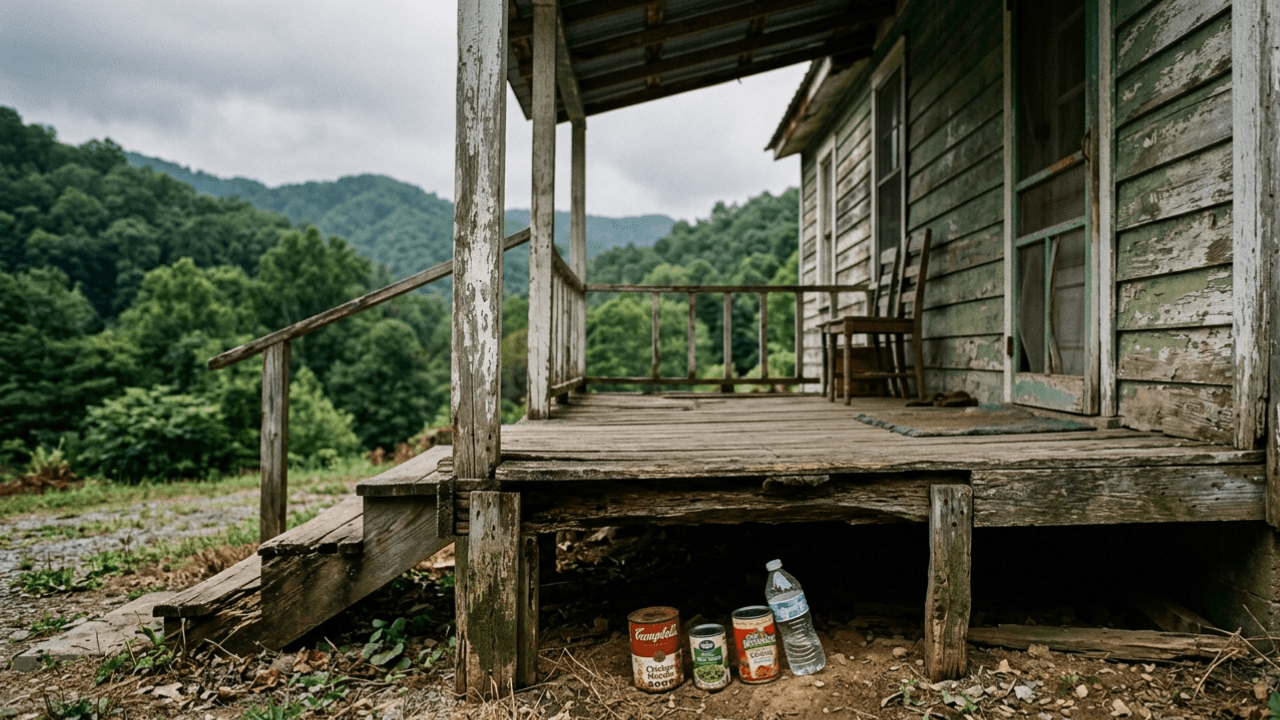
What the Addiction Crisis Looks Like in Rural Appalachia and What One Community Is Doing About It
In McDowell County, West Virginia, children are hiding food so their parents won't find it, the only hospital lost its OB/GYN, and one woman left her nursing career to build a recovery center in an abandoned church. A firsthand look at what the addiction crisis looks like when nobody is watching.