For Families
How to Renew Your Hope After Losing It

Hope is one of the few things Scripture tells us will last forever.
Faith. Hope. Love.1 Corinthians 13:13
And yet, anyone who has lived long enough knows that hope can still wear thin. It can erode quietly. It can be delayed so long that it begins to feel irresponsible to hold onto it anymore.
The Bible doesn't pretend otherwise. It says plainly that hope deferred makes the heart sick. Not discouraged. Not disappointed. Sick.
That word matters.
A sick heart doesn't bounce back easily. It doesn't respond to clichés. It doesn't recover just because someone tells you to "stay positive" or "trust God more."
Most of us understand deferred hope in everyday ways. You wait years for something that never materializes. A door you prayed would open stays shut. A relationship fades no matter how much effort you put in.
But some hope doesn't just disappoint - it devastates.
It's the hope that your child will finally stop using.That your spouse will mean it this time.That this relapse really will be the last one.
And when it isn't - when the cycle repeats again - something inside you starts to shut down. You don't stop believing in God. You don't stop loving the person. You just stop letting yourself hope the same way.
You get tired in a place rest doesn't reach.
The reason this kind of disappointment cuts so deeply is because it isn't happening at a distance. It's happening inside your world. Inside your home. Inside your relationships. You're not hoping for a stranger to change - you're hoping for someone whose choices directly shape your peace, your safety, and your future.
Over time, your emotional world shrinks.
All of your energy funnels into one person. One outcome. One situation you cannot control. And slowly, without realizing it, your entire sense of hope becomes dependent on whether they change.
That's when the heart starts to get sick.
Not because you care too much - but because you're carrying more than you were meant to carry.
Sometimes the way God restores hope is not by finally changing the person we're waiting on, but by widening our world again.
This doesn't mean you stop loving them.It doesn't mean you detach emotionally or harden your heart.It means you stop letting your entire inner life rise and fall on someone else's decisions.
When all of your time, energy, prayer, and effort are poured into someone who keeps rejecting help, hope drains away. But when even a portion of that same care is allowed to flow outward - toward people who can receive it - something in you begins to heal.
One of the first places hope often begins to return is through giving time.
Time is costly. For many people, it's harder to give than money. But when you invest time outside the crisis - serving, mentoring, listening, showing up - you're reminded that your presence still matters. That your life still carries weight. That you are more than a supporting character in someone else's addiction.
Another way hope is renewed is through giving resources.
Money can feel complicated, especially if you've been burned by manipulation or false promises in the past. But generosity, when practiced wisely, reorients the heart. Supporting good work, good people, and meaningful causes reminds you that change is happening somewhere - even if it isn't happening where you want it most.
Then there is talent.
Every person carries something God has entrusted to them - skills, experience, wisdom forged through suffering, insight earned the hard way. When all of that is consumed by one relationship that keeps collapsing, those gifts begin to wither. But when you use them to bless others, something comes alive again.
This is where hope moves from theory to practice.
Some people find renewal by getting involved locally - through a church, a shelter, a mentoring program, a school, or a community organization. Seeing hope land in real people, face to face, does something powerful. It reminds you that effort isn't wasted simply because it didn't work there.
Others find renewal by engaging work that reaches beyond their immediate environment. Online ministries, support communities, prayer networks, writing, advocacy - these exist because pain exists everywhere. When you lend your voice or support to work like this, hope multiplies far beyond what you can see.
And sometimes the most profound renewal comes from sharing your own story.
What you've walked through may have left you tired, embarrassed, or ashamed that you still feel this way. But there are countless others living in the same quiet exhaustion. They've loved someone who didn't change. They've believed promises that weren't kept. They've felt their hope slowly slip through their fingers.
You don't have to be fully healed to help someone.You only have to be one step ahead.
When you speak honestly - not triumphantly, not pretending everything worked out - you remind someone else that they're not alone. And in the process, something in you steadies. Your pain begins to matter again. Your story becomes more than something you survived.
Your suffering does not have to be wasted.
This doesn't mean you stop caring about the person you love. It means you stop letting your entire future be held hostage by their present.
Jesus said that when we give, it will be given back to us - pressed down, shaken together, and overflowing. That's not a transaction. It's a description of how the heart works.
Hope often returns quietly.Not when the situation improves -but when your world gets bigger again.
You were never meant to carry this alone.And you were never meant to wait indefinitely for someone else to change before you were allowed to live.
Hope can be renewed.
Sometimes not by fixing what's broken -but by letting God remind you that your life is still larger than the brokenness.
Hear more on our podcast: God Hasn't Forgotten You (Even in This Season)
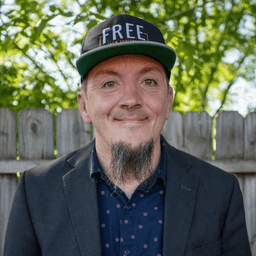
Justin Franich
Justin Franich is a Teen Challenge graduate who overcame a meth addiction and has been clean since 2005. He spent over a decade leading Christ‑centered recovery programs and now serves as Executive Director of Shenandoah Valley Adult Teen Challenge, helping families find the right path forward and supporting people as they rebuild life after addiction.
Read my story →You don't have to figure this out alone.
We help families find the right faith-based recovery program.
Get Help →Or call: 540-213-0571
This page came out of real ministry, not internet theory. We take the calls, help families think clearly, and point people toward Christ-centered programs that can actually walk with them. If that matters to you, help us keep doing it for the next family.
Related Articles

When NOT to Tell Your Kids About Your Addiction
Sometimes sharing your addiction story with your kids does more harm than good. Here is how to know if you are ready, and what to do if you are not.

Am I Crazy for Supporting the Addict I Love?
Friends say to quit. Family says to move on. They call you crazy for still hoping. But holding onto faith, hope, and love-the things Scripture says last forever-isn't foolish. It's foundation.

When Your Loved One’s Addiction Ruins Your Summer Vacation
You were counting down the days. Then it happened-a broken promise, that familiar look. What was meant to restore you now feels stolen. Speaking truth in love means holding hope and honesty at the same time.

How to Help an Addict Without Losing Yourself
When someone you love is drowning in addiction, your first instinct is to jump in after them. But here's what nobody tells you: you can drown trying to save someone. After 20 years in recovery ministry, I've learned that empathy means "I understand," not "I'll fix it." You can love someone deeply without losing yourself in the process.