Getting Help
How to Tell If My Loved One Needs a Program

It's that time of year again.
Leaves are falling. Turkeys are nervous. Christmas music is already playing somewhere it shouldn't be.
Everyone's excited for the holidays...right?
Not always.
For a lot of families, the holidays don't bring relief. They bring everything to the surface. Broken relationships. Empty seats at the table. Old grief that never really healed. And for many, the quiet dread that comes with knowing someone they love is still trapped in addiction.
Gathering together can make it impossible to ignore what's been getting worse year after year.
You see it more clearly.You feel it more deeply.And once again, you're left wondering what-if anything-you can do.
You can't make someone change.You can't force repentance.You can't control their choices.
But that doesn't mean you're helpless.
One of the ways families can help is by recognizing when a program or rehab may be necessary-and whether it's even possible.
The holidays, painful as they can be, actually give you a clearer window than most times of year. Not just to see the reality of the addiction, but to discern next steps wisely.
Here are a few things to pay attention to.
First, has your loved one tried-and failed-to quit on their own?
There are rare cases where someone simply stops. Sheer willpower. White-knuckled determination. Maybe with family support.
But that's not what usually happens.
What's far more common is the cycle: promises to quit, short stretches of improvement, followed by relapse. Over and over again. If that pattern is present, it's a strong indicator that outside help is needed.
Addiction that can't be overcome alone usually won't be overcome alone.
Second, has the addiction disrupted normal life-for them or for your family?
Some people manage to function for a while. They work. They show up. They appear fine on the surface.
But over time, addiction always demands more.
Work suffers. Relationships erode. Finances strain. Health declines. The addiction slowly becomes the center of gravity around which everything else rotates.
When that happens, a program isn't an overreaction. It's often the next necessary step.
Those two questions help you determine need.
But wisdom also asks about timing.
Something can be necessary and still not be possible yet.
So the next questions matter just as much.
Does your loved one express a genuine desire to change?
At some point, desperation becomes a gift. Not because suffering is good, but because it finally breaks through denial. Until someone reaches a place where they want change-really want it-rehab may not stick.
That's a hard reality for families to accept.
Sometimes the most honest prayer isn't for immediate relief, but for clarity. For the person to reach the end of themselves. For the illusion of control to finally collapse.
When that desire to change shows up, the window begins to open.
Which leads to the next question.
Are they open to going to a program for themselves?
People can be forced into rehab. Threatened. Manipulated. Cornered.
But lasting change usually doesn't come from coercion.
It comes when someone says, I don't want to live like this anymore.
This doesn't require dramatic speeches. Often it shows up quietly-in curiosity, in questions, in hesitation that isn't outright resistance.
Simple questions can reveal a lot.Have you ever thought about getting help?What do you think about starting the new year differently?
You're not trying to close the deal. You're listening for openness.
When willingness and desperation meet, a program becomes not just necessary-but possible.
And that matters.
Because the holidays don't have to end the same way they always do. They don't have to be another season of silent suffering and helplessness.
They can become a time of clarity.
And if the time is right, a turning point.
You're not responsible for fixing your loved one. But you are allowed to act wisely. To observe honestly. To stop pretending things aren't what they are.
And when help becomes possible, you're not powerless.
Freedom is still what God desires-for them, and for your family.
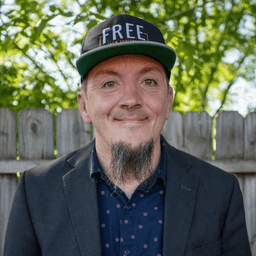
Justin Franich
Justin Franich is a Teen Challenge graduate who overcame a meth addiction and has been clean since 2005. He spent over a decade leading Christ‑centered recovery programs and now serves as Executive Director of Shenandoah Valley Adult Teen Challenge, helping families find the right path forward and supporting people as they rebuild life after addiction.
Read my story →Ready to take the next step?
We help families find the right program. Free. Confidential. No pressure.
Talk to Us →Or call: 540-213-0571
This page came out of real ministry, not internet theory. We take the calls, help families think clearly, and point people toward Christ-centered programs that can actually walk with them. If that matters to you, help us keep doing it for the next family.
Related Articles

7 Myths About Teen Challenge (And What's Actually True)
Is Teen Challenge only for teenagers? Is it free? Is it basically boot camp? After years of helping families navigate recovery, here's the honest truth behind the most common myths.

How to Start a Recovery Ministry at Your Church
Ready to launch a recovery ministry? This honest guide covers three models, how to pitch your church board, what it costs, and a 90-day launch roadmap.

Adult Teen Challenge vs Prison: Why Faith-Based Recovery Works
Prison punishes addiction. It doesn't heal it. With a 60-70% recidivism rate, incarceration fails to address the spiritual brokenness at the root of substance abuse. Adult & Teen Challenge offers a different path-one that transforms lives through faith, community, and long-term support.

The Prodigal Son and Addiction: Rebuilding Life After You Get Clean
How does the prodigal son apply to addiction? The father's three gifts, the robe, ring, and sandals, are a biblical framework for rebuilding life after recovery.