The Bail Bondsman Pastor Who Shows Up When Everyone Else Walks Away
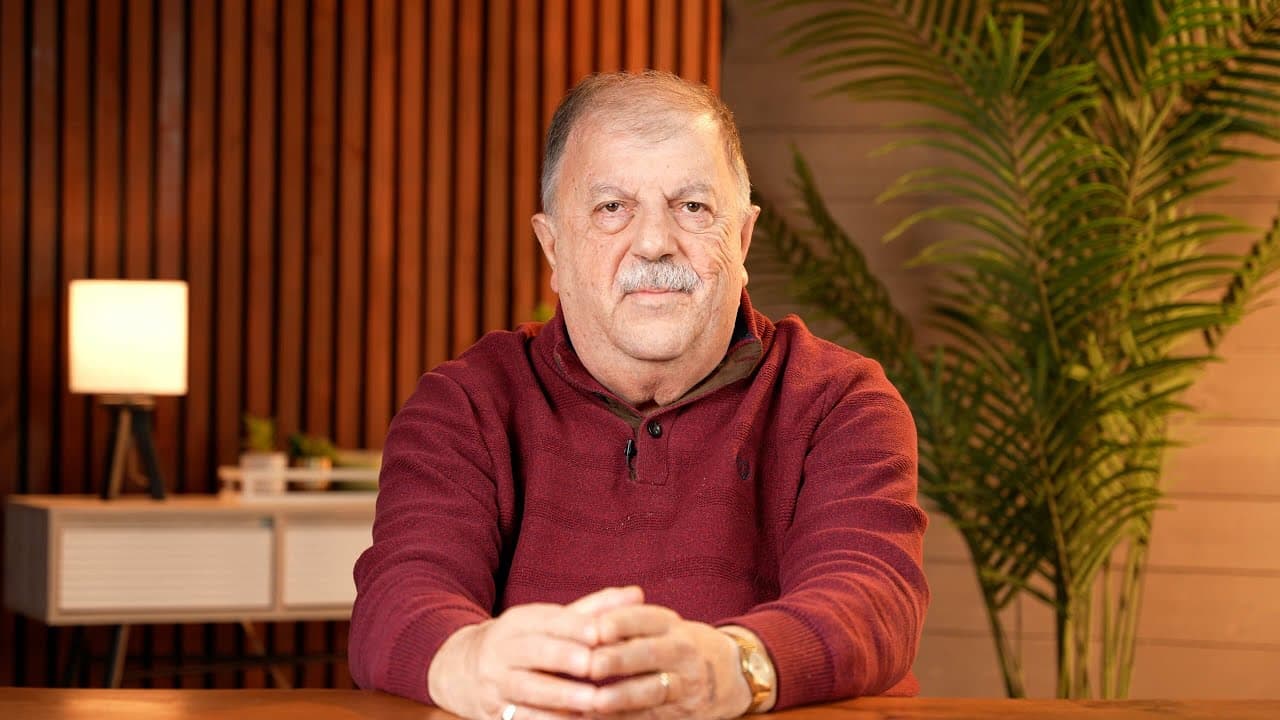
with Pastor George Williams
About This Episode
Pastor George Williams posts bail at 2AM, pastors a biker church on Sundays, and leads mission trips to one of the poorest counties in America. He shares how working in the justice system shaped his ministry and what it takes to build a recovery center in Appalachia.
Key Takeaways
- ·People at their most broken are often the most open to real conversation. George has built lasting relationships with people he posted bail for at 2AM who still call him years later.
- ·The church often puts qualifications on people that God never did. Giving people ownership and opportunity before they feel ready is what helps them grow into it.
- ·Ministry in Appalachia is not a one trip commitment. The communities there have seen hundreds of groups come through, take pictures, and never come back. Trust is built through consistency and showing up again.
- ·The drug epidemic in rural Appalachia is compounded by poverty, lack of healthcare, and geographic isolation. The only hospital in McDowell County has lost its OB/GYN, and clean drinking water is not available in parts of the county.
- ·Children are bearing the weight of the crisis. George's team builds food kits designed for a six year old to feed themselves because in some cases there is no parent sober enough to help.
- ·Sustainability matters more than launch. George's five year vision is not about expanding but about training the next generation of leaders to carry the work forward.
Listen to This Episode
About Pastor George Williams
Pastor George is the founder and pastor of Home Church in Dayton, Virginia, a church built for bikers, former inmates, and anyone who has been turned away from traditional church environments. He is also a licensed bail bondsman with Freedom Bail Bonds in Manassas, VA, a private investigator, and an instructor for the Virginia Department of Criminal Justice. George is a first generation descendant of Kentucky coal miners and has spent years leading mission trips to Appalachian communities in West Virginia, where he and his team are currently helping build a women's recovery center in McDowell County. He is a member of the Second Thief motorcycle ministry.
Show Notes
In this conversation, Pastor George walks us through his unlikely path from traditional church ministry to pastoring a biker church in Dayton, VA called Home Church, a place built for the people who do not fit in anywhere else.
George also works as a bail bondsman with Freedom Bail Bonds out of Manassas, VA. He talks about what it is like to meet people at their lowest moments and how that work has shaped the way he sees people and does ministry. He shares a story about walking into a home to find a father and instead finding a child who had not eaten, and how moments like that have colored everything about the way he pastors.
The conversation shifts to George's work in McDowell County, West Virginia, where he and his wife have been running mission trips for years. He describes the poverty, the water quality, the pill mills that fueled the opioid crisis, and the current state of addiction in the region. He introduces Sandy Blankenship, a former nurse who left a career making over $40 an hour to purchase an abandoned church and convert it into a women's recovery center that will house nine women.
George also shares the story of a young boy in Appalachia who gave blueberries to George and his wife out of the little he had, and a young girl who hides her food kits under the porch so her mother will not find them when she is sober.
The episode closes with George's advice for anyone feeling called to unconventional ministry and a reflection on the Matthew Barnett quote that has guided much of his work: if you reach the ones nobody wants, God will give you the ones everybody wants.
Mentioned in This Episode
- •Home Church, Dayton, VA (American Legion on Rt. 42)
- •Freedom Bail Bonds, Manassas, VA
- •McDowell County, West Virginia
- •The Dream Center, Logan County, WV
- •Sandy and Tony Blankenship
- •Second Thief Motorcycle Ministry
- •Matthew Barnett and the LA Dream Center
Resources from Rebuilding Life After Addiction:
Partner with the ministry: https://justinfranich.com/partner
Get help through Shenandoah Valley Teen Challenge: https://svtc.info/get-help
More help and resources for families:
- •Bible verses and faith‑based recovery tools: https://justinfranich.com/christian-recovery-resources
- •Bible verses for addiction and recovery: https://justinfranich.com/bible-verses-for-addiction
- •Teen Challenge guide for families: https://justinfranich.com/teen-challenge-guide
Read Transcript
Pastoring a Church for People Who Do Not Fit In
And when I first met you, you were the, everybody described you as the pastor of the biker church. And so, yeah, let's start right there. How did you end up pastoring a church for the bikers?
Well, you know, I was in a traditional church or maybe not quite traditional. And God kept knocking on my heart to start a church for people who don't quite fit in anywhere else. And that's going to be your folks who are bikers. They may have been in the penitentiary or the local jail. They've had addiction issues, they've had abuse issues, and they're sitting back going, where do I find a place to connect?
And one of the most difficult things to do after you've been hurt, or you've been turned away by a traditional church environment, is to find a place where I feel at home. And that's why when we started our church we named it Home. It's called a place where you can feel at home.
What People Get Wrong About Biker Culture and Faith
What do you think people get wrong in the most part, about that type of culture and faith and kind of where it belongs together?
That's such a good question. I think a lot of people, their biggest problem is they are seeing the exterior, but they're not seeing the interior of the person. One of the greatest problems that we run into is seeing people from the outside, for example, tattoos. A lot of bikers have tattoos and a lot of people who've been to prison have tattoos. And a lot of times people look at the tats, but they don't look at the person. And clothing is a big issue, and it's like you show up at church on a motorcycle in leather, you know? What are you doing here?
So, like, I want to say it this way, grandma, holier than thou, right, is going to look at you with a sad eye and go, excuse you. Why are you here in my little pristine, pretty church? And I hate to say it that way, but it exists. And those people need Christ just as much as anyone else.
You know, it's interesting, like the cultural context of the Shenandoah Valley. Because I think some folks in cities may watch this and be like that really didn't happen where I'm at, you know. But when you're thinking rural Virginia, very deep religious culture here in this area. Those type of things do stand out quite a bit. Much more different than they would in the middle of, let's say, inner city Richmond.
Oh, absolutely. And culturally, you have a lot of folks who are steeped, if you will, like a good, strong tea in the culture of how they do things. This is just the order of things. And sometimes the order of things doesn't even line up with a Bible in the first place.
From Biker Church to Bail Bondsman
So from biker church to the other thing that I remember about you when I first met you, you're also bail bondsman. Yeah, and security. How does a pastor end up in that world?
Well, you know, I think God has his people everywhere. And I had the great fortune of knowing a really great guy who owns a bail bond company. And I looked at Dave one day and said, hey, can I do this? And he said, yeah, sure. Can I work with you? And he's like, absolutely. He's one of the most positive people I know. And he's also one of the most intense people I know.
And so the company's Freedom Bail Bond, and it's based out of Northern Virginia, Manassas. But it's a place where I found out when I got into the business that a lot of people, they just want somebody to treat them with a little dignity and not treat them just like a paycheck. You're just money. And so the entire time that I've done the bail bond industry is treat people with dignity, because I think everybody deserves the opportunity for a little dignity. It doesn't matter who you are.
Posting Bail at 2AM
And that connected me with some of the most unique and wonderful people I've ever met. So you're posting somebody's bail, 2:00 in the morning, right? Or whatever time that is. Late night. Or out of nowhere. What does that conversation look like when you're meeting somebody in that moment? They're probably a little embarrassed or whatever they may be dealing with. What's that conversation look like?
Well, it's your typical business contract kind of business. It's like, okay, your court date is going to be this time. You've got a cosigner. They're responsible for you. You got to check in with me, make sure you're doing what you're supposed to do. And if you have problems, call me. So many people in business will look at me and go, I've never had a bail bondsman say, if you have problems, call me. Because so many people just make it transactional. And as a Christian, I couldn't help but to reach out to people and say, if you got issues, call me.
Why People Open Up More in Crisis Than in Church
Do you find that people are typically more open in those moments than they would be, let's say, in a row of chairs at church?
Well, a lot of times people are like, yeah, I really screwed it up this time. And you're sitting there going, okay, do you want to change? And you know, I don't hide the fact that I'm a pastor. Matter of fact, it's part and parcel. If you talk to me ten minutes, you're going to know I'm a pastor. And so they know I'm a pastor, and then they're talking to me, and they ask questions that they won't ask anyone else.
And typically over the years, there are lots of people still in contact with me that I got out of jail. I'm the only pastor they know. And they're still calling me. They're not darkening the door of any church. But they're still calling me. And I'm the only pastor they know. And that's no me blowing my horn. It's just where God put me. To speak into people's lives who are sometimes at their most broken moment.
How the Justice System Shaped His Ministry
It colors you. You can't help but be colored by what you see. Because part of the bail bond business is also when people skip court is finding them. And sometimes when you're looking for somebody, you walk into a home. And you'll see a child who hasn't eaten or needs some care.
And as a man I'm there to collect, you know, the father of this child and take him back to jail so he can go to court. But you stand there as a pastor also and you look at this child who is lost. For lack of parenting.
And so it colors how I treat people because I see people in their moments. And you have to look at them and go, hey, there's still a human being. They still deserve the same grace that God gives to the nice, clean, pretty person.
It's such a powerful point. And I think it does impact the way you do ministry. Think it gives you a lot more patience with people.
It has to because you look at people and say, okay, so yeah, they're broken, but they deserve so much opportunity. I've said for years, I believe in people's possibilities. Because God looks at us and goes, hey, you have possibilities. Will you really step up to them? And if I can encourage somebody to live to their maximum possibilities in Christ as a pastor, that's my goal.
Giving People Opportunity Before They Feel Worthy
We can sometimes put a lot of qualifications on people that God didn't put on them. So have you balanced that over the years of giving people possibility or opportunity to serve, get connected to the work that you're doing, but also that balance?
It's what I keep telling people is it's balance and boundaries. And with my job, with the bail bond industry or private investigation or teaching for the Department of Criminal Justice, any of that stuff, it's boundaries and balance. So when I step into the pulpit, I'm preaching to the heart of man, to the heart of woman, regardless of where they come from, because I can't see a person as anything more than another person that God created.
And I've seen so many people charged with crimes over the years that were found innocent. So just because you get charged with a crime doesn't mean you're guilty.
We couldn't have done Teen Challenge all these years without putting students in student leadership roles. And there's two parts of that. Number one, it helps the ministry because you have people in some leadership roles. But number two, it gives the people ownership. And so I think sometimes in the church, I remember growing up, it was like we had to prove ourselves before we got an opportunity to get engaged. And I found that the opposite is true. It's like when you give people opportunities, even when they still feel unworthy, it helps them to grow into that worthiness, if you will. They start to understand their sonship in Christ.
Well, you know the old adage, how do you eat an elephant? One bite at a time. How do you climb a mountain? One step at a time. We have to pursue ministry and people at all levels right where they're at. To the next step. And so many times, the next step requires a little hand-holding. And that's entirely okay.
How God Gave Him a Heart for Appalachia
So you mentioned doing ministry, seeing a hungry kid and that really impacting you. And it just made me think about your work over the mountain in West Virginia, where we were talking in the yard prior. And you mentioned, you know, coming out of the coal mines, you're the first generation to not be walking around with coal dust on you every day, and God's giving you this heart for Appalachia. So how did that all get started?
Oh, that's quite a question. My wife and I married, and I told her what my heart was. And you've met my wife. She's a let's get it done kind of woman. Who I'm phenomenally blessed with. And this month is our anniversary month. 24 years. She's tolerated me.
But that very first year, before we even had our first anniversary, we were in Logan County, West Virginia, at a place called the Dream Center. Kind of meet and greet to see what we could do. And my wife, after seeing how desolate the area was, how broken people were, she was ready to leave and move down there to help people. I said, honey, you have to have resources. And if you don't have resources, how can you help people? So we stayed here and started running mission trips down there.
I remember one Christmas there at the Dream Center. We had seven churches of seven different denominations. 70 plus people. And we made a full Christmas dinner. Turkey, gravy, biscuits, the mashed potatoes. Dennis Stump, a friend of mine who went to church with us, stayed in the kitchen for hours. 72 turkeys, we thought. And then we realized each box had two turkeys in it. And so we served full Christmas dinner to everybody, and toys for every child.
What Life Is Really Like in McDowell County
So what are people up against in Appalachia? What is life like in Appalachia and why the need to go over there and do ministry?
Well, you know, coal mines, they're not as popular as they used to be. And the folks over there, they're a lot of the old Irish and Scottish descent and the whole, this is my home. I'm never leaving mindset is still there. The old culture of, hey, this is where I was born, this is where I live, and this is where you're going to plant me. And so they're not going to leave their home regardless of what their home turns into.
But down there, poverty is out of control. Quality drinking water doesn't exist in places. Matter of fact, the place we're going right now in McDowell County, West Virginia, you don't drink the water. You drink bottled water. People always talk about how bad the water is overseas. Well, this would make a lot of the stuff overseas look clean. It's that bad.
And horrible poverty. But years ago, what happened was the medical industry, God bless them, added the fifth vital sign, which was pain. And they started doing the pill mills down in Appalachia. And people would go, oh, my back's hurt. And the doctor would say, oh, great, your back's hurting. There's 30 days in a month. Here's 120 oxy for the month. Nobody needs that much. And so it got referred to as hillbilly heroin. Because not only did we take it, we shoot it, we ground it. We popped it. Skin popping with a needle. Injecting. And it became a thing.
And years ago, we were dealing with not only the opiate epidemic with the pills, but we also had heroin in there. Cocaine, crack cocaine. We had a lady on a team one time walked up on a guy sitting in the middle of the street with his legs out in the pavement, smoking a bubble of crack cocaine. Drunk on moonshine.
And so the culture down there, there's horrible poverty. There's no good, solid work. The drug epidemic is out of control. The place we're working at right now, the hospital lost its OB/GYN. So the ladies have no specific doctor for themselves for that care. The facilities down there are not great for a hospital. And it's the only hospital in the county.
That was one of the biggest struggles in this area for a long time, was getting people to even see that a drug problem exists. You go over there to a place in Appalachia, Kensington up in PA or the streets of San Francisco. It's very visible. In an area like the Shenandoah Valley, it exists, but it's still very hidden. It's under the culture. It's under the radar. Out there you're sitting and you're looking at people and you know they're high. And it's just a horrible thing. But then again, they're not going to leave their home. No matter how poor or how bad it gets.
The Coal Companies and What They Left Behind
So you got a community that was already in poverty due to the coal company stuff. I remember going to the Dream Center. I remember seeing the coal company store and all that stuff there. That's what the Dream Center was, right? It was a company store.
Well, you know my family. We came out of the coal mines, Kentucky, down there in Letcher County, which is the county just east of Hazard County, Kentucky.
So it's interesting, you have these coal companies, right? Some of them just up and left. And then you layer the EPA issues on top of it. Putting restrictions on the coal companies and causing a lot of these jobs to disappear. And that's a roller coaster ride. It all depends on whose focus at the federal and state level.
And then the way these communities are built, right in the middle of the mountains. You had a bit of water, floods. We went over there one year, and the rain they had here would have been a spring storm. But the way that it hit that community, it just broke it open. The thing about the mountains up there, everything goes downhill. And so if you have a flood, it'll come through and it'll go out, and then you're just left with the devastation. Very little standing water.
Sandy Blankenship and the Women's Recovery Center
So let's talk about the recovery program that's going to be starting over there. Tell us a little bit about that. What's the story and what's the vision for this recovery center?
It's Sandy Blankenship and her husband, Tony. And Sandy was a nurse making really good money. If I remember right, she was making over $40 an hour. And she said, listen, I see the people down here and their needs and what they need, and I can't turn my back on them.
Now, the lady has two degrees. One in nursing, one in business. And she is basically a tornado on two little legs because she is a handful.
She purchased a coal miner's boarding house. It's a destination for people who are riding the four wheelers down there and everything, but we house the ministry down there. $30 a night, and then we sit at the table and have breakfast and it's like 22 feet long.
The goal is, we work out of the center down there, we have a pantry, and we put out food. We put out diapers and wipes for the babies down there, and it's just an ongoing process.
And then she purchased a church. The denomination, which I don't quite remember which one it was, just got up one day and said, yeah, we're just gonna leave. And just walked out. Left even the piano behind. So for a couple of years, we've been helping her convert it to a recovery center for women who are going through the worst of the worst.
The Cycle of Addiction and Overdose
So what do the options look like down there for a woman who's in addiction right now?
Well, you look at different things. Of course, you can have court ordered programs. You have a lot of folks that go through a program. They get clean, and then the money comes back in and then they use again. And so very often they're at this level and then they get clean. And a couple of months goes by and then all of a sudden they're well, I'm just going to try it again. It's been a hard day. Been a hard year. Mama died. Whatever. And they use again.
But the amount they use is not what their body's capable of handling because they were doing this much. But their body can only handle this much. But it's the old memories and they use this much. And overdoses are rampant down there.
That's one of the things that's really interesting about how the drugs have changed. They're so much more potent now, they will just take you out. You don't have lifelong drug addicts now. And what you just mentioned is such a big deal. And that's why I've always been a fan of longer term programs. Because 30 to 60 days, you feel good, you've got yourself convinced that you're ready to take on the world, and you're just far enough removed from it that if you go back out and use, it can take your life in a heartbeat.
Now, our team, everybody carries Narcan. When we're down there, everybody has Narcan. We carry the nasal Narcan because you just never know what you're going to run into.
The Blueberry Story
And one of the things is you have these stories where people have moments. Me and my wife had one of those moments last year. We got pallets of blueberries last year. And so we're out there and we're giving away food. There's this line of people down the street waiting, because there's buildings just down from that parking deck. So the line stretches through the parking deck, and we're down there, and me and my wife are just at the point of exhaustion.
So we're sitting on the sidewalk, and this young man, probably seven, no more than eight years old, comes over and looks at my wife. He's got this little container of blueberries. You know how they come, right? He goes, here you go. Gives my wife two and grabs two. Here you go. Gives me two. And that child gave out of the depth of what they had.
And there's so many people who are so worried about things. Oh my goodness, are their child's hands clean? Is there coal dust on that? I ate those blueberries without a second thought. And I thanked that child for the blueberries. You wonder why? Because that child has possibilities. But they need to be inspired.
Building the Recovery Center
So what have been the obstacles? Because you guys are looking at getting this program off the ground. What have been some of the obstacles to get this thing rolling and what's the plan for sustainability?
Well, fortunately, with Sandy's background in nursing and everything, she understands how the government's support goes. So she's able to get the government support through the programs there. She already knows it. And each lady coming in will be on support. So that'll be a certain amount of money, which is more than sufficient to do the job.
But the process of getting to that point has been an absolute booger. Because we took a church building and now we're not going to have a church. We're going to have an entirely different building. So an entire sprinkler system had to be installed in this old church because it had never had a sprinkler system. And if we were to just put another church in there, that would have been fine. But because we changed the purpose use, then there's fire doors and there's painting, then there's showers and there's laundry and there's rooms to be furnished.
The average sprinkler system in a building that size, you're looking at $200,000. And it all happened on donations. Because when you ask, God's people will step up. But all the work we've done there, it's multiple ministries. It's not just me. It's multiple churches, multiple ministries going and offering their services.
I know the motorcycle ministry that I've been blessed to be a part of, Second Thief. When the flood came through, a team from Second Thief from across the nation was going down there. And of course, all these bridges across all these creeks and everything just washed out. And one of the brothers, Mike, he just retired from the Army as an Army engineer. He knows his business. And so he was able to be down there and bless the people with his knowledge.
And so everybody brings to the table everything they have, regardless of what your skill set is. People ask me all the time, well, what can I do down there? And it's whatever you put your hand to. Sometimes your biggest thing you'll do down there is to stop with one person and listen to them. To stop and have a conversation. And sometimes that's the best thing that happens.
Children Break Your Heart Down There
I remember I took Pastor Eddie down there on my first look trip. I call them recon trips. It's my military background. And I got down there and Pastor Eddie is holding this foster care child. And it was just like, now what do I do? But children break your heart down there.
So how have you gone into an area like that, whether it be Logan, whether it be Welch, and earned trust, being from over in Virginia now? How does that work, going into a community from outside and starting to earn trust?
Earning Trust in Appalachian Communities
You don't go in like you actually have all the answers, and it doesn't hurt to be able to speak the language. Now, my wife does laugh at me. If we stay more than 3 or 4 days, my twang comes out right and horribly. But it doesn't hurt.
And also, the people of Appalachia are what we refer to as folks who want to see genuine. There are 1001 trip wonders. They go down one time. They don't build culture. They don't build connection. They don't build credibility. But they go down. They take a lot of pictures, click click, which I think is the most horrible thing. And they come back, oh look what we did.
It's like no, no, no, honey. If every church in Shenandoah County, Rockingham County and Augusta went there one trip a year, the need would still exist in Appalachia. Because let's say you get one county fixed. Well, how many more can we go to? Because from Hazard County all the way up to Logan, cross over to McDowell and go back down to any of the other counties, it's just an ongoing thing.
And working down in Welch is somewhat personal to me because my mother's family moved up there for a while from Kentucky because that's where the work was at.
Five Year Vision for the Recovery Center
Where does this thing end up five years from now?
The sustainability, that would be the biggest thing. Getting programs off the ground is great. Keeping them functioning for 20 years is a different ball of wax. If I had my vision, it would be new leaders stepping up and bearing the burden of responsibility to do things. Because if you don't have new people, you're going to be in trouble.
So when you get to the point where you no longer are physically able to do what you do today, if you haven't trained your replacement, that's the biggest thing. So five years from now, we need to have trained more people like us to run the ministry and keep it going. And the vision would be nine women constantly rotating in and out and becoming successful.
I tell people all the time when I teach classes for the state, my goal here is not to make it crazy. My goal here is to make you successful. And I think pastors need to work hard at that. And I am brutally blunt. I was told by a deacon of another church that I'm as blunt as a sledgehammer and as smooth as a chainsaw, which I wear proudly.
We need to be going about the ministry like a man on fire.
How to Get Involved
What does it look like for people who would want to get involved in Appalachia? They're watching this and they're like, I don't know anybody over there. I hear what you're saying. I'm interested in checking this out a little bit. How would somebody that maybe is catching the vision or catching the heart of the work that needs to be done over there get involved?
Well, here's the thing. I am more than capable of connecting you, but I'm also more than capable of helping your ministry, your church develop their own program. But in the meantime, if they want to, they can go on a trip with me. Send an observer, go as an observer themselves. And when I say observer, working observer, because nobody sits around doing nothing with us.
We sometimes do these three day trips, Thursday, Friday and a Saturday. And we hit it hard and fast, kind of like a special operations team. Nothing slow about what we do. We go down to work like we're fighting fire 24/7.
Unconventional Ministry
I remember a few years ago, you had all of our students at your Christmas party. And I'll never forget that. You guys treated these students, all of them, like they were family. They all got loaded down with the meal. Nobody could eat anymore. And then the presents. That was such a cool night for our students. But what I'm seeing is almost what feels like unconventional ministry. It's outside of the box.
I think that's the heart of it. I mean, was Jesus kind of outside the box? And I think for a lot of folks, we've got this very civilized Christianity thing going on, you know, where we have pretty stained glass windows and the carpet's perfectly clean. Give me dirty faces and bruised egos and busted hearts any day of the week, because those people are hungry for what Christ has.
Called to Something Outside the Box
So let's just say somebody is watching and they're feeling maybe called to unconventional ministry. They kind of see what it is and it frustrates them a little bit. And they're like, man, I'm not feeling called to plant a church. I'm feeling called to maybe do something a little outside of the box. What do you say to somebody who's just kind of wrestling with that, but just doesn't quite know what to do with it?
I say they need to have a conversation with somebody who's already doing it. Sit down with you. You're not exactly what we would call traditional. Or sit down with me or any of the other ministers. I have a small church in Dayton. And I've got myself, my associate pastor Eddie. I've got an Elder Charles who is phenomenal, and his wife. I've got two great deacons. I've got an evangelist and an upcoming speaker who's going to be something in the fivefold ministry. All of those seeds of God in one little church. And so we have created a culture at Home Church for everybody who doesn't fit in anywhere else.
Abundance and the Heart Behind It
And that's why when your students came down and we fed them till they were ready to bust at the seams, we gave them toys for themselves, their kids and gifts to the point of abundance. That God says that he's going to open up a window and pour out a blessing that we do not have room to contain. Now, if I can't do it at that level, I'm not doing enough. And so when I tell you I love you, there's no pause in that. It just is.
The Mission Trips and Meeting the Need
I'm excited to go with you to Appalachia. We haven't been over there in a while. We did some stuff with Pastor Hartwell. It's been ten, 15 years, but we went like 4 or 5 times in a row. Every time we went down, we saw another need. Pastor Hartwell had a roof leak, and we sent a team down. And then there was a flood. And we sent a team down. I remember being there for a week helping people muck out their houses. We were nimble. When Pastor Hartwell called, we could load six guys up in a van and send them down and help meet the need.
The Children's Food Kits
Right now the need we're meeting, you can never have enough diapers. You can never have enough baby wipes. But right now, our real focus this time is what we call the children's food kits. We're putting together kits with ravioli, Vienna sausages, snack crackers, a couple of waters, some basics. But the rule for these kits is food that a six year old with no mama, no power, no food, no stove, no microwave, no can opener, no help, can feed themselves.
And that's the kind of children's issues we're dealing with down there. There's one young lady down there, a young child, who literally hides her food kits under the porch. So mom, when she's sober, doesn't find them.
If You Reach the Ones Nobody Wants
For you guys that may be in the Shenandoah Valley, Pastor George has a church down in Dayton. American Legion, big green Army tank on 42. So the church with the tank, the bikers, and the bail bondsman.
I think that unconventional word fits. And that is a positive thing because it takes the people that are going to be willing to step outside the box, to be unconventional, to reach the ones that nobody else is reaching. And that is what God calls us to do.
I think Matthew Barnett said this a long time ago, and I'll never forget this. He was talking about his trip over to LA. And he said, when God called him out there as a young minister, he had this idea that he was going to be reaching the celebrities and the people with money. And then they end up on Skid Row. And God gave him the word when he was out there on Skid Row. He said, if you reach the ones nobody wants, I'll give you the ones that everybody wants.
And that was the word that God gave him. But years later, Angelus Temple, all these celebrities now showing up in his church. The Dream Center. The Rock was there a few years. And all of that started because he went to Skid Row when it wasn't popular, when there weren't people meeting those needs.
He went and found the places that nobody wanted. The dejected, the pushed down. And God built something beautiful out of it. And the thing is, you just got to be willing to hear what God wants you to do.
My whole goal when I was getting into ministry is I wanted to be an evangelist. I wanted to preach fire and hand the pastor band-aids on the way out the door. I'll see you next year. But God's got a sense of humor. He turned a sledgehammer like me into a pastor.
Thank you guys for taking the time to watch this episode of the show. We'll be following up. If you want to get involved or learn more about what's happening in Appalachia, I'll drop some information down in the description so you can connect with Pastor George. And thank you again for tuning in to another episode of Rebuilding Life After Addiction. We will see you in the next one. God bless.
Stories like this start with one phone call.
If your family needs help finding a program, we're here.
Talk to Us →Or call: 540-213-0571
This page came out of real ministry, not internet theory. We take the calls, help families think clearly, and point people toward Christ-centered programs that can actually walk with them. If that matters to you, help us keep doing it for the next family.
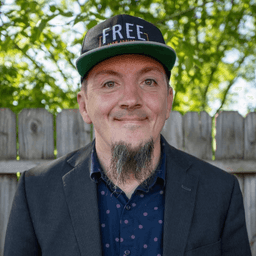
Justin Franich
Justin Franich is a Teen Challenge graduate who overcame a meth addiction and has been clean since 2005. He spent over a decade leading Christ‑centered recovery programs and now serves as Executive Director of Shenandoah Valley Adult Teen Challenge, helping families find the right path forward and supporting people as they rebuild life after addiction.
Read my story →