You Can Win at Life and Still Feel Lost: Aaron Gordon
with Aaron Gordon
ABOUT THIS EPISODE
Aaron Gordon beat the odds - graduating from West Point, building a successful military career - but at 54 he's still wrestling with the question most people avoid: Who did God actually create me to be? A conversation about identity, purpose, and the subtle lies that derail even "successful" lives.
KEY TAKEAWAYS
- •Low expectations don't just drag you down — they can also drive you into pride, which is just as destructive to identity
- •God strips away what we build our identity on so he can rebuild it on the only foundation that holds — him
- •The "I think I'm broken" feeling usually means we skipped the instruction manual and built identity on assumptions
- •Comparison steals calling — success for a fork will always look different than success for a spoon
- •The struggle isn't punishment. It's the cocoon. Without it, you'll never develop the strength to fly
- •There are souls on the other side of your obedience — your purpose reaches people no one else can
This content is free because people give. If today's reading encouraged you, would you consider partnering with us?
Support This WorkLISTEN TO THIS EPISODE
About Aaron Gordon

As an empty-nester, father of four, and "G-Pa" of six beautiful granddaughters, Aaron writes with the passion and wisdom of a loving father. He realized he needed a way to pass along important lessons learned—to help his family and all children find their God-given identity and grow into people of purpose. This realization led him to create the Cutler's Wonderful Creations series: authentic, relatable stories based on his own experiences and featuring his family as the main characters. In a world that constantly pushes children to grow up faster, his mission is to share stories that help parents and children alike to embrace the wonders of childhood and recognize their inherent worth: original in design and designed on purpose by their loving Heavenly Father.
SHOW NOTES
Aaron Gordon grew up in Washington, D.C. when it was the murder capital of the world — told that a teenager in his neighborhood had lower odds of surviving than a soldier overseas. But low expectations weren't the only threat to his identity. Pride was just as dangerous.
When Being the Best Became the Problem
Aaron excelled at everything — academics, athletics, leadership. But when God stripped all of that away during his first semester at West Point — a 1.8 GPA and a failed swim test — he finally heard the voice he'd been drowning out. "You thought all of your accomplishments were because of your skills. Now you don't have them anymore without me. Now I can use you."
Identity, Comparison, and the Fork That Thought It Was Broken
Aaron's children's book "Cutler's Wonderful Creations" started as a story he told his kids to explain identity and purpose. In it, a fork watches a spoon eating cereal and thinks something is wrong with him — until he discovers he was designed for steak. The metaphor cuts deep for adults too: we spend years trying to be something we were never designed to be, then wonder why we feel broken.
Why the Struggle Is the Point
Aaron shares a powerful illustration about a cocoon — a boy who tries to help a butterfly escape the struggle actually kills it, because the struggle is what forces blood into the wings. Without it, the butterfly can never fly. The same is true for us: God allows the process not because he's absent, but because he sees what we're becoming.
Separate Mission, Equal Worth
The conversation lands on a truth that hits hard for anyone in recovery or rebuilding: your path doesn't have to look like anyone else's to matter. A spoon is not a failed fork. Your calling, your reach, your impact — it's yours. And there are souls on the other side of your obedience.
Read Transcript
Growing Up in DC's Shadow
Justin: At one point growing up, my guest today was told that a teenager in his neighborhood had lower odds of surviving than a soldier in a war zone.
Aaron: And I remember the newscaster saying that a soldier in that war had a better chance of surviving that war than a teenage black male did of seeing age 18 in Washington, D.C. Whether I wanted to or not, I was surrounded by that mindset. Can any good thing come out of Washington, D.C.? Come out of my neighborhood?
Justin: When I think about the city and folks that I know that come from the city, the streets offer one sort of identity. So before success — before your journey through West Point and your career and author and all of this stuff that God's used you to do — what did you believe about yourself as a young child in regards to identity?
Early Identity and Family Influence
Aaron: It's interesting you start off with that question. I was very fortunate to be raised in a two-parent household — that wasn't the norm growing up in inner city D.C. My parents drove me to excel. I often say this — I'd love to say it was a rags to riches story, but my parents really did instill that. It was kind of a God-given thing. I was just driven to want to do well.
We have these transformative events that shape how we're going to be. And that was a part of my early identity — wanting to prove so badly that something good could come out of D.C.
Justin: So I hear your story, and you're talking about almost like these protection mechanisms that were in place for you, shaping you. What was protecting you? Before you had language for discipline, faith, and purpose — what really put that protection around you?
Aaron: I think, little did I realize at that time, God had called me at a young age. My identity was formed in not the best of circumstances.
Belonging, Talent, and Isolation
Aaron: So my friends thought — I had really good grades, so I was "too white" for my black friends. And then for my white friends, they were like, "You're still..." And then to throw that in, I was one of the best athletes at the school. So I had nobody to identify with.
I remember we had these pickup football games — on the concrete, by the way. I was the last one chosen. Mind you, I was one of the best athletes there. First two times I touched the ball, I scored a touchdown. After the second touchdown, they got everybody together. I was like, what's going on? They said, "We want to start over. We don't want his touchdowns because he got them."
Justin: You're talking about expectations of other people. Somebody told me one time that it's important for us to have a vision for our lives because if we don't, everybody else does. You've got the low expectations of the community around you, you're excelling above that — what shaped you in regards to not just saying, "Well, I'll just be who they say I am"? Because I think that's the challenge. It almost becomes prophetic in a sense.
Aaron: Yeah, but there's a flip side to that that was unhealthy for me.
Pride, Drive, and Its Cost
Aaron: It became pride. Then it became, "I must be the best at all cost." I will outwork you, you will not be smarter than me. I would do anything and everything to win. It was unhealthy for me. So by the time I accepted the invitation to go to West Point, I had already thought I was the best thing in the world. I really did — until God had to tremendously humble me at West Point.
Justin: You write in the book, "May your identities never be shaped by shifting societal norms or low expectations." Why are low expectations so dangerous for people growing up?
Aaron: I think until you know who your creator is, until you have a relationship with Christ, we're really just wandering, trying to figure out who we are. Am I here just to achieve accolades? Am I here just to win as much as I can?
West Point Humbling and Crisis
Aaron: I'll share this because I think it's related. I remember — so here I was telling you how good I was. To get into West Point, you have to be really good. Then my first semester at West Point — remember I told you I had excellent grades, one of the best athletes — first semester I got a 1.8 GPA. And then I almost flunked out because I couldn't swim.
I had 3% body fat at the time, and we had what we called a "rock class" in swimming, which isn't good. I was below the rocks. So here I am facing for the first time in my life where I wasn't good at the things I had built my identity on. Things I thought no one could take away from me.
My parents never went to college. I was the first one in the history of my family to ever go. So there were no higher expectations because people didn't know what that looked like.
Stripped to Rebuild
Aaron: I'll never forget. One day I get this letter telling me I'm on academic probation. After the swim class, I'm coming out — and I'm mad. I punched every locker I could in the locker room. I was there on a remedial class by myself. I eventually sunk in a corner and just yelled as loud as I could, "Why have you left me?"
And as clear as I'm talking to you — one of the clearest times I heard God say, "You thought all of your accomplishments and all of the things that I allowed you to do were because of your skills." He said, "And now you don't have them anymore without me." He said, "And now I can use you."
It let me know there's always a stripping away process. Like when you strip a floor before you refinish it, or you sand down a chair. I believe spiritually that's what God had to do to me. That began the process of me figuring out who I am, because I hit my rock bottom. I no longer knew what I was good at. I no longer knew what I was here for, because what I forged my identity on had been stripped down.
Justin: A lot of men resist structure. We think that freedom is really just a byproduct of being able to do what we want, when we want — no discipline, no structure. And you end up at West Point, a place that is the exact opposite of freedom. How did God use that structure and discipline to rebuild you in a way that freedom really couldn't?
Structure, Discipline, and Formation
Aaron: The good thing about growing up in my household is that we had structure. My dad was ex-special forces. So he didn't play around. The one thing I had was structure. I had no problem with the structure at West Point or the discipline whatsoever. It was actually good. I didn't see it until years later how God used that structure to reconstruct me.
Justin: You have a quote in the book that says, "Time and experience are also important, so you can see how you work best according to my master design." You're in this season — God's breaking you down, you're being formed. Why do you think people struggle with the waiting so much?
Waiting, Process, and Maturity
Aaron: I think it goes back to the fact that we don't know God. Many of us have equated God, whether we admit it or not, to a genie. We rub him, he comes out the bottle, and we say, "This is what I need, this is what I want," and we expect power to happen like that. When God is a God of process.
The Bible speaks of Jesus growing in maturity, growing in stature, growing in favor — which speaks of a process. Nobody escapes the process. It's just his way. And it's hard because we as men and women in today's society have such an expectation that everything is available now. Just give it to me, grant me my three wishes. Why can't I be better right now? Why can't you just take it away?
But it's in the process that you're made. And it's in the process that humbles you enough to relate to other people.
Justin: One of my favorite verses is Ephesians 1:11-12. The Message translation says that it's in Christ we find out who we are and what we're living for. Long before we heard of Christ and got our hopes up, he had his eyes on us, he had designs for glorious living. This process of life is really discovering the original design versus the expectation of society or the stuff that life throws on us. Stripping everything off and getting back to that original design that God had all along.
Why a Children's Book on Identity
Justin: So Aaron, you've done a lot since West Point. You've got a great career, you do leadership consulting, you're a phenomenal speaker. So let me just ask — why a children's book?
Aaron: I had no intentions of ever writing a book. Period. None. A fellow classmate from West Point told me about this conference he was going to. He said, "People just don't know what they're here for." He said, "You always have a story about everything." So he asked what I thought, and I told him the story that I eventually wrote the book on.
He stood there in silence. He said, "Aaron, that's the simplest explanation I've ever heard for identity in my life. Where'd you get that from?" I said, "Man, that's something God gave me years ago to tell my kids — to help them understand how their uniqueness and the process God uses to discover who you are in him." His next words were, "You need to write that as a children's book."
I was like, no way. I'm never writing a children's book. Last thing in the world. Fully resolved — I'm not doing it.
Resistance, Provision, and Obedience
Aaron: Three years ago, December 30th, God says, "Go look up some book publishers." I'm like, for what? He's like, "You're going to write a book." So I call one and ask how much it would cost. He said $20,000. I said, "Oh no, this is a hobby. That's confirmation I'm not supposed to."
Then he says, "Wait, tell me about your book." After ten minutes he said, "It's the end of the year, we're trying to get as much sales as we can, and I believe in what you're trying to do. What if I give you a complete package — everything, marketing — for $3,000?"
I used the famous married man quote: "I need to check with my wife." And God said, "Why are you worried about the money? That's my money to begin with." I said, "Oh."
So I began the process. Through a slew of spiritual warfare and resistance, the book was finally published about two or three weeks ago. It was an unveiling to me. I never knew that was in me. I never knew. But God did. And he allowed the process to inform me.
"I Think I'm Broken" — Why We Jump to That Conclusion
Justin: In the book, the fork says, "I think I'm broken." Why do so many people — kids and adults alike — jump to that conclusion so quickly when things aren't going how they think they should?
Aaron: I think it's because, first, we never go to the instruction manual. And when you miss the instruction manual, you make assumptions. And when you make assumptions, you figure your assumptions are right. So all my life I've been building this identity that I think is who I am — whether it was my accomplishments or whatever. And because of that, it's so hard to believe that when something doesn't work the way we thought in this identity we've created, our only recourse is to think we're broken.
Because I couldn't possibly be wrong. Imagine how devastating that is. That's why the book, even though I wrote it as a children's book, is just as much for adults. Imagine how devastating it was for me at West Point to learn that my identity wasn't in how good I was. What do you mean? I've been proving my whole life in the 17, 18 years on earth how good I was. And you mean that's not it?
The Old Attack on Identity
Justin: I am what I do, and I am what I do relative to you. We end up in that spot — I'm not who God created me to be, I am what I do. This journey of identity is something I'm learning even now. I just turned 40. Every career change hits the questions of identity. What did I do wrong in the last season? Why didn't I rise to the top? And trying to figure that out — what's broken inside of me?
Aaron: Somehow Satan realized that in man from the very beginning. When he began to speak to Eve, he didn't come as a monster. He questioned: "But did he really say that? The reason he doesn't want you to is because you could be like him." What did he attack? Her identity — who she thought she was. It wasn't enough.
Then you fast forward with Jesus. What did he do? "Turn these stones to bread." He wanted Jesus to feel like he had to prove himself instead of knowing already that he was the Son of God. And the attack hasn't changed. With Eve it was a fruit, with Jesus it was in the desert, and with us it's just the different things of our life — disguised. Satan tries to make us question: "Are you really enough?" And because we've built our identity on puzzle pieces, one piece being out of whack can throw everything off.
Affirmation Without Idolatry
Aaron: That's why it's so important to really spend time with your creator, with God, and say, "God, who am I? What are the things that are inherent in me?" The song at the back of the book says it — that the way you were wired fascinates me, that God knew me before I was even born. Which means he had an intention. He designed me specifically for something that only I was uniquely qualified for.
Justin: Why is comparison such a powerful thief when it comes to our God-given purpose?
Aaron: I think because inherently we have this desire to gauge progress. We want to keep score. And I think sometimes it's in the score that we subconsciously determine our value. Instead of embracing your original design, we begin to say, "I need to tweak it to be like this person." And when you do that, we become less and less of what God intended for us to be.
Alignment Over Achievement
Aaron: I've seen that in myself so many times because I wanted to be like somebody else. And God said, "What if no one else is ever like you?"
It takes God continually rebuilding and stripping me down and rebuilding me again. But each one is a little higher foundation. I think the reason we compare is because we're not content. We don't know what success looks like in God. And without the faith to trust that God ultimately has the best version of success for us, we go to the next best thing — which is what we can see.
Justin: How do we get a healthy view of affirmation? We all need it, we all desire it. How do we receive applause without slipping into the comparison trap?
Aaron: I had to reconcile this for myself. Yes, I love to hear affirmation. But where it begins to slide is — we were never meant to be hosts of glory. Never were. The only person that can handle that glory is God. So as long as I remember that — "Hey, I appreciate it, thank you so much, but all the glory belongs to God" — it goes back to what God told me in that locker room: "You thought it was you the whole time. But now I can use you because you see it wasn't. It was me."
As long as I do that, I don't have to carry the burden and the weight of that glory, because only he can. That's who he is, that's his character — his holiness. We were never meant to carry that.
Plugging Into the Source
Justin: In your book, the fork and knife went through this process where they realized their actual purpose. And the book says they felt a sense of security and purpose they never had before. So why does peace come after alignment and not achievement?
Aaron: Because achievement is so fleeting. I'll never forget the first time I was involved in an organized sport and we won a championship. Afterwards I was like, "That's it? This is the best it gets?" That's achievement. But when you achieve purpose, it's deep and fulfilling. It's like, "Now I know why. Now the process makes sense."
I try to remember that we all, like fork in the story, just need God to lead us to our steak dinner. But we're so content with eating cereal. Not realizing it doesn't work. And then you have this abomination called a spork — which doesn't do either well.
I think many of us go through a spork season where we try to become many things instead of focusing on God and asking, "What am I?"
Trusting the Creator's Timing
Aaron: I was vacuuming one day — I have a confession as a married man of almost 29 years: I love to vacuum. Always have. My wife's never vacuumed. It's peaceful to me.
One day I used the vacuum to prop open a door. And God told me, "Aaron, that's a pretty expensive doorstop you got there." I said, "Well, I'm just putting it there for a minute." He said, "Yeah, but what if you left it there? Would that vacuum cleaner ever know its purpose?" I said, "Well, no." He said, "When does the vacuum cleaner really become a vacuum cleaner?" I said, "When I plug it in and use it."
He said, "Aaron, that's a hundred percent right. I'm the vine, you're the branch. Apart from me, you can do nothing. If you don't plug into me, you're just a doorstop. And you'll be happy being a doorstop, never knowing you were meant to be a vacuum."
Electricity brings to life the purpose that was always intended. I don't expect the oscillating fan to cook my bacon. But once it's plugged into the source, it naturally flows into what it was meant to do. When fork went into that steak for the first time — "Oh, wait a minute. This feels right."
The Cocoon and the Struggle
Aaron: There's this story about a little kid who found a cocoon with his grandfather. He sees the caterpillar transforming into a butterfly and it's struggling. He says, "Grandpa, it can't get out!" The grandfather didn't say anything, just watched.
After a while, the boy says, "I need to help it out." So he opens the cocoon, and the butterfly in its weakened state just flops out. It wasn't long before it died. The boy asks, "Why did it die? I was just trying to help it."
The grandfather says, "Son, it was in the struggle that the blood from its body would go out to its wings to strengthen it so that it could fly — so that it could become everything it was meant to be."
The lesson is that God allows the struggle so that it transforms us. Without that struggle, we will eventually be premature. And anything born premature cannot exist in the state that it's supposed to. We're all in these spiritual cocoons. God allows the struggle not because he's a sadist, not because he's unaware, not because he's unloving — but because allowing me to go through that struggle is actually the most loving thing of all. He sees and knows what I'm going to become and the impact I'll have if I just endure.
Separate Mission, Equal Worth
Justin: Your book ends with this idea — separate mission but equal. Different but no less valuable. How does this truth change the way a man would rebuild his life, his faith, or his family?
Aaron: I think it allows you to be content that you've served your purpose. Part of fork's dilemma is that it saw success through the eyes of spoon when it was never a spoon. And success for a fork is always going to be different than success for a spoon.
Aligning yourself with the purposes of God for your life — he always gives us context clues. There are certain things that just burn you up. You see a problem, you see a solution where other people just see a problem. You're predispositioned that way.
I never knew I'd fall into leadership, but when I look back, I always wanted to champion the underdog. Even when I didn't want to, people would say, "We want you to be in charge." And I just did it because I thought somebody needed to do it. God was having these spiritual checkpoints — "Okay good, he's reached that part."
For someone trying to avoid the comparison trap — the first thing is coming to peace with who God made you. Seek his face. The Bible says, "In all your ways acknowledge him, and he'll direct your paths." Then step back and watch your life. See where you start having successes. See what you have an affinity for.
I don't aspire to be T.D. Jakes. I just want to be the best Aaron. Because here's the beauty of it — I will reach people that he never will. The Bible says heaven rejoices when one sinner turns. He has people attached to his name. I have people attached to mine. When you live your purpose in Christ and do it well, there are souls on the other side of your yes. There are souls on the other side of your obedience.
Outro and Community Invite
Justin: Aaron, where can people find you? How can they get a copy of the book?
Aaron: I'm Aaron P. Gordon — just because there are other Aaron Gordons, it's a pretty generic name. You can find me on Facebook. If you go to Amazon and type in Aaron P. Gordon, you'll see my book come up. It's called "Cutler's Wonderful Creations" — subtitled "A Children's Book About Finding Your God-Given Identity." Even though I say children's book, it's very much for adults also. Imagine how powerful it can be if a parent and kid work on their identity journey together.
Justin: I'll be dropping the links in the description on YouTube. Check Aaron out, check the book out. If something from this episode resonated with you, drop it in the comments. Please like the video, subscribe so we can continue to put this message of hope out for men and women that are just trying to rebuild their life after addiction. Thank you so much for watching, and we'll see you in the next one.
Aaron: Take care.
Get stories like this one every week.
Real people. Real transformation. Delivered to your inbox.
HOST
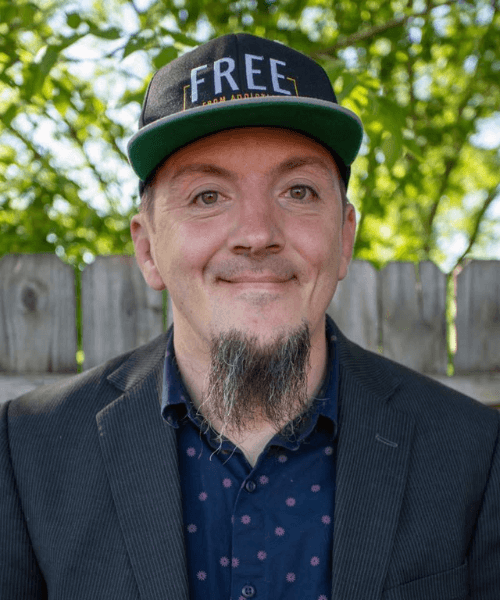
Justin Franich
Executive Director of Shenandoah Valley Teen Challenge with 20+ years helping families navigate the journey from addiction to restoration. Learn more.
Support Justin's workRELATED ARTICLES
Aaron Gordon: Finding Identity, Overcoming Low Expectations
Aaron Gordon grew up in Washington, DC when it was known as the murder capital of the world, and he wasn't "supposed" to make it. Instead, he defied every expectation, graduated from West Point, and built a military career. At 54, he's still discovering the layers of identity and purpose God placed in him.
The Hidden Meaning of Grace
We use the word "grace" so often it loses weight. But understanding what grace actually contains-free, true, and authentic-changes how we love someone through addiction without enabling destruction.
Should I Date During Recovery?
No one wants to be alone. But a good thing at the wrong time can become destructive. Dating in recovery comes down to two questions: who and when. Get them both right, and relationships become gift instead of risk.