We're Not Closing. We're Relaying the Foundation.
ABOUT THIS EPISODE
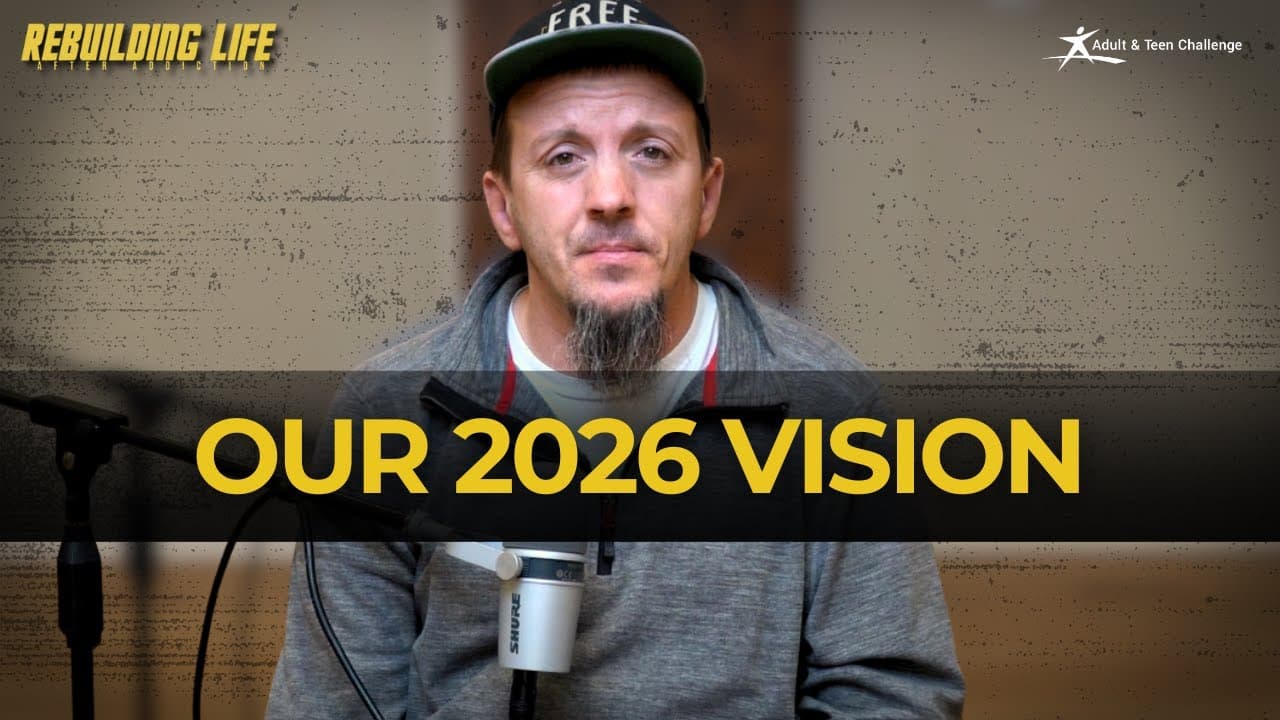
We filmed this in the empty chapel at Teen Challenge. No students, no program running, just me and Rob in a room that used to be full. It hit different. But this isn't a goodbye. We're not closing. We're relaying the foundation and building something new.
KEY TAKEAWAYS
- •The ministry is not closing. The residential program chapter has ended, but Shenandoah Valley Teen Challenge is moving forward with a new model.
- •Memorial stones in Scripture were meant to remind us of God's faithfulness, not to keep us camped out in the past.
- •Recovery ministries can be as territorial as churches. Not every person needs the same program, and being willing to refer is more important than protecting your model.
- •Rob's foundation analogy from Tony Evans: the bones of the ministry are still healthy, but things have shifted. It's time to relay the foundation, not keep painting over cracks.
- •Rather than building a program and searching for a need to fill, the approach now is listening to the community first and structuring around what people actually need.
- •Justin and Rob are committed to building in public, sharing what works and what doesn't as they figure out the next chapter.
LISTEN TO THIS EPISODE
SHOW NOTES
Justin and Rob sit down in the empty chapel at Shenandoah Valley Teen Challenge for an honest conversation about transition, loss, and what comes next for the ministry.
After the passing of Justin's father, Rev. John Franich Jr., and the closing of the residential program, people have been asking: is the ministry shutting down? The answer is no. But it is changing.
Justin talks about the tension between honoring what God did in a previous season and being willing to move forward into something new. He references the memorial stones in Joshua 4 and the danger of camping out at a model instead of staying faithful to the mission.
Rob shares an illustration from Tony Evans about cracks in a wall that keep coming back because the real issue is the foundation. The structure of the ministry is still healthy, but things have shifted, and it's time to relay the foundation rather than keep patching the walls.
Together they talk about what the future looks like: listening to the community, connecting families to the right resources, being facilitators instead of gatekeepers, and building in public so people can follow the process in real time
Read Transcript
Welcome from the Empty Chapel
Welcome to another episode of Rebuilding Life after Addiction. We're here in the chapel. This ain't the first video you've seen from me the last couple of weeks in an empty building, but here we are again. An empty space. How do you feel about it?
It's a little weird. I remember the last time that I was in this building, just recently actually. But emptying it out is actually a little bit refreshing, if you ask me.
It's refreshing in many ways, right? Because it's the launching of something new. And I think sometimes going into something new, stepping into another season can be scary.
Why People Stay Stuck in the Past
I think that's why a lot of people remain stagnant and stuck in the past, because they're scared to move forward to the future. What does it hold? What is it like? What's in store? And I think for us, we look beyond the present and understand that God has been faithful before. He's been faithful to you and your dad and to your mom and to this ministry for so many years. And so if he did it then, why can't he do it again?
Memorial Stones and Moving Forward
I've been thinking about the memorial stones that Joshua built. Joshua chapter four. He was told to go build those memorial stones as a reminder of what God had delivered them out of. But it wasn't meant to be something that stopped their progress.
I've been wrestling with the beautiful tension that exists in Scripture between honoring the past while also moving forward. And I think sometimes we can get caught in the middle. We idolize a method, a model, a process, or something God did in a previous season so much that we camp out at the model rather than remembering the basic mission God called us to, which is just to be His witnesses. And that can show up so many different ways.
The Kingdom Model Is Different
I think for a lot of individuals, especially in the recovery space, we want everything to be put together first before we actually go. And the Kingdom model is completely different. For our viewers and listeners, when you're in a position where it seems like you need to have all the ducks in a row, just like how we always say, "Well, if I get my life together, then I'll go to church," or "Let me clean myself up first." God's like, no, just come as you are. And I think it's the same way in stepping into something new. We just have to take that leap of faith.
Faith doesn't mean going out blindly. There's a lot of wisdom that we've taken into consideration from the counsel of others, as the Scriptures tell us. There's wisdom in a multitude of counsel. And so we sought out counsel. But what we see is something bigger than ourselves. What we see is something nationwide. What we see is something that's going to be revolutionary within communities because we want to equip families, we want to equip pastors. We want to equip those that have a heart for the addict.
Who Would Actually Love an Addict?
You were just talking to me about this the other day. Who would actually love an addict? Who is that person? When you shared that with me through text the other night, I was like, wow, that's a really profound thought. Because not many people are pursuing those that are struggling with addiction.
It's not even that there's a wrestling match there. Even if I'm thinking about the person that I love, it is a reality check when I realize, oh, I do love an addict. Because we don't want to see the people we love like that. But we know the pain of it. We've experienced it.
That was just part of what I was wrestling with. I've been looking back. Everything that was going on the last month, month and a half with losing dad and the transition at the ministry and all of it compounding. These types of seasons in life naturally cause you to look back a little bit more. You start to consider where you've been, what you've been through, what God's brought you through, all the good and bad and all the in-between times.
What Is God Doing in You Right Now?
I wanted to ask, where do you believe God is going to deal with you in the coming future? What is he doing in you? Because often God is doing something in the individual when he calls them to something. You've been so accustomed to speaking to a large audience, having a center full of students. It's not going to look the same as it did before. So what do you believe God is working in you in this season?
It's not easy. I've been wrestling with the seasons of maximum visible fruitfulness, where the trees grow and it's harvest season. There's fruit all over the tree. And then the winter season when there's a pruning that has to take place.
As leaders specifically, I've heard so many testimonies over the last month of people that have been through this ministry. God has transformed their lives. So there is fruit, visible fruit that remains. But it's a bit different than standing on a stage with 20 students and the choir behind you. Graduations every single month. And that is a process we're learning to figure out. God, what does this work look like going forward?
What was the original call? Was it just to, as dad said, help a few people? And if that's the call, then it's okay if it looks different.
Listening to the Community First
We met today with a judge and a pastor from the local area. Rather than doing what a lot of people do, coming into a community with their mindset, "I'm going to do a 12-step model, we're going to do long-term residential," recovery ministries can be as territorial as churches. It's only our model or nobody else's.
Rather than creating a program in search of a need in the community, we're helping the community now and trying to determine what the need is so that we can structure a program to actually meet the needs of the people around us.
Redefining Success
That's not sexy. It doesn't sell because it's redefining what success really is. Often we attribute our success by the amount that we're impacting. Though we're going to be still impacting individuals, this is us taking the back seat and saying, "I'm going to play the background and let the community be the ones that actually help those that are struggling."
I think that's where our heart is, because if you think about it, even the church is not a building, it's a people. We need community. We can't do this on our own. Too often you have families that have loved ones that are struggling and they're trying to do it on their own. It's like, no, let me link arms with you. It takes a village.
Being a Connector
You and I talked about this in a former podcast when we met with Kim for Care. The work that she does is very background. She's a connector. She's getting resources from churches and getting them into the hands of foster families. She's not the church. She's not the one that gets the credit. She just facilitates. She just makes that connection.
There is a need in the community for people to just be facilitators, just to be connectors. I've got 15 years of residential program systems and docs on my computer and institutional knowledge from doing this for so many years. I know what works. I know what doesn't. I know what is doomed to fail.
I had a conversation with somebody a couple days ago and I'm going to go meet with them and take my documents and help her figure out in a few months what we had to take a decade to figure out.
Is Teen Challenge for Everybody?
Same thing with being in the middle with families. Does your loved one need to go spend a year at Teen Challenge? We had that conversation today with a family. Let's be honest, a lot of these parents are like, "I just want my kid to get help, get him out." They don't care how they get the help. They just want help.
What we've done is we've boxed things into a corner and said, this is the only way that this person is going to get the help that they need. But everyone's different. The way I parent my children, I have a nine, a six, and a four year old. One boy and two girls. My boy's the oldest. The way I discipline my oldest is completely different than the way I communicate with my girls. I can't put a one-size-fits-all on the way we parent.
What I have learned is to understand the individual, ask them the right questions, as a physician would, so that I can properly diagnose the problem and get them the treatment that they need. So often we just say, "Oh, let me write you a script. Here you go." But that's not going to help. There are deeper rooted issues that the eye cannot see. It takes a listening ear.
Dad's Wisdom: 20 Students, 20 Programs
We've had testimonies. Both of us have gone through year-long discipleship programs. But over the years we've also seen lives that have walked away from the facility. We just had a guy, Adam, who had a business and left the program to tend to it. I believe if he had proper counsel and mentorship in place, he wouldn't have felt the need to leave.
My dad used to make a statement all the time that would drive me crazy. He would say, "We got 20 students, we got 20 different programs." And I'm like, "How do you scale that?" That's all I used to think about. But the principle behind it really is this: Is Teen Challenge for anybody? Sure. But it's not necessarily for everybody. Is Celebrate Recovery for anybody? Yeah, anybody can show up at a meeting. But is it the best place for everybody? Probably not.
You've got to put enough of your ego aside to be willing to just be the referrer. My role in helping you may just be connecting you to other help. And that's the role we facilitate.
Compassion Is Lacking in Recovery Spaces
Something I think about is how individuals in the recovery space often don't receive the same access and compassion that's needed for them to get the help for their spiritual growth and maturity.
Jesus looked at the people and said, "I look at these as sheep without a shepherd," with eyes of compassion. And I think there's a lot of compassion lacking in the recovery spaces because we're just looking at these individuals like, "Bro, this is your fourth, fifth, sixth time. Come on, get right already."
But you're not meeting them where they're at. We're trying to deal with a surface-level issue when we need to address the root so that we can understand the fruit. Changing my perspective on how the Father sees me will help me develop a better eye to see others in the same light in which he saw me.
How often do we pray and just talk to God and walk away from the prayer closet without listening to the Father? He's a great listener. And he's like, "I understand, child. I understand every bit of it. Can I share my input now?" He's just waiting to share with us. And often the student is waiting to share with their counselor, with their mentor, what they're dealing with. But what we do is try to inundate them with all of our theology and all of our programs and systems. And it's like, man, that might have worked for Johnny, but that's not going to work for you.
Cultural Shifts in Recovery
I still believe in long-term residential programs. I know they have a place. But I've been acknowledging and trying to recognize some of the shifts in culture.
I asked somebody today that had no knowledge of Teen Challenge. I've sat on the bench in front of people over the years and just asked, "Are you seeing a shift? Am I crazy? Am I just looking for a reason that things didn't work to make myself feel better, or am I really seeing a trend?"
And it has shown up. There are a lot more sober living homes than there are discipleship programs nowadays. Sober living homes are a lot more loose. Not saying there's no discipleship, but nowhere near as structured as a place like Teen Challenge. There are a lot more community-based recovery groups starting up. Everybody's got a recovery group.
I'm old enough to remember when Bush was banning cold pills from stores and nobody wanted an addiction group in their church. Things have changed, and that's a positive. But then methadone clinics on every corner, access to Medicaid, people are going to go to the easiest route. That's just human nature. Why do I want to go somewhere for a long period of time and fight the flesh?
And then if long-term does work, then how do we break this down into bite-sized chunks so that it's more palatable for the people to receive it? Because they may not be ready for the whole meal yet. So maybe I just need to give them a snack.
Trusting the Process
I'm really looking forward to what the Lord's going to do. And I think the thing is that we're just trusting the process. It all starts with an audience like you guys, partnering with us, not just financially, but prayerfully.
We are wanting to see something big happen. And it doesn't just start with us. It starts with a community of people that come alongside each other and really believe and desire to see change within their communities. You might not be struggling with addiction and you're listening to this, but you have a loved one in your family and you just need resources. Maybe you need some guidance. Maybe you need some help.
Look at Justin's page. He has some resources on there. This is what we're here for. Rebuilding Life after Addiction isn't just for the addict, but it's for those that have loved ones in addiction, and also the ones that are on the opposite side.
There are a myriad of places that you can go. There are a myriad of resources out there. So many residential programs, so many support groups, all sorts of treatment options. Best way to put it, we're just here to guide you through so you don't have to walk through it alone.
That's where the heart is. It's really just being here to walk with people and helping people navigate through all those resources that are out there. What are the next steps?
Building in Public
The cool thing about this, Rob, is that every part of me would love to be able to get on this camera and lay it all out. I have talked about content, community, and coaching. Those are all true. That is part of the idea of where we're going to go. But specifics on the vision and figuring it out, it's hard for me to do that because typically it's, "We're going to go get a 20-acre property, we're going to get 70 beds, I know exactly where we're going."
And this time it's a little more like, God, I'm okay with this taking time to figure out. And for those that are watching along, we're going to build in public. That's what this YouTube channel is all about. As we build, as we figure things out, if it works, we'll tell you. If it doesn't, we're going to tell you too.
It's the beauty in building in public and letting people learn from the process. We're excited to trust God throughout this process. And the hardest part is learning how to trust God. I think it looks like surrendering our will, our plans, our desires. We have a lot of those. But at the same time, if God is not in it, then we shouldn't be going forward.
The Ministry Is Not Shutting Down
This has been a different season. But I'm not hopeless. I had so many people reaching out and I had to put that video out last week because so many people were like, "Are you closing?" No, the ministry's not shutting down. There's 20 years of history here and we have a future and the ministry is going to keep going forward. But this version of it, this season, it's over.
I don't know that residential is gone forever, but looking at this place and remembering all that God did, but not camping out at the memorial, it is time to move forward.
The Cracked Foundation
It makes me think about a home that has been built years ago. Tony Evans was talking about this in his book. He was saying how he was looking at his bedroom, him and his wife, and there were cracks in his bedroom wall. So he hired a painter to remove the old plaster, put new plaster up and paint it. A couple months went by, same thing. Another painter came and told him, "Hey Tony, hate to tell you this, but it's a foundational issue. You're trying to cure something on your wall. The reason this keeps arising is because over time, your foundation began to shift."
And so I think the structure and the bones of the ministry are still healthy, but things are shifting. And so we're just relaying foundation. We're relaying foundation and we're building. Because what his dad did, rest in peace, John Franich, what he did was remarkable. It was like an empty room like this that we're in. And he made a phone call, and he took phone calls, and he made more and more, and he focused on one soul at a time.
We're not about getting numbers. We're about focusing on one soul at a time. And so we want to bring the ministry back to the original heartbeat that John had for this ministry all along.
Closing
If you guys liked this video, give us a thumbs up, hit subscribe, follow us on Facebook, on all streaming platforms. We really do appreciate you. God bless you guys. Subscribe. Follow the channel. Appreciate y'all. And we will see you in the next one. Peace.
HOST
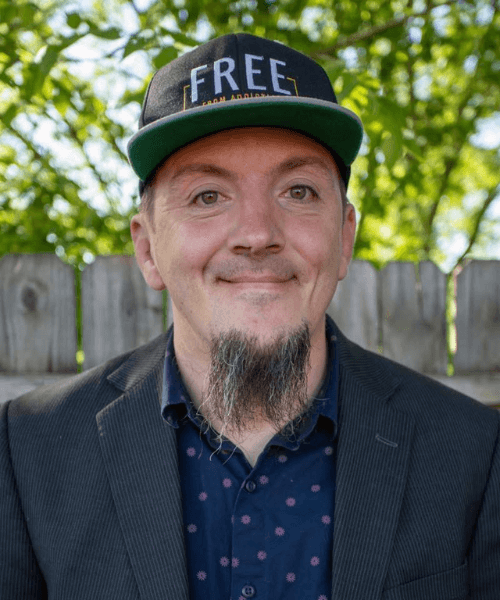
Justin Franich
Executive Director of Shenandoah Valley Teen Challenge with 20+ years helping families navigate the journey from addiction to restoration. Learn more.
Support Justin's work