
The Cost of Ministry Nobody Talks About
I thought getting off drugs was going to be the hard part.
Eighteen years old, strung out, life in shambles. When Jesus got a hold of me and pulled me out of that, I figured the worst was behind me. I was gung ho. On fire. Ready to run hard and fast for the kingdom. And honestly, the excitement was probably mixed with a heavy dose of naivete. Because nobody sat me down and told me what 20 years of saying yes to this calling was actually going to cost.
The cost of ministry nobody talks about isn't the low salary. It isn't the fundraising letters or the late nights or the seasons when you're staring at the accounting software praying for a miracle before the electric bill bounces. Those things are hard, but they're the kind of hard you expect. That's the brochure version of ministry. Most people can at least imagine it before they sign up.
What they can't imagine is the relational carnage.
Some of the greatest people I've ever known are people I served alongside in ministry. And some of the deepest wounds I've ever carried came from those same relationships. People you went to war with. People you thought would ride with you forever. And then one day they're just gone. No confrontation. No closure. Just silence. And you're left trying to figure out what happened, and the honest answer is that maybe they only needed you for what you could do for them. When that dried up, so did the relationship.
David wrote in the Psalms about wounds from a friend being more insufferable than wounds from an enemy. He wasn't being poetic. He was being accurate.
I've watched people jockey for position in ministry and get frustrated because they didn't get the role they thought they deserved. I've had people smile in my face on Sunday and undermine me by Wednesday. And my mindset for years was simple: if you think you can do this better, then why didn't God put you in the chair? But that kind of thinking only protects you so long. Eventually the accumulation of relational hits starts to settle in your bones. And you get tired in a way that sleep doesn't fix.
There was a season not long ago when I seriously thought about walking away from the identity altogether. I didn't want to be the guy known for his addiction story anymore. Twenty years of this being the thing. The testimony. The calling. The weight of stewarding a story that God gave you for a reason when you're exhausted from carrying it. Nobody tells you how heavy that stewardship gets.
And nobody prepares you for 20 years of overdose deaths. Students you poured into. Guys who graduated and you genuinely believed were going to make it. And then the phone rings and they're gone. Celebrating with one family while you're simultaneously mourning with another. That's not a metaphor. That was most weeks.
Then my dad got sick.
Right in the middle of everything else. The ministry was transitioning. The building was emptying out. Two decades of accumulated weight pressing down. And now the man who chased me halfway across the country when I stole his vehicle as a teenager, who never once gave up on me through the worst years of my addiction, who showed me what relentless patience actually looks like before I had any theology to attach to it, was in a hospital bed. And I didn't know what was going to happen.
I spent days that week sitting in my car crying. Sitting in my bed crying. Probably not crying on camera right now only because there's not much left in there.
You plan for how you'll respond to moments like that. You rehearse it. You hope you'll hold it together. And then it hits and you realize you don't get to choose how grief arrives. It just arrives. And you sit with it. Or you crumble under it. And some days the only difference between those two options is a grace you can't explain.
Here's where it gets complicated for people in ministry, and especially for people in recovery. We preach about the power of prayer. We teach people to bring their requests before the Lord. We believe it. I believe it. But somewhere around year ten or twelve, you start accumulating a list of prayers that didn't land the way you asked. People you begged God to heal who aren't here anymore. Doors you needed open that stayed welded shut. Moments when you did everything you knew to do and it still fell apart.
Hebrews talks about hope as an anchor for the soul. I've preached that verse more times than I can count. But Proverbs also says hope deferred makes the heart sick. And there are seasons when hope stops feeling like an anchor for your soul and starts feeling like an anchor on it. Dragging instead of stabilizing. Pulling you under instead of holding you steady.
The old church used to call it the dark night of the soul. I just call it Tuesday in ministry.
And in those seasons, you become incredibly susceptible to getting pulled back into the muck. The old coping mechanisms start whispering. The escape routes light up in your peripheral vision. Not because your theology is wrong but because your body is tired and your heart is sick and the enemy knows exactly when to show up with a counterfeit comfort.
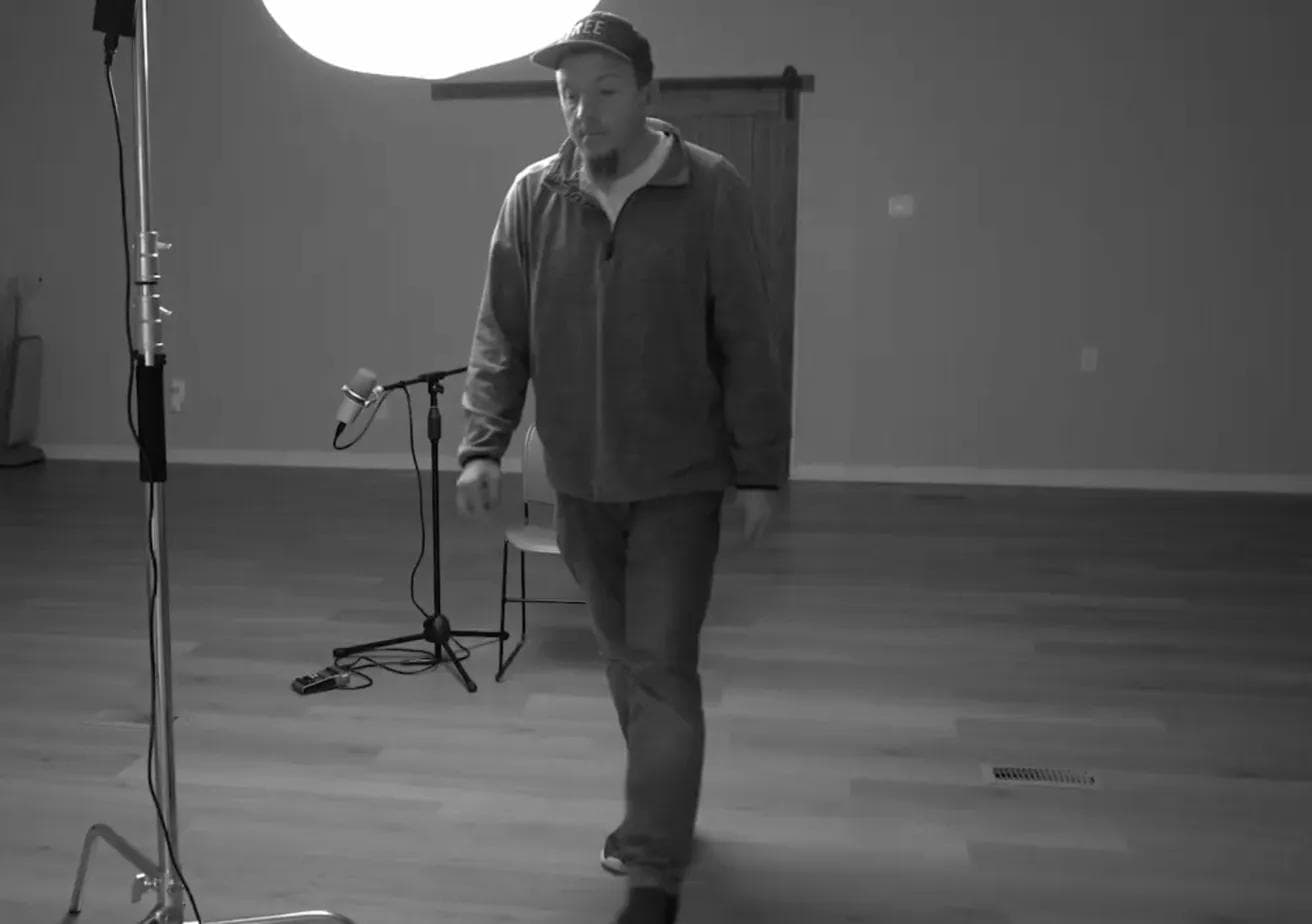
I sat down during one of those weeks and tried to record a video. Couldn't get through it. Started and stopped. Read some Scripture. Broke down. Said on camera, "This will never get published." And maybe it won't. But the thing I was wrestling with in that moment was something I think every long-term ministry leader eventually faces: I was standing on a stage every week giving people answers to questions I was still privately fighting with myself.
That's not hypocrisy. That's the job.
Because what I'm learning, 20 years in, is that my relationship with God is not built on what his hands do. It's built on who his heart is. I'm connected to his heart. I'm not in it for his hands. And when prayers don't get answered and the phone rings with bad news and the building empties out and the friends disappear, the question is not "does God still work?" The question is "do I still trust him when the evidence isn't cooperating?"
The grace of God doesn't just save you. It sustains you. Titus talks about that, and sustaining grace gets almost no airtime compared to saving grace because it's not dramatic enough for a sermon illustration. Nobody writes a worship song about the Tuesday you didn't relapse even though your entire world was collapsing. People want the mountaintop testimony. The dramatic deliverance. The before-and-after photo.
But what about the four relapses you avoided? The moments when the world would have expected you to fall apart and you just didn't? Not because you're strong, but because a grace you can't manufacture held you upright when you had no business still standing?
That's the testimony too. Not just the miracle. The sustaining. The keeping. The still-here-ness of a God who doesn't bail when the story stops being inspirational.
Right before Christmas, in the middle of all of it, I kept coming back to the same thought. Every year I've preached the Christmas story, I've noted the juxtaposition. Immense suffering in the world. Genocide in the background. Oppression everywhere. And into that mess, hope shows up. Not as a conquering army. As a baby. In a barn. To a teenage girl. In the least likely place at the least convenient time.
I'd never felt that more personally than I did sitting in my grief that week. Looking for hope and having no idea what shape it was going to take when it arrived. And realizing that maybe that's the whole point. Maybe hope was never supposed to come in the package we expected. Maybe the miracle isn't always the healing or the open door or the answered prayer. Maybe sometimes the miracle is just the sustaining grace of a God who keeps you breathing when you've run out of reasons to hold it together on your own.
I can't fake it anymore. I won't. Twenty years of this has cost me something real, and I'm done pretending it hasn't. Because the people watching need to know. The ones in early recovery. The ones five years into their calling wondering why it's harder now than it was at the beginning. The moms Googling at 2 AM trying to find help for a kid who won't help himself. They need to know that the hard seasons are not a sign you're doing it wrong. They're the cost of doing it at all.
I'm still here. Still saying yes. Still showing up to an empty building with a calling that hasn't expired even though the method has changed.
And I'd rather live with the results of my obedience, whatever that looks like, than wrestle with what happens when I walk away because the cost got too high.
Some days that's a declaration.
Most days it's just enough.
Get hope in your inbox
GET HOPE IN YOUR INBOX
Weekly encouragement, practical resources, and stories of restoration for families walking through addiction.

Written by
Justin Franich
Former meth addict, Teen Challenge graduate (2005), and recovery ministry leader with nearly two decades helping families navigate addiction through faith-based resources.
Continue Your Journey
Teen Challenge for Men: What Families Need to Know
Looking for a faith-based recovery program for men? Learn what Teen Challenge offers, how it works, and how to know if it's right for your son, husband, or loved one.
Related Articles


Share this article
Need help for your family?
If you or someone you love is struggling with addiction, you don't have to face it alone. Reach out today and take the first step toward hope and restoration.