Addiction & Recovery
What the Addiction Crisis Looks Like in Rural Appalachia and What One Community Is Doing About It
Most people picture the addiction crisis through the lens of cities. Kensington in Philadelphia. The Tenderloin in San Francisco. Tent encampments under highway overpasses. The images are jarring, visible, and impossible to ignore.
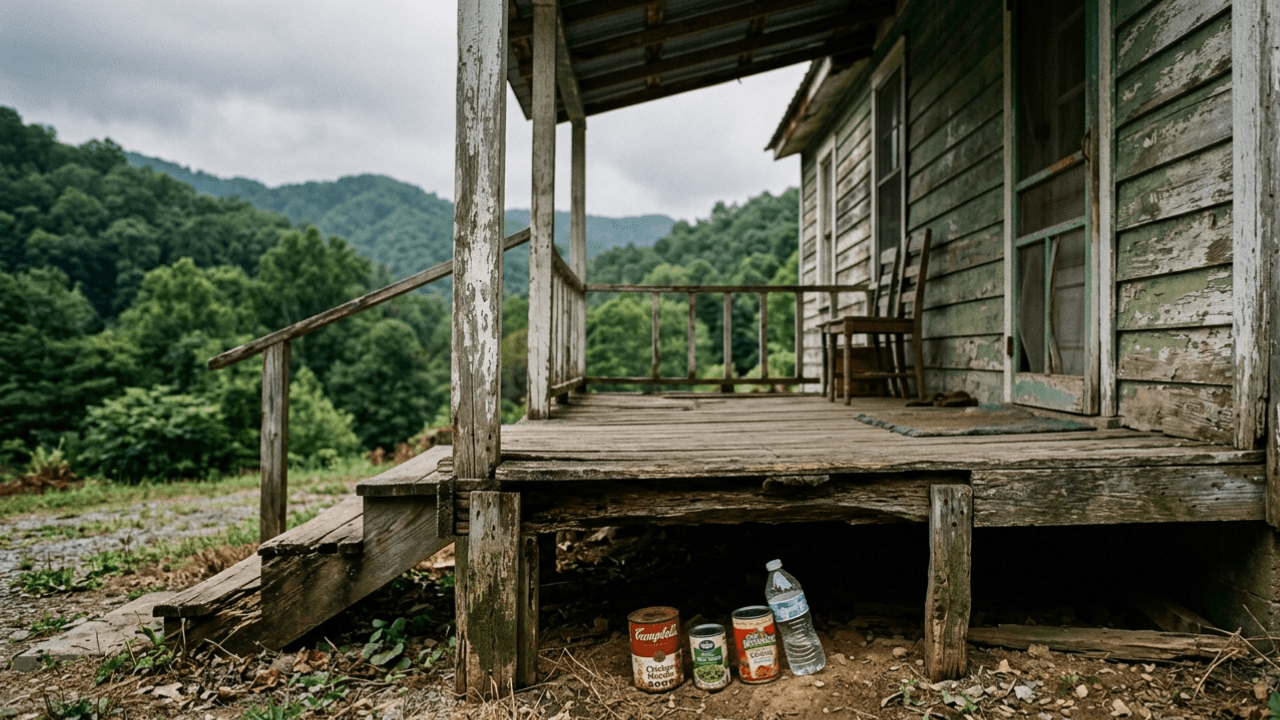
But in the mountains of southern West Virginia, the crisis is just as devastating and almost entirely invisible. There are no tent cities in McDowell County. No open-air drug markets. Just hollows and ridgelines and small towns where the poverty runs so deep that a child hiding food under a porch so her mother won't find it when she's sober barely registers as unusual.
I sat down recently with Pastor George, a bail bondsman, biker church pastor, and missionary who has been running teams into Appalachian communities for years. What he described isn't what most people imagine when they hear the word "crisis." It's quieter than that. And in many ways, it's worse.
A Region That Was Already on Its Knees
To understand the addiction epidemic in Appalachia, you have to understand what was there before the drugs arrived.
McDowell County, West Virginia was built on coal. Generations of families, many of Irish and Scottish descent, came to the mountains because that's where the work was. The coal companies built the towns, ran the stores, and employed everyone who lived there. When the mines started closing and companies packed up and left, the jobs disappeared but the people didn't. The culture in Appalachia runs deep. People don't leave. This is where they were born, where they live, and where they intend to be buried regardless of what happens to the economy around them.
What got left behind was poverty on a scale most Americans don't associate with their own country. In parts of McDowell County, the drinking water isn't safe. Residents rely on bottled water because the tap water would make some conditions overseas look clean by comparison. The only hospital in the county has lost its OB/GYN, leaving women without dedicated care. Infrastructure crumbles. Jobs don't exist. And into that vacuum, the pharmaceutical industry poured gasoline.
How the Pill Mills Lit the Fuse
Pastor George described it bluntly. When the medical industry designated pain as the "fifth vital sign," it opened the door for a wave of over-prescription that devastated rural communities. Doctors in the region began writing prescriptions that defied common sense. 120 oxycodone tablets for a month, when no patient legitimately needed that supply.
The pills became currency. People swallowed them, crushed and snorted them, dissolved and injected them. The locals started calling it "hillbilly heroin." And when the prescription supply eventually tightened, heroin and fentanyl filled the gap. The drugs just got more potent and more deadly.
One of Pastor George's team members once walked up on a man sitting in the middle of a street, legs stretched across the pavement, smoking crack cocaine while drunk on moonshine. That's not a stock photo of a crisis. That's a Tuesday.
The overdose cycle George described is one that anyone working in faith-based recovery has seen. A person gets clean through a short-term program. 30 days, maybe 60. They feel strong. They convince themselves they've beaten it. Then a hard day comes, or a death in the family, or just the weight of going back to a town where nothing has changed. They use again. But the amount they reach for is the amount they remember using before they got clean, and their body can no longer handle it. The overdoses are relentless.
This is one of the reasons longer-term recovery programs exist. A month or two of sobriety can feel like enough, but it's often just far enough removed from the addiction that going back becomes fatal. George's entire team carries nasal Narcan every time they go into the field. It's not a precaution. It's a necessity.
The Children Are Bearing the Weight
The part of this crisis that doesn't make the news is what's happening to the kids.
Pastor George's ministry puts together what they call children's food kits. The contents are specific and deliberate: canned ravioli, Vienna sausages, snack crackers, bottled water. Nothing that requires a stove, a microwave, a can opener, or an adult. The kits are designed so that a six-year-old with no sober parent, no electricity, and no help can feed herself.
That's not hypothetical. George described a young girl in one of the communities who hides her food kits under the porch so her mother won't find them when she's sober. A child rationing and concealing her own food supply because she's learned that it might disappear otherwise.
He also talked about going to collect a man who had skipped his court date. George works as a bail bondsman with Freedom Bail Bonds out of Manassas, Virginia. He walked into a home to find a child who hadn't eaten and needed care. He was there to take the father back to jail. But he stood there as a pastor looking at a kid who had been forgotten. Those moments, he said, color everything about how he does ministry. You can't unsee a hungry child and then go preach a clean sermon on Sunday morning like it didn't happen.
Sandy Blankenship and the Church Nobody Wanted
In the middle of all of this, something is being built.
Sandy Blankenship is a nurse with two degrees, one in nursing and one in business, who was making over $40 an hour in healthcare. She looked at the women in McDowell County and decided she couldn't turn her back. She left her career to purchase an abandoned church that a denomination had simply walked away from one day, leaving even the piano behind.
For the past several years, Sandy and her husband Tony, along with Pastor George and teams from multiple churches and ministries, have been converting that old church into a women's recovery center. The vision is a nine-bed facility for women going through the worst of the worst. A faith-based recovery program built in one of the most underserved counties in America.
The obstacles have been enormous. Changing a building's use from a church to a residential recovery facility triggered a cascade of code requirements: a full sprinkler system (typically a $200,000 installation), fire doors, showers, laundry facilities, furnished rooms. Every dollar has come through donations. Every hour of labor has been volunteer.
George's motorcycle ministry, Second Thief, has sent teams. When a flood devastated the area, a retired Army engineer from the ministry showed up to help rebuild washed-out bridges. Churches from across denominations have contributed. The work has been slow, physical, and relentless, but the building is taking shape.
Why Most Mission Trips Don't Work Here
One of the hardest truths George shared is about the mission trip culture that has defined how American churches engage with Appalachia for decades.
Communities like those in McDowell County have seen hundreds of groups roll through. They come for a weekend, take pictures, post them on social media, and never come back. George called them "one-trip wonders." The communities know it. They've learned not to expect anything lasting from outsiders with matching t-shirts and good intentions.
If every church in the Shenandoah Valley sent one team a year, George said, the need would still exist. Because the need isn't a project. It's systemic. It's generational. And it requires people who are willing to show up again and again, build relationships, and earn trust through consistency. Not a photo op.
This mirrors what anyone in long-term addiction recovery already knows. Quick fixes don't hold. Transformation requires sustained commitment, and the people who stay are the ones who actually make a difference.
Building Something That Lasts
When I asked George where he sees this work in five years, his answer wasn't about expansion. It was about sustainability.
Getting a program off the ground is one thing. Keeping it running for 20 years is something else entirely. His vision is to train the next generation of leaders who can carry the burden forward. People who don't just show up once but are formed through the work itself.
This is a principle we've seen in action through Teen Challenge for years. Some of the strongest leaders in recovery ministry are people who were once in the program themselves. You give people ownership before they feel ready, and they grow into it. George put it simply: when you believe in people's possibilities and give them the opportunity to step up, they start to understand who they were created to be.
The women's recovery center in McDowell County isn't trying to be everything to everyone. Nine beds. Consistent care. A community of people who refuse to leave. Sandy isn't building an empire. She's building a lifeboat in a county where the water is rising and most people have stopped looking.
If You Reach the Ones Nobody Wants
Pastor George pastors a church called Home in Dayton, Virginia. It's a congregation built specifically for bikers, former inmates, and anyone who has been turned away from traditional church environments. He's a bail bondsman who posts bail at 2 AM and then becomes the only pastor some of those people will ever know. He's a first-generation descendant of Kentucky coal miners who has spent decades going back to the mountains that shaped his family.
His operating principle comes from Matthew Barnett, the founder of the Dream Center in Los Angeles, who said that when God called him to Skid Row, he gave him a simple promise: if you reach the ones nobody wants, I'll give you the ones everybody wants.
That's the work happening in McDowell County. Not flashy. Not viral. Not optimized for clicks. Just people showing up in the hardest places with food kits and sprinkler systems and the stubborn belief that every person, including a six-year-old hiding crackers under a porch, has possibilities.
How to Get Involved
If your church or organization wants to serve in Appalachia, Pastor George leads working mission trips. These are typically three-day intensive deployments to McDowell County, West Virginia. He can also help your church develop its own ongoing program rather than a one-time visit.
The most immediate needs are diapers, baby wipes, and supplies for the children's food kits (canned ravioli, Vienna sausages, snack crackers, bottled water, anything a child can open and eat without help).
To connect with Pastor George or learn more about the work in McDowell County, contact us or call 540-213-0571.
Hear the Full Conversation
This article is based on a conversation from the Rebuilding Life After Addiction podcast. To hear Pastor George tell these stories in his own words, including the blueberry story, the Christmas dinner for 70 people, and what it's like to post bail at 2 AM as a pastor, listen to the full episode here.
Justin Franich
Justin Franich is a Teen Challenge graduate who overcame a meth addiction and has been clean since 2005. He spent over a decade leading Christ‑centered recovery programs and now serves as Executive Director of Shenandoah Valley Adult Teen Challenge, helping families find the right path forward and supporting people as they rebuild life after addiction.
Read my story →If this helped, there's more where it came from.
I send weekly encouragement. Scripture, reflection, and honest conversations about faith and recovery.
You can unsubscribe anytime.
Related Articles

He Saw a Map With No Pins and Decided That Wasn't Acceptable
My dad had no diploma, no plan, and no experience. He saw a map with no pins in Virginia and decided to start a recovery ministry. Here's what he built.
Cookies With Christ: How God Met Me in Prison
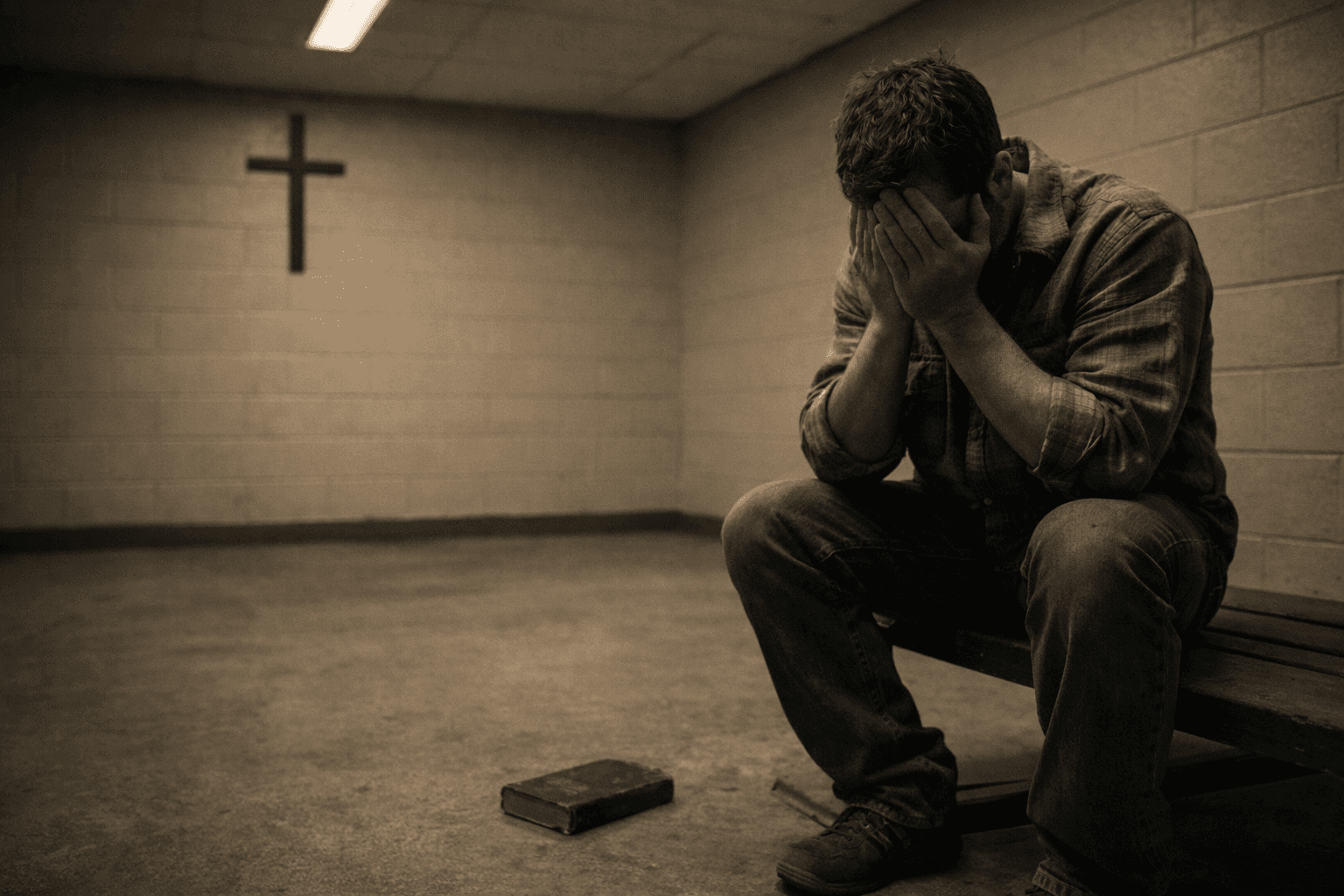
I went for the free food. I stayed because for the first time in my life, I felt the weight lift off my chest and I could finally breathe.
A Conversation with Eddie Jame Minsistries
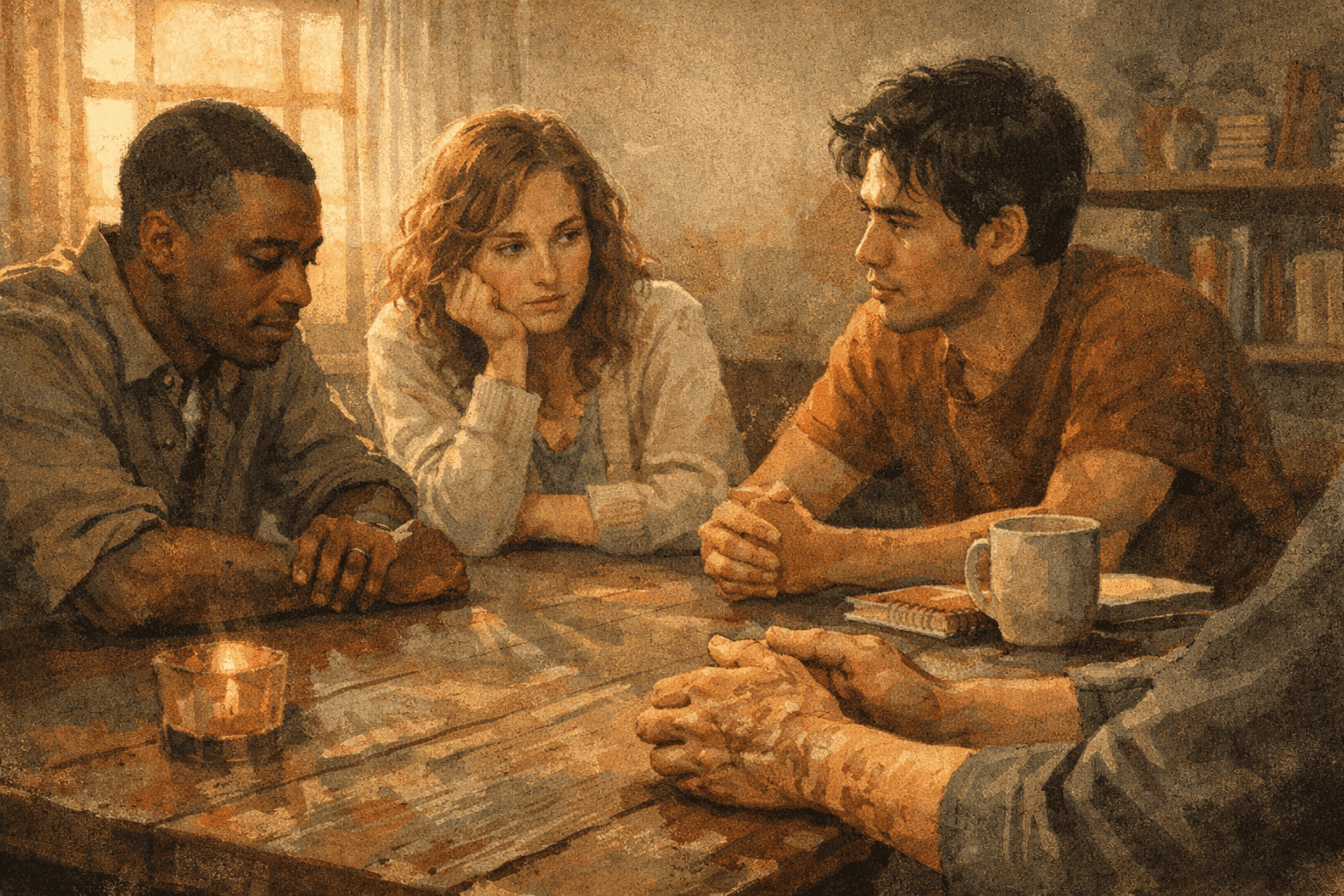
A raw and honest conversation with the team from Eddie James Ministries about calling, obedience, addiction, trauma, and the real cost of following God. This episode explores why sobriety is only the beginning, how accountability and submission lead to lasting freedom, and how God redeems brokenness into purpose.
Your Ministry Doesn't Have to Be the Answer. It Just Has to Know Where the Answer Is.
Not every person who walks through your door belongs in your program. The most Christ-like thing a recovery ministry can do is connect families to the help that actually fits.