
What Healing From Church Hurt Actually Looks Like
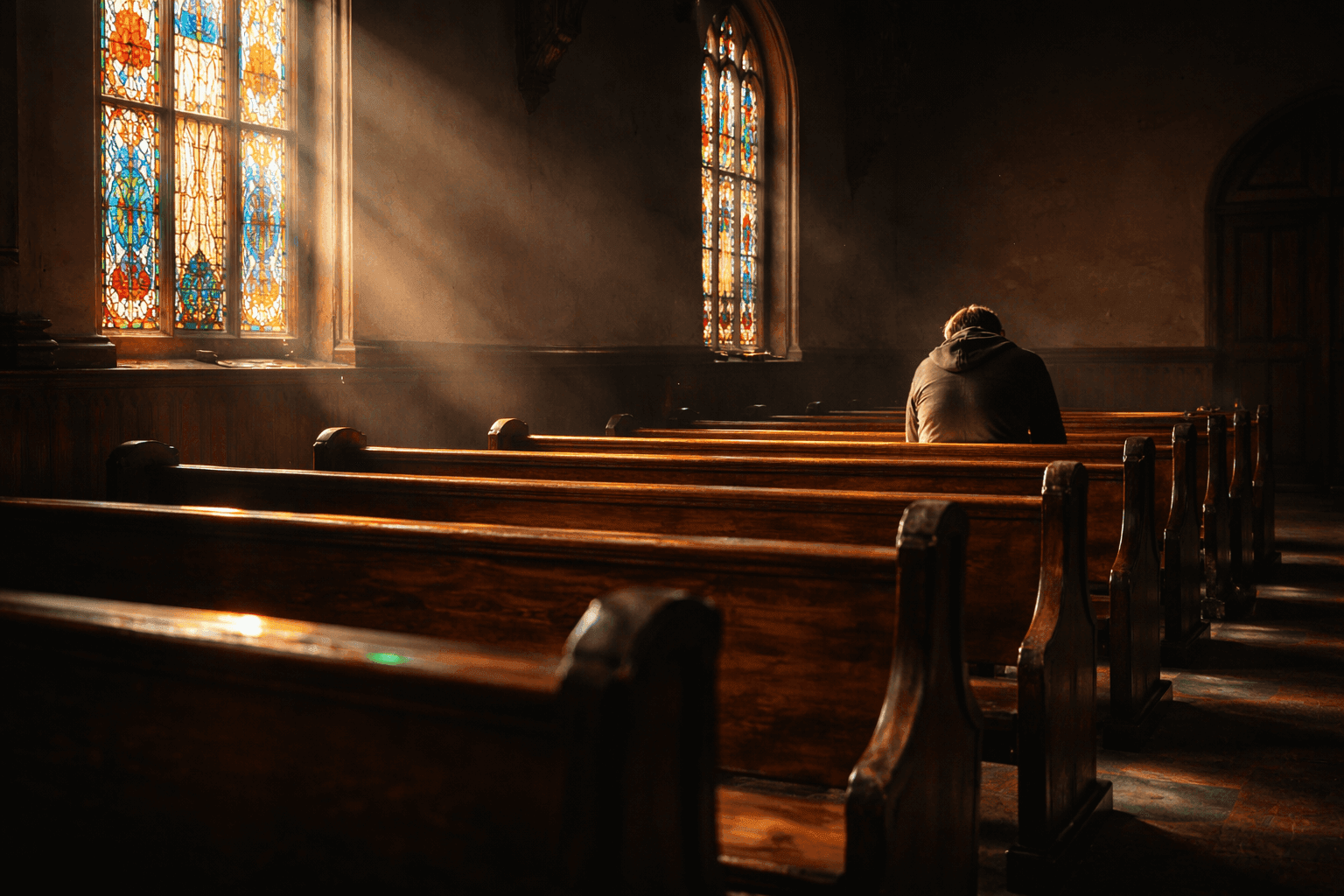
Church is supposed to be the safest place on earth to struggle. That's what I've always believed. That's what I've told countless people walking through addiction and recovery. Come to church. Find your people. Get plugged in.
So what happens when the church itself becomes the source of the wound?
I had a long conversation with my friend Aaron Daigle about this recently. Aaron spent years in pastoral ministry, serving faithfully under a lead pastor he adored. Father figure. Mentor. The guy he went to with every question. Then the relationship turned toxic. Accusations of disloyalty. Manipulation. Gaslighting. By the end, Aaron and his wife were told to sell their house, move out of the city, and never contact anyone from the church again.
He sat in a dark room for six weeks afterward. No church. No pastor. No direction. The whole world he knew had been ripped out from under him.
If that story sounds familiar, you're not alone.
Why This Is So Hard to Talk About
Aaron stayed quiet about his experience for over six years. Not because he didn't have anything to say, but because he was terrified. In the Christian world, you don't talk about being hurt by church. Doors close. Pastors stop inviting you to speak. Podcasters don't want you on their show.
There's this unspoken rule: if you say you were hurt by a church, you must be the problem.
That silence is killing people. When Aaron finally started looking for resources during his darkest season, he found almost nothing. The Bait of Satan by John Bevere helped with the personal offense piece, but it couldn't address the reality that sometimes you're not the one who needs to check your motives. Sometimes you were genuinely wronged by someone who was supposed to shepherd you.
We expect church to be a place of healing and trustworthy friendships. We walk in hoping to find community, growth, spiritual family. But when spiritual abuse is happening, the opposite occurs. Expectations shatter. The friendships feel worse than the ones in the world. You leave feeling more broken than when you arrived.
The Anatomy of Spiritual Abuse
One of the clearest signs Aaron identified: a leader who brings you into their confidence to talk about other people in the church. If someone's talking to you about others, guarantee they're talking to others about you. It creates this web where everyone is pitted against each other, and the one source of information is the leader at the top.
We call it "venting" or "private ministry discussions." We give ourselves permission. But it's gossip dressed in spiritual language.
Another sign: separation from friends and family. Not the healthy kind where you're prioritizing spiritual growth, but the controlling kind where your entire existence narrows to church activities and church relationships. Aaron described being punished for wanting to keep a Saturday morning marriage date with his wife instead of attending a new prayer meeting. Suddenly he and his wife "didn't have a heart for the house." They weren't being "loyal."
The most insidious sign: a smoke screen of accountability. The pastor demands submission from the congregation, but who's holding the pastor accountable? Usually it's someone nine states away, or a board that only knows what the pastor tells them. Anyone who voices concerns gets labeled disloyal and eventually removed. What's left is a leadership team of yes-men, and the cycle continues unchecked.
The Gaslighting Problem
Gaslighting in church looks like this: you raise a legitimate concern, and suddenly the conversation becomes about your heart condition. Your lack of loyalty. Your failure to honor leadership. The actual issue you raised? Never addressed.
Aaron internalized everything. Was it my fault? Did I touch the Lord's anointed? Did I offend God? His former pastor told him he would never succeed without him. That's not shepherding. That's control.
It took a professional therapist to help Aaron see what had actually happened. "You were in an abusive relationship," the therapist said. Naming it brought the first real healing. Sometimes you need someone outside the church system to tell you the truth because everyone inside has been conditioned to protect the system.
The Long Road Back
Healing from church hurt isn't like healing from other wounds. You can cut toxic friends out of your life completely. But if you love Jesus, you can't just abandon the body of Christ forever. At some point, you have to re-engage. And that's terrifying.
Aaron put it perfectly: what happened to us is not our fault, but healing from it is our responsibility.
That's a hard truth. It would be easier if we could just blame the abusive leader forever and never have to do the work of restoring broken trust. But sitting in bitterness isn't healing. It's just a different kind of prison.
The path forward requires a few things:
Name what happened. You have to reveal in order to heal. Aaron sat too long not calling it what it was. Abuse. Manipulation. Narcissism. Those aren't dramatic overstatements when the behavior fits the pattern. Naming it accurately is the first step toward freedom.
Get outside help. Aaron went to both a therapist and a denominational leader the same week. The therapist helped him see the gaslighting. The denominational leader helped restore his standing and gave him permission to stop honoring commitments he'd made under manipulation. Sometimes you need voices outside your immediate situation to cut through the fog.
Give yourself time, but not forever. Telling someone with church hurt to "just get plugged back in" is like telling someone with a broken leg to start jogging. The bone needs to set. But you also can't sit with your leg propped up for the rest of your life. At some point, there's physical therapy. It won't be comfortable. But it's necessary.
Boundaries are biblical. Jesus had boundaries. He refused to play games with people trying to trap him. Having boundaries isn't unchristian. The reason many of us got hurt in the first place is because we didn't have healthy boundaries. Learning to set them isn't mean. It's wisdom. The book Safe People by Cloud and Townsend is worth reading twice.
For Those Still in It
Maybe you're reading this and you're not on the other side yet. You're still sitting in that church, seeing red flags, wondering if you're crazy or if something is actually wrong.
Here's my advice, borrowed from Aaron: unless God has specifically called you there to address it, just go somewhere healthy. That's not running away. That's wisdom. The Bible says engaging in a quarrel that's not your own is like grabbing a stray dog by the ears. You're going to get bit.
If you're a lay member seeing these patterns, it's probably not your battle. Find a healthy church. Protect your family. Heal.
If you're on staff and seeing it from the inside, that's more complicated. You may be there to influence change. Pray hard. Get outside counsel. But know that confronting a controlling leader rarely goes well. The spirit behind that kind of leadership is highly confrontational, intimidating, and demeaning. You'll likely get your head handed to you. Count the cost before you charge in.
A Word to Leaders
If you're a pastor or ministry leader and any of this sounds uncomfortably familiar, don't dismiss it. None of us set out to become abusive leaders. But selfish ambition is sneaky. It disguises itself as vision. It calls itself passion for the house.
James 3:16 says where selfish ambition exists, every evil thing is there. Every kind. Manipulation. Control. Fear. Confusion. It's a package deal.
You need people in your life with permission to pull your coattail. People who will tell you when you're wrong. If everyone around you is a yes-man, that's not loyalty. That's a warning sign.
The people in your congregation are not tools for building your kingdom. They're sheep who belong to Jesus. He's just letting you borrow them for a season. Treat them accordingly.
There Is a Way Through
Aaron is preaching again. Traveling. Writing books. Pastoring people through their own church hurt because he walked through it himself. The wound became a door.
That's not minimizing what happened. It's not saying the abuse was worth it or part of God's plan. It's saying that God wastes nothing. The churches whose pastors have been hurt and then healed tend to attract hurt people. God knows what he's doing when he sends wounded sheep to shepherds who understand wounds.
If you're in the dark room right now, sitting in that chair, wondering if you'll ever trust a pastor again, hear this: you're not crazy. What happened was real. And there is a way through.
It starts with naming it. It continues with getting help. It requires time and boundaries and the terrifying decision to trust again. Not blindly. Not without wisdom. But trust.
The church hurt you. But the Church, the real one, the bride of Christ that will outlast every toxic leader and broken system, that Church is still worth fighting for.
You just might need to find a healthier local expression of it.

Written by
Justin Franich
Former meth addict, Teen Challenge graduate (2005), and recovery ministry leader with nearly two decades helping families navigate addiction through faith-based resources.
Continue Your Journey
Rebuilding Life After Addiction: A Guide to Freedom
An overview of the Rebuilding Life After Addiction framework and the Prodigal Son roadmap of identity, authority, and mission beyond sobriety.
Related Articles


Share this article
Need help for your family?
If you or someone you love is struggling with addiction, you don't have to face it alone. Reach out today and take the first step toward hope and restoration.