If God is Good, Why Does He Allow Suffering?
with Carter Morris
About This Episode
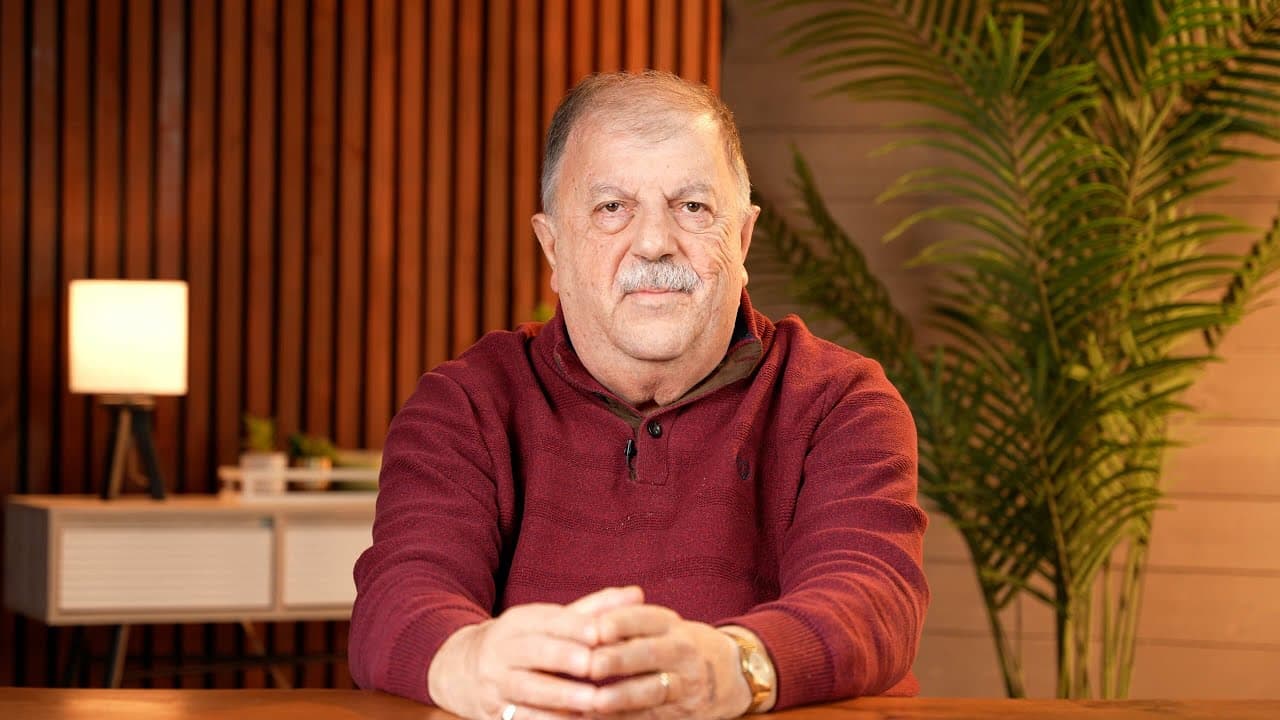
Carter Morris got diagnosed at 14 with FSHD, a lifelong muscle-eating disease. He drifted from church, got angry at God, and tried to medicate the pain with drugs and partying. His breakthrough started when he met his wife. A mentor challenged him to write a 44-page handwritten testimony. Carter began to view his disease as a tool God could use. He speaks at events like the Car Church Conference in Texas encouraging people who feel forgotten or angry at God.
Key Takeaways
- ·Carter was diagnosed with FSHD, an incurable muscle-eating disease, at age 14 after a basketball injury
- ·He drifted from church, got angry at God, and coped with drugs and partying for years
- ·Meeting his wife brought him back to church, leading to a gradual spiritual awakening
- ·He shifted perspective: without the disease, he wouldn't have his wife, kids, or salvation
- ·Three keys to peace: right perspective (ask what, not why), don't worry (it's like a rocking chair), and hope of heaven
- ·Writing his 44-page testimony helped him see God's hand throughout his life
- ·He now views his disease as a tool to expand God's kingdom and encourage others
About Carter Morris
Carter was diagnosed at 14 with FSHD, a lifelong muscle-eating disease with no cure. After years of anger at God and self-medication through drugs and partying, he returned to faith through his wife's influence. He now speaks at events sharing how God used his suffering for good, and is working on turning his 44-page handwritten testimony into a book.
Show Notes
Carter was diagnosed at 14 with FSHD, a rare genetic muscle disease with no cure. After dislocating his shoulder during a basketball game, doctors discovered the condition that would progressively weaken his muscles. The diagnosis sent him into years of anger, questioning God's goodness, and self-medicating through drugs and partying. But his story didn't end there.
From Athlete to Diagnosis
FSHD stands for facioscapulohumeral dystrophy, a lifelong muscle-eating disease. Carter was born with it, but the condition stays dormant until the second decade of life. By 16, he started losing the ability to lift his arms above his head. By 18, his left arm was nearly paralyzed. At 22, his hands and wrists began failing. Every friend got stronger while he got weaker.
Anger and Coping
Carter stopped going to church around 15 or 16. He felt cursed by God, if God even existed. Unable to play the sports he loved, he found new ways to fill his time. Drugs, alcohol, and partying became his coping mechanisms. He was mad, insecure, and convinced he'd never be loved because of how his body was failing him.
Meeting His Wife and Returning to Faith
Everything changed when Carter met his wife at a Halloween party. She was a committed follower of Christ and got him back into church. It wasn't instant. It took two or three years of attending Bridge Church before everything clicked. When God spoke, it wasn't an audible voice. It was a whisper, but it changed everything.
Perspective Shift
Carter realized that without FSHD, he wouldn't have his wife or his kids. He would have joined the Marine Corps and never been at that Halloween party. The disease he thought was a curse became the path to his salvation. As he puts it, quoting Genesis 50:20, what the devil intended for bad, God used for good.
"I wasn't given a disease. I was given a tool, a tool that can expand the kingdom of God."
Three Keys to Peace
Carter shares three things that help him maintain peace. First, perspective. Don't ask why God is doing this, ask what He's doing it for. Second, don't worry. Worry is like sitting in a rocking chair, it gives you something to do but doesn't get you anywhere. Studies show 93% of what people worry about never happens. Third, the hope of heaven. This life is temporary. Eternity is forever, and there will be no pain or suffering there.
A mentor encouraged Carter to write out his testimony. It ended up being 44 handwritten pages. When he gave it to his pastor at Bridge Church, it led to his first speaking opportunity. Now he speaks at events like the Car Church Conference in Texas, encouraging people who feel forgotten or angry at God. He's working on turning that testimony into a book.
Read Transcript
Catching up and how we met
You're one pretty good man, just taking a day by day, you know how it is.
Yeah, absolutely.
Well, I'm excited, man, to get the chance to talk to you tonight, I, on, you know, I think we've met a while back, you saw me in my car, 50 years back when I just had rear-ended my other vehicle, and you hooked me up with a good deal, and then we ended up connected on social media and whatnot, and I saw that you were out speaking, sharing some of your story.
We actually had you up to the church, and so why don't you just kind of introduce yourself to the audience a little bit about yourself.
Yeah, man. Thanks for, for having me, Justin.
So like Justin said, my name is Carter, and I was a car salesman for about five or six years, and that's where we met Justin, and really what, what continued to connect us after that, I guess, was, I spoke at Bridge First, right, and then you had asked me to come speak at Brookside, and I mean, we've kind of kicked it off since then.
But to me, me and my story is just my life, it doesn't seem like anything's special for me, so it always intrigues me, like why people are interested in learning more about me.
It's like, man, I'm just Carter, you know, I'm, so it's hard for me to really talk about it, because to me, you know, it's just my life, so, but I will answer everything I can to the best knowledge I ever have, man, I'll give you the most real right answers you can get.
I appreciate it, man.
We have, remember, you came out to Brookside, and all the folks in our church, man, had wonderful things to say, just about your perspective on some of the struggles that you've walked through, and, you know, being able to see God's goodness, even in the midst of suffering, and, you know, I think that's a lot of stuff that we, we talk about as Christians, but it made it get real difficult when it comes time to live it out, you know, we, we try to, try to discern and ascertain God's will for our lives and figure that out.
And then when we're hit with roadblocks or things that come out of left field that we never saw coming, it can make it a little difficult on, you know, so in regards to your journey, you share a little bit of kind of your journey of saying how you came to Christ in Jesus, and, and all that good stuff.
Diagnosis in adolescence: FSHD explained
Yeah, man.
So growing up, I grew up going to church, you know, you even went to a Christian school and the eighth grade.
So I grew up in the faith, but around, I don't know, it's probably 13, 14 years old is when my journey really shifted another direction, well, at least I thought it had.
So at 14, I, in the middle of a basketball game, right? So I dislocated my shoulder, and that ended up leading to a diagnosis I received of a form of muscular dystrophy called FSHD.
And that's short for facioscapulohumeral dystrophy.
So in short, it's a lifelong muscle-eating disease. It has no cures, it has no treatments. Nothing that they can do about it, other than continue to work on finding a treatment, but as of now, there is none.
But really, that is what took me down a long road of eventually coming back to Christ, because, like I said, growing up, I would have considered myself a Christian, but looking back, I wasn't really a Christian, I was a kid that went to church by parents.
And to me, that was a Christian, you know, and I was even baptized, it may be nine or ten, I don't remember exactly, but I don't really truly consider myself a reborn Christian until probably about a year and a half ago, because being diagnosed with that disease, it took me down this long road of, you know, asking, one, is God even real, you know, because if he was, why is he allowing this to happen, this isn't fair, you know?
And it, I mean, it just took me down a long road of pain and struggles and, yeah, ultimately looking back, it's the exact path I was supposed to take because it's leading me to where I am now.
But, let me ask you a question. Going back to the basketball game is, so the muscular dystrophy, is that something that was like always there and injury exposed it or, yeah, so what it is, it's genetic.
So technically, yes, I was born with it, but the kind that I have, it, I guess it's always there, but it's kind of dormant until the middle of the second decade of life.
So I was spot on for that.
Early progression and how life changed
So typically, you need to put time between 10 to 20 years old in a normal case is when symptoms will start to show up and I was 14, 15 when that happened.
But I was really, I wouldn't have known I had it probably until the 17 or 18, if that had happened because even when I dislocated my shoulder, that took me to the ER to get looked at for the dislocated shoulder, but it wasn't until maybe three to four weeks after that my mom was like something doesn't look right with your shoulder because of how my scapula wings out.
That's the S part of the FSHD scapula. So it's called like winging. It's when your scapula kind of pokes out, but she thought that was because my shoulder hadn't healed properly, but really that was a symptom of the disease and it took about eight to nine months of testing and stuff like that to get diagnosed, but that's ultimately what it led to.
So how did life kind of start to look different after that once you guys found out? I mean, I know you just mentioned there was eight to nine months of testing and all that. But how did that begin to change things up for you? I mean, going from 14, playing basketball athletic, you know, just you're doing life as a 14 year old that all of a sudden you guys find out something that you didn't know was there.
Yeah. So it was kind of weird because of how this disease works. It's a very slow, progressive disease. So even when I was diagnosed at 14, it wasn't until I was probably almost 16 where things like I could really tell that, you know, something wasn't right.
Like when I first got diagnosed, like I knew it probably wasn't good, but I didn't realize it was going to be like this kind of issue looking back, like 12 years later, I would have never thought that I'd be having the issues that I have now. I just thought it was like, you know, this, I might have a little pain here and there. Things might not work exactly right, but I'll always be athletic.
I thought I'd always be able to do everything I'd normally be able to do, but it wasn't until 16 and it was really, I started losing the ability to put my arms above my head. I could still do it, but I could tell it was getting harder. All of my friends were still like sailing in sports, working out, you know, at that age as a guy start going to the gym and going to the gym and I wasn't seeing results. Like all of my friends that were getting faster and stronger and I'm like, people with the head. And that's really when it set in that like, oh man, this is going to be a real problem.
Like I'm not gaining muscle. And it's still like I said, it's a lifelong. So it never goes away. It's always going to continue to get worse. But really it, it started with losing the ability to put my hands above my head. And then by the time I graduated high school at 18, 19, my left arm, I wouldn't say, I don't say it's paralyzed, but it's as close to being paralyzed as you can get. I can't lift it up against gravity, like bending it at the elbow, like if you were going to do a curl, I can't do that even against its own weight. My hands, that started being affected. My hands and wrist at like 22, 23. And that's really when I went down the rabbit trail of depression and all of that anxiety and asking why.
Turning away from church and coping with pain
Yeah. So let me let me ask you about that your faith along this journey. You mentioned that you were kind of in the church with your parents. Yeah. You really there. You grew up like that, kind of the "I'm being dragged to church" experience. I'm going to phrase it here.
Yeah. Yeah. And we've learned a lot during this season of life. But then how did your faith start to get impacted during all this season? So when you found out and you realized kind of what was going on, you know, did it drive you toward or away from God in the beginning stages? Away for sure.
So I probably couldn't go into church should about that time when I was old enough to where my parents, you know, couldn't force me to go. I mean, I guess they could have, but they didn't. They were like, you know, if you want to go, you go, if not, then stay home, then I stayed home. So when I quit playing basketball all the time, I found some new habits that were not healthy habits. So started hanging out with probably the wrong crowd while I know for sure it was the wrong crowd. So everyone drugs getting into partying and really looking back. That was a form of coping because I wasn't, I wasn't able to do the things I was I grew up doing playing basketball, I played football and baseball and soccer. I played all the — so athletic. So I had to find something else to fill my time instead of filling my time with, you know, Christ and and read the Bible in scripture and everything that I fill my time with now. It was drugs and alcohol and parties, back of weed and doing all of those things.
So it really drove me away because I was trying to fill my time, but I was also I was mad. It wasn't fair. I was upset that I wasn't going to be able to go do the things that I wanted to do that. I had to quit doing what I love because of this disease that I thought God had cursed me with, you know, and if God was even real, he didn't like me. So he gave me this disease. It wasn't my, it wasn't my thoughts on it. But, you know, ultimately it brought me to where I am now, but yeah, it was, it was a long journey.
So what was the shift during that season of life, you know, you, you began to dabble with the drugs and you said, mentioned earlier some depression and anxiety. Oh, yeah. You know, question God, you know, wondering like, you know, why, why did this happen? Why me? Or are you even real? I mean, was, was there an epiphany moment or was it kind of like a gradual process of the Lord slowly nudging you back his direction? I mean, how did, how did you make sense of all that?
Meeting his wife and returning to church
Yeah. So it really started with meeting my wife. So my wife is, I mean, in my book, she's a saint. I mean, she has always been like a close follower of Christ and intentional about it, you know, like would make time to read the Bible. And really, I mean, she grew up, when I say the right way, it's, in my opinion, you know, the right way. She went to church and she's always, she's always been there. She never had that drift away from God like I did.
But it started with meeting her, and it happened at a Halloween party, which is kind of funny about it. I'm not willing to say what we were dressed as, but, um, but yeah, I met her at a Halloween party, but she ultimately got me back into church. And that's when I started attending Bridge about six years ago, and it's, it's weird because it started as a slow process, looking back, I know it, I needed to get back into the church before I was really able to make sense of all this.
But when I'll say that I heard God speak to me, it wasn't like an audible voice kind of nothing like, you know, would you, yeah, yeah, exactly, it was not like a big voice coming down from the clouds. It was really a whisper, but it was a short process because when I heard him, I knew it's like the cartoons, uh, came back and everything made sense. But it was somewhat of a slow process of, I went to church, got back into the church and it was probably two, three years before that it clicked and everything made sense.
Is God good? Wrestling with suffering and perspective
Yeah. Yeah. So, so that, that journey back, right, you on, when you, when you spoke at Bridge, I saw your, your video on your Facebook, and if you're watching, and you guys should definitely hop on Carter's Facebook and check that video out, but on, you posed a question, you know, is God good. And it may be unpacked out a little bit in context to your story, I will, I won't, I won't do that. I'll let you.
Yeah. Yeah. So, to answer the question, yes, always and he, he, he is nothing but good. He never knows how to be anything but good. But in regards to my story, what, what brought me to that was, if God is good, why does He allow suffering, right?
You know, in Jeremiah 29:11, it says, for I know the plans that I have for you, declares the Lord, plans to prosper you and not to harm you, to give you hope and a future. Well, when I reflected that to my story, it didn't have a good reflection. It didn't make sense, right? Plans to prosper and not harm don't make sense when you mesh that with being diagnosed with an incurable disease, right? That doesn't make any sense to me. So it started off, God isn't good because He allows pain and suffering, you know, and that's not just my story, that's all around, around the world, everybody has hurt and pain.
But it's all perspective-based, right? So I had to look at it from a different perspective before it made sense. So when I asked, is God good, I have to look at it from a perspective of, I didn't have much good history, I wouldn't have met my wife. Yeah. I would have joined the Marine Corps like one of my brothers, but if I would have joined the Marine Corps, I would have been around the night that I met my wife at that Halloween party. And if I hadn't met my wife, I wouldn't have my kids and I wouldn't trade anything. I mean, you're a father, you would do, you would die for your kids, right? You would take a bullet, you'd step in front of a train, you would never go back and redo the past if your kids weren't going to be in it. So I feel blessed to have it.
But it is good because not only did he give me my wife and my kids because of this, but he also brought me to my salvation. Yeah, wow. So when the, what does the Bible say, it talks about our lives here like temporary tents, right? Yeah. So my perspective has shifted from looking at this as being a forever to this is a very short period of time where I have to deal with this before I don't have to deal with it ever again and no pain, no suffering.
So God is good because he was looking out for me in the long run. He knew what it was going to take, you know, for me to come back to Christ. But you know, it's just perfectly laid out my life for me and I had not always had that perspective. This is only about the second year where I've really been able to see God's goodness through all of this.
Yeah. Yeah, absolutely. You know, that seems to be an objection, I think for a lot of folks that are on the fence about faith, you know, it's, it's God is real, then why, right? You know, that tends to be the question. I think a lot of people ask and, you know, I think we've all certainly been there at some point or another looking, you know, it's not a personal experience, just kind of looking at the world around us and see, you know, suffering and seeing hardship and just kind of wondering like, yeah, God, you know, how can you be so good in loving, but yet allow this stuff to exist, you know, and I think sometimes it's hard to swallow some of that.
But it seems like the Lord's used your story and your circumstance to help help you get a grasp on his goodness through the middle of all of that. Absolutely. You may always, always reflect Joseph's story in Genesis, Genesis 50 verse 20, you know, it's not that God gave me this disease. We live in a sinful world, right? So bad things are going to happen, but Genesis 50 verse 20, what the devil intended for bad, God used for good. And that's really how I look at things, I don't look at it as he did this to me. This is because we live in a broken world, bad stuff happens, people get sick, people die, you know, but I can look at that from the perspective of how is God trying to use this for good? And that's how I try to look at everything in life.
Yeah, absolutely. I mean, that original sin entered the world and it all went downhill since there, except for the grace of God and through Jesus Christ eventually coming and dying as an atonement for our sin. I mean, it's just a, it's a beautiful story.
Deciding to share the testimony publicly
So you went from this place of, you know, kind of grappling with this and really holding onto this perspective of God's goodness. So Carter, what prompted you to get out and start sharing this story with other people, right? Because I mean, everybody, I mean, people have, you know, these experiences and in your experiences, give them one of a kind and your story is phenomenal. But not everybody goes out and shares publicly, right? Yeah. And they say the public speaking thing is like number two on the list of fears. Normally people hate it.
Yeah. I mean, even people that do it for a living get scared, they get nervous every single time. Like, there's that brief second where it's like, man, I can't believe I'm doing this again. Like, I mean, you preach, you know how it is getting up on the stage, no matter how many times you do it. You still, there's that peak and you're still nervous about it. Right. Yeah. I realized a long time ago, I don't need a stage to say stupid stuff. I'm good to say. Yeah. It's so possible just don't worry.
So what do you mean the boldness, I mean, or just the desire, I mean, what was the Lord doing in you that said, you know, I need to get out and share, share the story, share my testimony with other people. Yeah. Man. So really, that was kind of a gradual process as well. So one of my mentors, someone, he's actually baptized me. He's incredibly influential. And he encouraged me to write out my testimony on paper, write it out. And if you've never done that, I would highly encourage you to do that. It is such a powerful thing to do. But I wrote it out and it was 44 pages long.
And I noticed God in my life, in times of my life we're looking back, I had no idea his hand was in it. Like when I had to go get a test done while I was getting, we were trying to figure out what what I had, what was going on. We didn't have the insurance for this particular test and this test, it was like reflex testing where they like shock you and stuff like that, nerve testing. But it was like $1,500. And my mom, she is a woman of faith. Love that woman. She was praying for me since I was born and she felt that God was telling her, go get this test done and I will take care of it. Don't worry about the cost.
So we go to this test and we get it done and the doctor is like, I see you don't have insurance, right? And mom's like, no. And he was like, how's the hundred bucks? So for $1,500, it was $100 trying to get this test done that I needed to get done to get diagnosed. I didn't even realize that like I didn't see God in that time of my life in the middle of that. But when I went back and I wrote it out, I could see, it was a string line. I could see God working in my life, having His hand on me the entire time when I wrote it out.
And so like I said, it was 44 pages long and I ended up giving it to Todd, the pastor, Bridge. And that is what led to him asking me to speak last August at Bridge. And that's kind of what ignited everything. But I went back and I read John chapter nine with the man that was born blind. And when Jesus tells the guy, this happens so that the power of God could be seen in him, that really hit home with me because we don't know anything about this blind man after the fact after chapter nine, but I can't believe how many people came to Christ because of him and his story. And I felt that I wasn't given a disease, I was given a tool, a tool that can expand the kingdom of God.
So I can go out and tell people about it because you overcome by the blood of the Lamb and the words of your testimony, right? Now. So it was one of those things that I could just feel was kind of in a calling and it's such a churchy word, right, being called. But I really felt that I was being called to that and that not only was being diagnosed led me to have my family and my salvation, but that this is what I was supposed to be doing. Right. Yeah. Because, you know, it's not me that's doing it. It's God's grace because I would not be here today if it wasn't for his grace. So I feel compelled that I have to tell people this story, you know, and it happens to be my life, but it's not my story.
Yeah. Yeah. If you mean, well, that's powerful. I'm a big Back to the Future fan. I actually have a Lego DeLorean here in my office, I love, I love that movie. I love the whole trilogy, but on, it's Carter could help him a DeLorean that actually worked and travel back and sound to when he was 14 and just out of the basketball court and got to, and he found out he was injured and won't get ready to go into the doctor's office. What would Carter today tell Carter at 14 to prepare him for going into that doctor's office?
Man, this is the one thing that I ask myself all the time is, you know, outside of what, what could I do? What would I do differently? And the only answer to that is go get back into church and find Christ sooner. Even though I think it probably happened at the perfect time, but if it was in my court, I would go back to church a lot sooner and I wouldn't have dabbled in the drugs and now go on the party. But the perspective thing, if I could go back and tell myself, or give myself some hints about, you know, this is how you get through this, and, or, you know, even if I was going to go into a hospital and go tell some people that are struggling with sickness and illness because I feel like a lot of the same things that people ask themselves that are sick or going through a hard time are probably the same no matter who you're talking through.
If they're going through something that's hard and painful, they're usually asking the same questions. But I would say three or four different things to them, you know, and we just talked about one is perspective. So to have to look at life not through a perspective of my own lens, but knowing that we look through life as a perspective of through a lens of like the size of a grain of rice where God looks at the perspective of he sees the whole picture. He doesn't see just a little snapshot. We try to judge our lives on this small little thing that we know what's going on in the present. What we've done in the past and we worry about a future that we know nothing about.
Practical guidance: perspective, worry, and hope
But would be to always keep a perspective of not why, but what and what I mean by that is not don't ask why is God doing this? What is God doing this for what is the purpose for this? And once I really turned back to Christ, I really got into the — we talked about the speaking thing, but really reading. I never read before and read a lot of books, but I've come to that to a point where I try to look at life through a lens of not like my own life, if that makes sense. So not why I'm here, it's not for me. What if my life was here to save one soul, to help one person find Christ, one person find peace and joy? But if I had to suffer for, you know, 50 years for that one person, it's worth it because it's not for me. It's for them. And that's what our goal is.
So one big thing would be perspective, always keep the right perspective. It's not, it's not why God is doing this, but what is he going to do with this? Yeah. Yeah. The next thing. Go ahead. I was just going to say, I remember here a preacher say a long time ago, he talked about life like a puzzle and you know, we put the pieces in not really being able to see it. And a lot of times we feel like we don't have the box top. And I'll never forget the illustration because he said, you know, but here's the thing, your creator has the box top. And he's guiding and directing as we put in, he knows what it's all going to look like. We have access to it. We don't have a clue. You know, we see very little.
But that's why we worry, man. That's why people worry so much is because they don't know what the future holds. They only see what's going on in the present, which I mean, that if you, if you look at the present, you're going to worry. And if you think about the future, you're going to worry. I mean, we are, this world is geared and built towards making people worry and freak out over nothing. Right. Which leads me to the next thing that I would tell them it would be why, why worry? Like, don't worry. And that's a lot easier to say than it is to do. I understand that. But I look at worrying about this, about like sitting in a rocking chair is the term I always use. Worry is like sitting in a rocking chair gives you something to do, but it doesn't get you anywhere.
And always say that worry and concern is different. Concern will drive you to take action about something. For instance, like if you're concerned about your weight, it'll drive you to maybe go on a diet or go to the gym and work out. But worrying over something that you don't know is going to happen, worrying about the future is pointless. It gives you something to do, but it doesn't get you anywhere. There was a study taken from, I don't remember, it was one of the big colleges about people and then worrying. And the study was like 93% of the things people worry about never happen. And I was worried about not getting married because I was so insecure. I was worried about never being loved, never meeting my person because of how I looked and what was going to happen to me in life. I was so worried about all these things and then I stressed. I lost sleep, depression. I was so anxious about it. And look, I got married. I have two beautiful children. That worry was for nothing.
That's amazing because I was so worried about something that I didn't know. The future that I have no business trying to control. So it would be, don't worry about things outside of your control. And then really my third point, and this is probably the biggest one for me for at least having joy, but is the hope of heaven. Knowing that we are only here for a little bit of time and one day all suffering is going to be gone. All pain is going to be gone that we will have wings, man. I will be able to run, I will be able to put my arms above my head forever for eternity. You know, what is 80 years for an average life expectancy for 8 billion people and eternity goes on and on. So it would be, don't look at life as the end that this is all that there is, that there is way more to come, a lot better than anything you've ever experienced to come, man.
So those are my three big points, man, it would be perspective, not worrying and the hope of heaven. That's good. Yeah. And you know, we can't ask, ask the topic questions, I think they're good reflection questions, but also for those who are listening, and you know find themselves in a place where they're getting, they may be facing something unknown or whatnot. And hearing your story and hearing what you would tell yourself having lived through all that, I mean, it's just such powerful, powerful insight for you to bring for a man in these short bunch of nuggets there. It's like, I like to call them sweetables, but man, they'll just drop a bunch of nuggets there.
So for those who are listening to that, I would maybe encourage you to rewind and go back and listen to these last three or four minutes again, because Carter just dropped a bunch of incredible wisdom. I mean, this is life, this is what the Bible talks about in Revelation, we overcome by the blood of the Lamb and by the word of our testimony. I mean, it's just something encouraging. There's about seeing somebody else walk through and, and get victory, you know, and be able to be at that place of peace and, and be at that place of purpose like you are. And so, man, I appreciate you for having the courage and boldness meant to stand out, stand up and share your story, getting over that fear of public speaking and on, and just being that testimony and that light for Jesus and it's, it's only for one.
And that said, man, it's the one, it's really when I started talking about my story and my testimony, it became easier to talk about the more that I did it. And it, it helped me, I thought I was already at such, such a peace with my diagnosis and my disease, but the more I talked about it, the more peace I came, like, I thought I was already, like, fully closed. I thought that chapter of my life was closed. I was done worrying about it and, you know, I would be a liar to tell you that I'd never think about the future of what might happen. I think that's probably normal, but I don't dwell on it and that's the difference. I used to dwell on it, but I would have continued to dwell on it if I never started talking about it.
I've seen what it can do when you talk about it, you know, and it honestly, it helps me just as much as it might help somebody else to hear it. It helps me just as much to talk about it as it might help someone else to hear it. So I would always encourage people to tell their testimony because you never know who it can impact. And having that feeling of you helping somebody else is one of the best feelings in the world.
Taking thoughts captive, resources, and upcoming plans
Let me ask you in those moments when you start to worry and you feel yourself starting to slip into that place or just constantly dwelling, what do you do in those types of moments? Try just, just practically speaking to kind of shift your mindset and pull out of that. Yeah, so it's going to sound like a pastoral answer, but it's completely biblical and it's been the only way that I can find it actually when the war in your mind is what I call it. There's a great book out by Craig Groeschel. I would highly recommend anybody read that book, but that's really what it is. Life is about the war in your mind, all of worrying, anxious thought, depression, that all happens in your head, right?
So I can't remember what verse it is, but it talks about taking your thoughts captive. So what I try to do is when I find myself going down that rabbit trail of worry because it happens really quick and it happens really fast, right? You worry about one thing and then that thought where it leads to another and another and then before you know it, you're worried about what's going to happen in your life 20 years from now. So it's important to grab it right then and there at the very beginning. But when I find myself starting to worry, I grab the thought and I reflect to scripture. Is this scripture? Is this going to align with what the word of God says and if not, I'm going to replace it with something that is.
So when I worry about, you know, how I'm going to possibly interact with my kids as my disease gets worse, they become more mobile, I get more weak, you know, that's one thing that I, I won't say I worry about constantly. It's always there, but I don't let it affect me like it used to. But being a good father doesn't reflect what I can do with them. If I train them up the way that they're supposed to be trained and going to church and teach them about God, that is all, I'm not worried about what the world, how the world says I am as a father and worried about what God says about how I did as being a father because they're not my children, they're his children, I've just been given the opportunity to raise them here as their earthly father.
So it's just going back to perspective, what God says I am, not what the world says that I am. You're not suggesting to people that, you know, facing challenges or actual concerns that they run and stick their head in the sand, but it's getting to that place where that illustration that you used, right, you said, on worry is just that it's worry, concern is something I could take action about. So you're acknowledging the challenges, but you're at a place where you're not allowing it to dominate, control your thoughts and also your life.
When I was back when I was 15, 16 years old, I didn't confront them and that's what led to me doing drugs, drinking, partying because I didn't want to replace the reality of, you know, what my future might look like. So that's what it led to, but now I have to take those thoughts captive and submit them to Christ. Yeah. I have to make them bend and form to what God's word says, not to these lies that, you know, Satan's putting in our head, that's how he works. It's always been lies. It's all, he, ever since the beginning of time with, at the fall of humankind that, in the first chapter of Genesis, it started with a lie and it's all lies. And if it's something, you know, you're not, or I was a stressed-out book, it says if it starts with you. So if you were thinking, you aren't good enough, that's not from God. It's coming from the devil because that's coming from a perspective of somebody asking you that question. And if it doesn't align with God's will and his word, then it's not from him and you just have to take it captive and it's a lot easier to say than it is to do and it takes time and it really one of those things you have to practice on, doesn't come naturally like it's natural for people to worry these days.
The news, if you watch the news, it makes you worry. If you're on social media, it makes you worry. We are so geared to worry about stupid stuff, really, man, just dumb stuff. Like who the next president is going to be and what, what's going on down the street and how much eggs are and all this stuff, man. I quit watching the news a long time ago because it's just geared to making worry. When I started being able to, I'm not going to say I've won the war in my mind because it's ongoing, but when I started, when I started seeing the shift and I'm, I'm winning battles, I might not win every single battle, but I started winning battles is when I started digging into the word of God and reading on a day-to-day basis because my head is filled with the truth, not the lies of this world, but the truth.
Yeah, absolutely. I mean, we don't take those thoughts captive, eventually the thoughts are going to take us captive, right? I mean, and that's, there's one way or the other and that worry, you know, ends up leading us trying to deal with, trying to deal with them through, like you mentioned, drugs, alcohol up and down that road before and, you know, that, that stuff numbs the pain for a moment, but then it ends up coming back 10 times worse. Afterwards, you know, you start to deal with all the shame and the guilt and the choices made to try to numb those thoughts and numb that pain and when the answer and the antidote is right there in the word of God and replacing those lies with the truth. A lot of times it's not even that Satan, you're just, my perspective is that a lot of times, he doesn't even try to stress us out over things that are blatantly false, you know, he takes very real concerns and then uses those to begin to go down the rabbit hole.
Like right now, how expensive are eggs or crap? What am I going to do for money? I haven't got to raise in so many times and then we start making decisions like putting things on credit cards and compounding debt and it all just compounds all over, all every one little thought. That was true. You think, oh, you know, we'll say it'd be cheaper, but, yeah, yeah, it went step at a time, you know, like when, when Samson went and slept with Delilah, he had to walk and was something like, I heard a pastor say it was like 50,000 steps. And it's like, how did you get to where you are today? One step at a time. Samson didn't sleep with Delilah until he took 50,000 steps in the wrong direction.
Really? And it starts with a false thought. Scripture there too says something, there's something in that passage where I think it says he, she lulled him to sleep and hearing that and just meaning that is so, so I indicate it, now my mind, my mind, hold on, let me pause. That is so descriptive about how the enemy works. He just lulls us to sleep slowly, you know, and I've heard somebody preach a sermon before on sleeping with Delilah or something like that, you know, something of that effect and yeah, it's stuff. Like you said, he doesn't put these crazy, crazy thoughts that are blatantly false in our head, it's little one by one step by step, little thoughts that you're in there and then like you said, they compound and then before you know it, if you tell yourself a lie enough, it becomes true to you.
Like one lie believed, one lie told too many times it becomes true to the person that said it. There's a lot of truth behind that man is if you, if you believe, if you tell yourself a lie, if you let Satan tell you a lie and you believe it enough, you're going to live your life as if that lie is actually true.
So Carter, what do you have going on here in the near future? Are you, I think you're heading to Texas, right, to speak? Yeah, man. So May 7th, May 7th and 8th, I'll be speaking at a conference in Texas called Car Church Conference. It started, it started off with being, there's a conference for people in the car business connecting the car business with the church, but I think it's kind of bled out a little bit outside of the car business, but going to Austin, Texas, to speak there, to give my testimony, you know, what I've learned, what I've gone through, and ultimately, you know, what Christ has done for me and what he can do for anybody else, man.
Really is, my goal in life is, I always, I like to use the term, I want to be a modern day Barnabas, right, being an encourager or to bring hope and encourage people that might be going through a tough time. But I'll be doing that and really after that, man, I don't, I don't have anything else on the schedule as of now, but that is what my path is. I have a passion for it, and I feel called to just tell my story. So every chance that I get, I will do it, just like me and you tonight, I would do this three times a week if you'd have me, you know, man, because this is what I feel called to. It is really just telling my story, what I've learned, and how it might help somebody else, and I don't try to change people's hearts. But it's not my goal, my goal is, you know, Christ to speak for me, it, it be his words, because he's the only heart changer.
So really just, I want to write a book, been trying to figure out time to do that. 44 pages done already. Everybody already says, like, man, you're like halfway there. Yeah, man. Yeah. For sure. He got that much further to go. Yeah. Facebook. I have a YouTube page. I'm not on there a whole lot. I've started to build, try to build a, a ministry, I guess you would call it. I've only, you know, I spoke for the very first time last August. So I've only been doing this for eight months or so. I've spoken three, four, five, seven or eight times since then, but continuing to try to build that up. But yeah, Facebook would definitely be the best way to follow me just Carter More. Yeah. But I can probably figure out a way to link it on here.
Yeah. I'll drop the link. I'll put the link down in the description box for anybody that's watching that wants to also click through and check Carter out and man, I appreciate it. And I, I love when people message me and have questions or, you know, we need advice or if I can just be of encouragement, I definitely repot a message. And I'm working on that. My response times go from a half a second to two and a half days, but yeah, I know how that goes.
It happens, man. And you click into it, kind of responding and something happens and you forget, and then there's this weird thing that happens in the brain like when I click in and I think I responded. I didn't quite finish. I never hit send. But somewhere I like check that box off in my brain and it's the worst. And so I'm not great with text messaging, man. If I click into it and I don't reply right then and there, you're not getting a reply. Yeah. I've done better leaving them unread now going forward and a lot of messages ready to respond. Yeah. I should do that, but I don't want to have that. It's a dull sum.
I appreciate it, man. I appreciate you jumping on tonight and just share parts of your story. Obviously, I know it's a whole life right there and not need to do anything in 45 minutes, but on and just bring in some hope and encouragement to people. And I love that that I want to be a Barnabas. I want to be an encourager. And I think the reality is we need more of that. There are times to pick apart and debate some of the evils of the world and all that stuff. But I think that in the middle of it all is Christians. God has taught us to be voices of encouragement, you know, to one another to build each other up in this most holy faith as the scriptures talk about, you know, showing that joy, patience, gentleness, kindness, you know, all that stuff that the spirit referred to in the scripture speaks about and just speak life into people.
You know, and there's a lot of suffering, a lot of hardship that I think people are facing and being able to be that source of joy, that's certainly a phenomenal thing in it. And at all your point, people back to Jesus. And so for people that are watching this evening that may come across this, if you're considering having somebody out to your speed, I'm a local church pastor, I brought Carter out, gave him the pulpit while I was out of town. But you know what, even there, it's still over the shoulder. And so I mean, it's a lot to say that you trust somebody to come to church and preach. Man, I can vouch for him. He's spoken in his home church Bridge and is an amazing, just a solid stand-up guy. If you're entrusting someone to come and preach, please connect with him.
Well, Carter, I really appreciate it, man, and thank you for taking the time. Do you have any parting words as we wrap up?
Man, I just appreciate you having me on here, man. It was an honor and thank you for letting me come speak at your church a couple of months back, but I really just appreciate it, man.
Stories like this start with one phone call.
If your family needs help finding a program, we're here.
Talk to Us →Or call: 540-213-0571
Justin Franich
Justin Franich is a Teen Challenge graduate who overcame a meth addiction and has been clean since 2005. He spent over a decade leading Christ‑centered recovery programs and now serves as Executive Director of Shenandoah Valley Adult Teen Challenge, helping families find the right path forward and supporting people as they rebuild life after addiction.
Read my story →