Addiction & Recovery
A Federal Judge Just Said What We Already Knew: A Recovery Home Is a Home
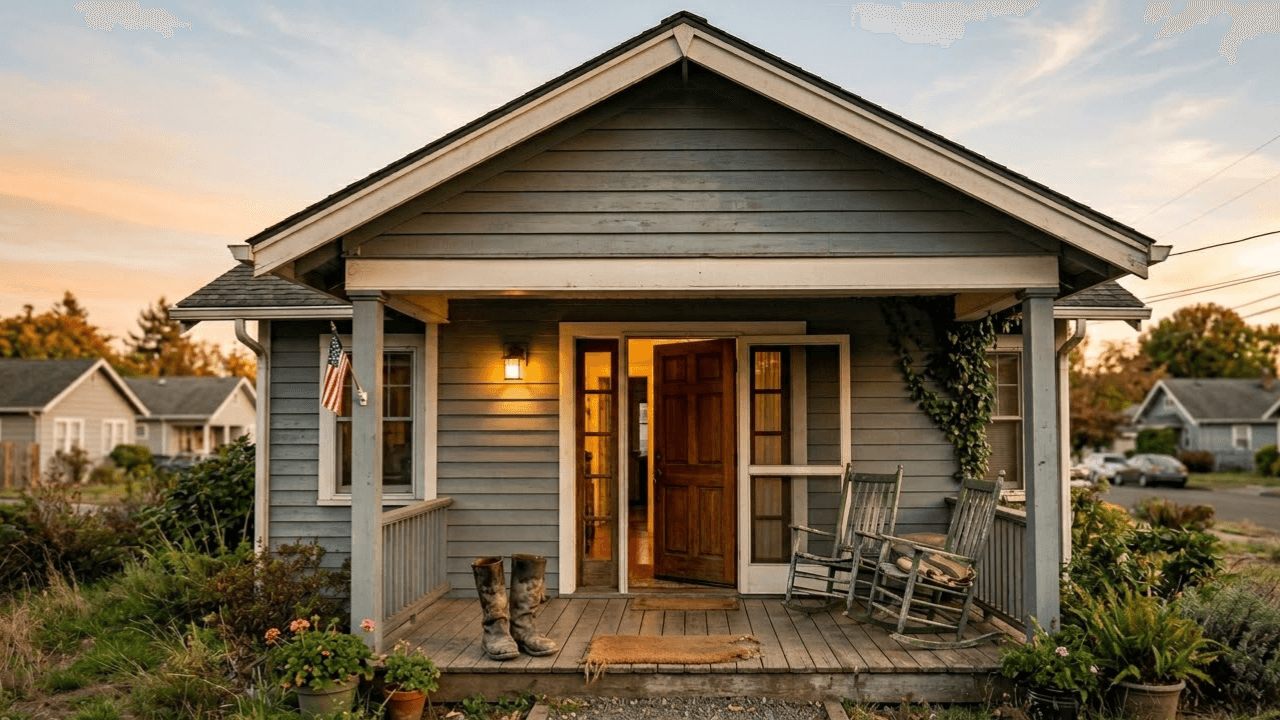
I'm not a lawyer and this isn't legal advice. This is me walking through what happened in Indiana last week, why it matters if you care about recovery housing, and what you should know if you're running one, supporting one, or thinking about starting one.
What Happened in Indiana
On March 10, 2026, a federal judge in Indiana ruled that the state unlawfully discriminated against four nonprofit recovery homes.
The state had classified these homes as commercial buildings. Same category as office buildings and apartment complexes. Not because the buildings changed. Not because they were unsafe. Because the people living in them were recovering from addiction.
The same buildings had been classified as regular residential homes when nuclear families lived there. The moment nonprofits purchased them and started setting them up as recovery residences, the state reclassified them.
That reclassification triggered expensive requirements. Most notably, costly mandatory sprinkler systems for each home. For one of the homes, Place of Grace in Huntington County, the total cost difference was over $270,000. They had originally planned to build with Habitat for Humanity at about $230,000 per home. After the reclassification forced them into commercial construction, the cost jumped to over $500,000.
The court awarded Place of Grace $206,232 in damages. And the judge issued a permanent injunction ordering Indiana to treat all four homes as standard residential structures. Permanently.
The Homes This Ruling Protected
These aren't institutions. They're houses.
Place of Grace in Huntington County built new homes for people in recovery and got hammered with commercial construction costs that more than doubled their budget.
Harmony Home of Huntington converted an existing single-family residence into recovery housing. Same house. Same neighborhood. Different residents. Suddenly it's commercial.
Inspiration Ministries in DeKalb County is ministry-affiliated recovery housing.
And Next Step Recovery Home in Jasper is a three-bedroom, two-bath, 2,000 square foot house where five men live together, share meals, and work through recovery with Behind the Wire Ministries. After the ruling, their statement was simple: "Our mission has always been simple. To provide safe, supportive housing for men working to rebuild their lives in recovery."
Two of those four homes are ministry-affiliated. That matters for anyone in the faith-based recovery world.
What the Judge Actually Said
Judge Tanya Walton Pratt rejected Indiana's arguments completely.
The state claimed the reclassification was about fire safety. The judge pointed out that there was no evidence fire risks increase just because residents enter a home independently of each other. She also noted the recovery homes already exceeded standard fire safety through voluntary measures: fire extinguishers, regular drills, no-smoking policies indoors.
The state's second argument relied on calling each resident an individual "tenant," which would make the home a commercial property. The judge called that out directly. The definition was designed to impose commercial requirements on recovery homes but not on other residences with unrelated occupants. Foster children in a group home weren't classified as individual tenants. Only adults recovering from addiction were.
She called the whole classification system "a proxy for discrimination."
And here's the part that should concern every state doing this: this is not the first time. In 2019, the same judge ruled that Indiana did the exact same thing to group homes for adults with intellectual and developmental disabilities. Indiana ignored that ruling and kept applying the same classification to recovery homes. The court came down harder this time because the state had already been told once.
Three Federal Laws Protect Recovery Homes
You don't need a law degree to understand this. Three federal laws have been on the books for decades, and courts have been enforcing them for over 30 years.
The Fair Housing Act says you can't discriminate in housing based on disability. People recovering from substance use disorders are a protected class. You cannot impose different housing requirements on a home just because its residents are in recovery.
The Americans with Disabilities Act says government entities can't discriminate against people with disabilities. Addiction in recovery qualifies as a disability under the ADA when the person is not currently using illegal drugs.
The Rehabilitation Act prohibits discrimination based on disability in any program receiving federal funding.
Indiana violated all three.
This Isn't Just Indiana
Five days before the Indiana ruling, the U.S. Attorney's Office sued the Town of Beekman, New York for blocking a sober home called Bunkhouse Recovery Ranch. The home specifically serves veterans, first responders, and their families. The town misclassified the property as an "alternate care facility," required unnecessary permits, then sat on the applications for ten months.
U.S. Attorney Jay Clayton said it plainly: "Those who are struggling to defeat their dependence on drugs or alcohol deserve support, not obstruction, especially when they are among our veterans, first responders, and their families."
The legal foundation goes back decades. In 1995, the Supreme Court ruled in City of Edmonds v. Oxford House that family-composition zoning rules are not exempt from the Fair Housing Act, meaning municipalities can't use them to shield discriminatory exclusion of sober living homes from residential neighborhoods. In 2001, a federal court in Connecticut found that West Haven discriminated against an Oxford House by classifying it as a "lodging and rooming house" and selectively enforcing building and fire codes against it. The same kind of reclassification Indiana got caught doing.
The pattern is consistent across circuits and across decades. If a home functions as a home, it must be treated as a home. Regardless of who lives there.
States are moving legislation right now. Ohio's House passed a bill unanimously tightening oversight of recovery homes. Rhode Island introduced a bill explicitly prohibiting zoning that restricts recovery residences. New Jersey is advancing mandatory licensing. Sixteen states are suing HUD over narrowing Fair Housing Act enforcement. The landscape is active and changing.
The Virginia Certification Reality
If you're operating or planning to open a recovery home in Virginia, there's a parallel conversation you need to understand.
As of July 1, 2025, Virginia law requires all recovery residences to be certified through the Department of Behavioral Health and Developmental Services. SB838 made this mandatory. Operating without certification is now a Class 1 misdemeanor.
The only two credentialing pathways in Virginia are VARR (Virginia Association of Recovery Residences, the state affiliate of the National Alliance for Recovery Residences) and Oxford House. Every recovery residence in Virginia must go through one of these two organizations to get accredited, then apply to DBHDS for state certification.
Here's the tension I think the faith-based recovery community needs to be honest about.
The federal government is actively expanding faith-based recovery right now. RFK Jr. just committed $100 million through HHS for a recovery and homelessness initiative, with the broader Great American Recovery Initiative explicitly calling for partnership with faith-based organizations. The Initiative names the spiritual dimension of addiction as central to the solution. JAMA Psychiatry just published a systematic review of 55 studies validating faith and spirituality in recovery outcomes.
But the state certification infrastructure wasn't built for faith-based operators. VARR certifies based on NARR's secular social model of recovery standards. Some VARR-certified homes are faith-based, but they're a small fraction of the total. Meanwhile, across Virginia and nationally, a significant portion of recovery housing is operated by churches, ministries, and faith-based organizations. There is no faith-based credentialing pathway in Virginia.
That doesn't mean faith-based operators can't get certified. Many do. VARR doesn't prohibit faith-based programming. The standards are about safety, resident rights, and operational quality, and those things matter regardless of your model. Ministry operators should get certified. The law requires it, and good standards protect the people you're serving.
But the broader question is worth raising: the federal government is investing heavily in recovery with explicit faith-based partnership while the state certification system has no credentialing pathway designed for the organizations doing that work. A significant amount of recovery housing in this country is operated by churches and ministries running faith-integrated models. The credentialing system should reflect that reality.
That's not a fight for today. It's a conversation that needs to happen as more faith-based homes open in response to the federal funding shift.
What You Should Know
I'm not a lawyer. I can't tell you what to do with your specific situation. But after 20-plus years in this world, here's what I'd want to know if I were running or starting a recovery home.
A recovery home is a home under federal law. People in recovery are a federally protected class, the same as any other disability. Three federal laws and 30 years of court rulings back that up.
If your city or state tries to reclassify your home, impose commercial requirements, or use zoning to block you, the legal precedent is on your side. But don't try to navigate it alone. Talk to a lawyer who knows Fair Housing law. The ACLU represented the Indiana homes. Fair housing legal organizations exist in every state.
Document everything. Indiana got caught partly because the pattern was documented over years. If you're getting pushback from local officials, keep records of every conversation, every letter, every requirement they impose.
Run your home with integrity. The Indiana homes won partly because they already exceeded safety standards voluntarily. Fire extinguishers, regular drills, no-smoking policies, resident agreements. When your home is well-run and well-documented, you have both the legal and the moral high ground.
Know your state's certification requirements. If you're in Virginia, that means VARR accreditation and DBHDS certification. If you're in another state, check whether your state has mandatory certification and what the process looks like. Federal law protects your right to exist. State law governs how you operate.
What This Ruling Means
Five men sharing meals in a three-bedroom house in Jasper, Indiana. Working through recovery together. Partnered with a ministry called Behind the Wire.
Not a program. Not an institution. A home. With people in it who are trying to rebuild their lives. If you're a family trying to figure out what programs like these cost or what comes next after graduation, those are different questions. But they start with knowing a safe place to land exists and that the law protects it.
A federal judge looked at Indiana and said: you can't treat that house differently just because the men inside it are recovering from addiction. You were told once in 2019. You ignored it. Now it's a permanent injunction and a $206,000 damages award.
The law has been clear for decades. A recovery home is a home. Courts keep saying it. And for every ministry leader, every church considering recovery housing, every family praying someone they love finds a safe place to land after treatment, that matters.
If you're running one of these homes, or thinking about starting one, know that the law is on your side. Get good legal counsel. Run it well. And keep going.
If you or someone you love is looking for help with addiction, we can help you find the right program. Get help here or call us at 540-213-0571.
Sources: ACLU of Indiana, The Indiana Lawyer, Dubois County Free Press, DOJ v. Town of Beekman, City of Edmonds v. Oxford House (1995), Vanderburgh Sober Living
Justin Franich
Justin Franich is a Teen Challenge graduate who overcame a meth addiction and has been clean since 2005. He spent over a decade leading Christ‑centered recovery programs and now serves as Executive Director of Shenandoah Valley Adult Teen Challenge, helping families find the right path forward and supporting people as they rebuild life after addiction.
Read my story →If this helped, there's more where it came from.
I send weekly encouragement. Scripture, reflection, and honest conversations about faith and recovery.
You can unsubscribe anytime.
Related Articles

Ben Fuller Testimony: From Cocaine Addiction to Worship
On paper, Ben Fuller had everything going for him. Captain of the football team. A work ethic that could outpace anyone his age. A childhood on a beautiful Vermont dairy farm surrounded by mountains, early mornings, and honest labor. But inside, he was drowning.

Who Founded Teen Challenge?
Don Wilkerson answered his brother's call, moved to Brooklyn, and spent 60 years building the program that Teen Challenge centers worldwide still use today.

Eight Years Between the Encounter and the Freedom
Blake Koteita had a life-changing encounter with the Holy Spirit in 2009. He didn't get fully free from porn until 2017. His story tells a truth we don't hear enough: deliverance and discipleship are not the same thing.

Marriage in Recovery Ministry: Ashley Franich’s Story
Can a marriage thrive when one spouse comes from addiction and the other doesn't? Ashley Franich shares 15 years of saying "yes" to God-from marrying someone fresh out of Teen Challenge to leading women through recovery to foster care and beyond