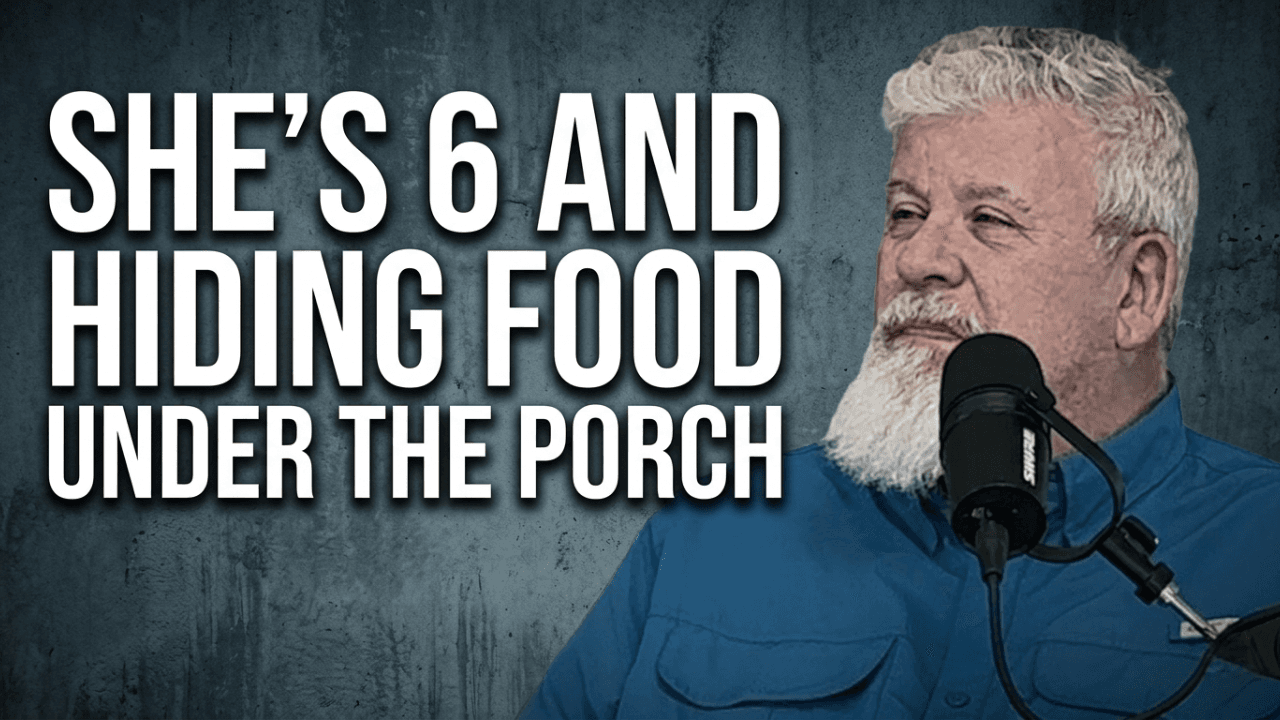
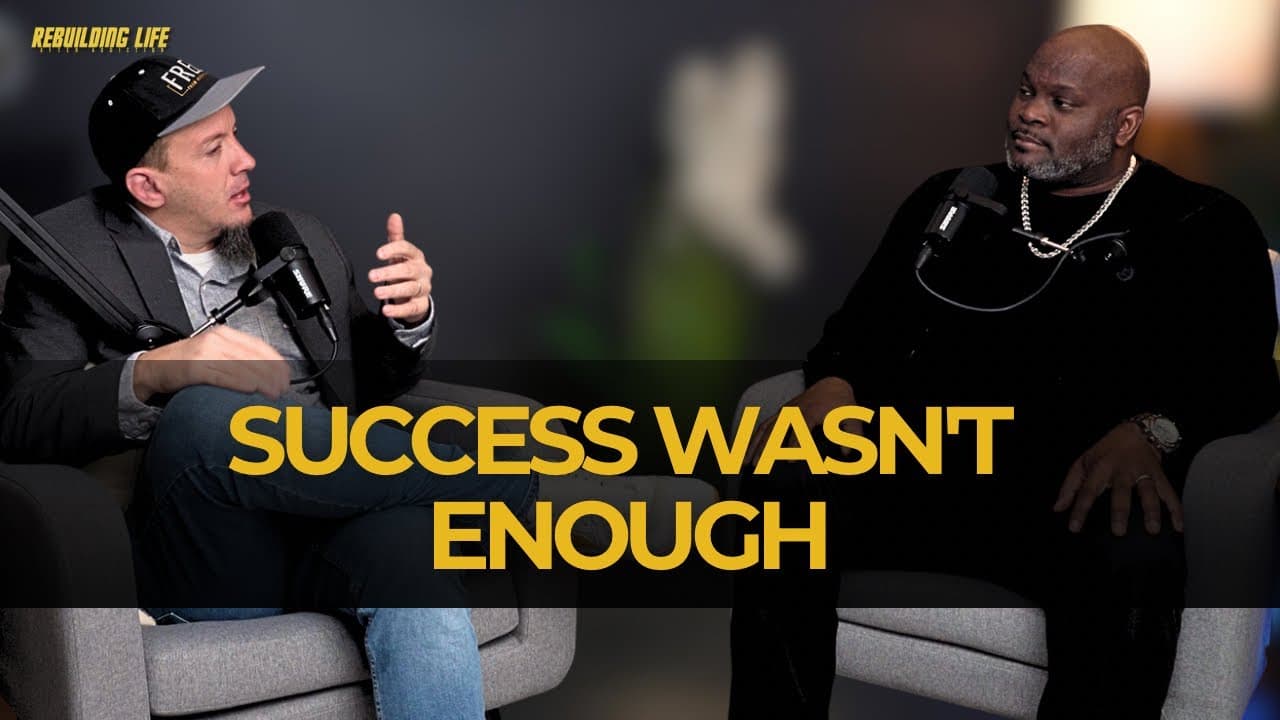
He Couldn’t Fix His Meth Addiction...Here’s How God Set Him Free
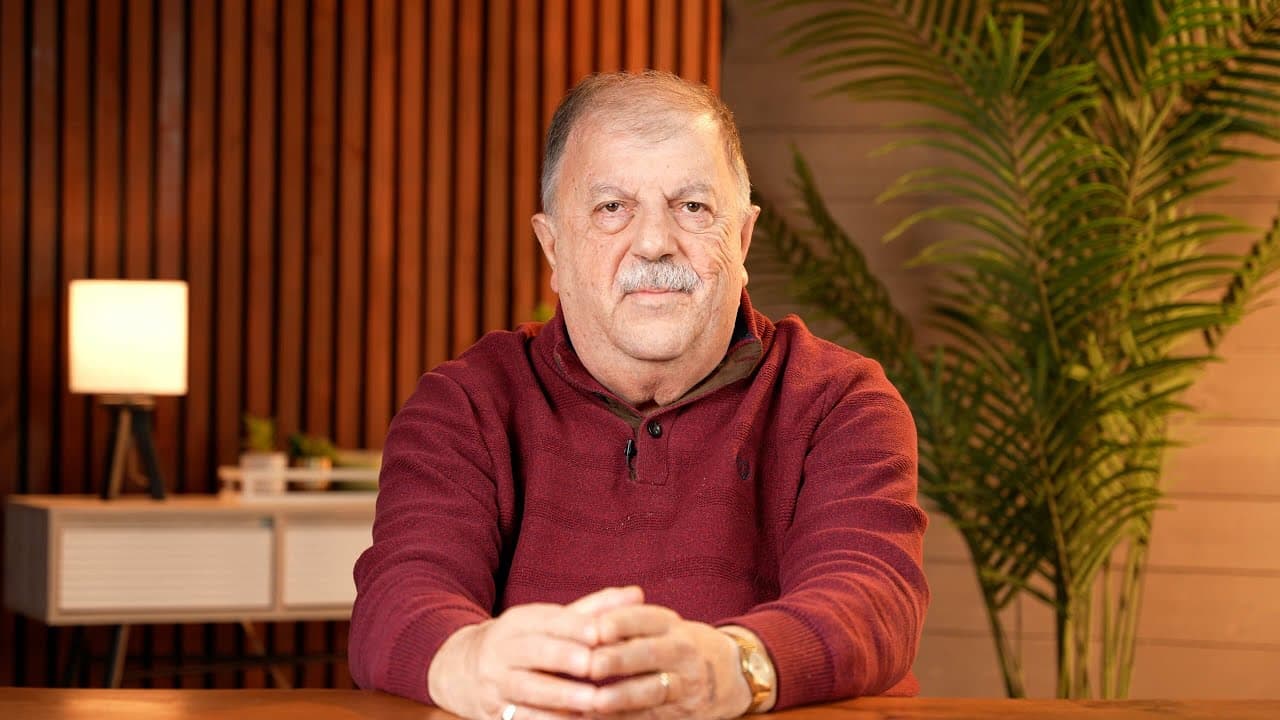
with David Mosley
About This Episode
David Mosley thought he could manage his meth addiction. That's the lie addiction always sells. Control. Balance. One more time. Then cancer hit. Thirteen years ago David got a diagnosis that crushed him, and meth became his way to keep moving while dying inside. He ended up in multiple rehabs, and every time he tried harder. More rules. More effort. More willpower. And it kept failing. Because you can't beat darkness with intensity. You beat it with surrender. David now serves on staff at Shenandoah Valley Teen Challenge helping men walk out of meth addiction.
Key Takeaways
- ·Willpower and intensity alone cannot break addiction, only surrender to God can
- ·Christian surrender means letting go AND allowing God to replace what you release with something better
- ·Pride and the need for control often mask deeper shame and fear
- ·Radical salvation moments are real, but growth happens slowly in the crockpot, not the microwave
- ·Relapse often starts with small compromises, cutting corners in prayer and Scripture
- ·You don't have to surrender everything at once, start with one small thing
- ·Real transformation requires daily dying to self and picking up your cross
About David Mosley
David serves on staff at Shenandoah Valley Teen Challenge, where he helps men walk out of meth addiction. He battled cancer 13 years ago and used meth to cope, going through multiple rehabs before surrendering to Christ. He was radically saved on September 27, 2001, and now lives out his recovery by discipling others in a residential program.
Show Notes
David thought he could manage his meth addiction while battling cancer. For 13 years, he used meth to keep moving while his body was dying inside. Multiple rehabs, more rules, more willpower. It all failed. Because you can't beat darkness with intensity. You beat it with surrender.
The Cancer Diagnosis That Changed Everything
When David received his cancer diagnosis 13 years ago, he had a tumor the size of a lemon on his neck. He tried to work through chemo and radiation, using meth to supplement his energy. Pride kept him from admitting he was spiraling. He lost his job and crashed hard. The illusion of control shattered.
What Surrender Actually Means
Before faith, surrender meant defeat. Growing up as a perfectionist and the black sheep of his family, David grabbed control wherever he could find it. He fought authority, lost jobs, and insisted on doing things his way. Surrender felt like another failure. But Christian surrender is different. It's not just letting go, it's allowing God to replace what you release with something better.
The Radical Conversion
On September 27, 2001, David walked into an Assembly of God church expecting a lecture. Instead, Pastor Brad just talked with him. After an hour, David realized his life was junk he didn't want anymore. When he prayed the sinner's prayer, he felt a physical weight lift. That night, the Holy Spirit showed up in his room and he couldn't even pick up his pipe. He was hungry for God.
The Slow Slide Back
Over several years, life wore on him. He cut corners, spent less time in prayer and Scripture. One bad day at work led to one beer at a bar. That's all it took to slide back into meth. But this time, God met him in the mess and taught him that real growth happens in a crockpot, not a microwave.
David now serves on staff at Shenandoah Valley Teen Challenge, helping men walk out of meth addiction. His message is simple: if what you're doing isn't working, give God a try. Start with one small surrender. God honors faith the size of a mustard seed.
Read Transcript
The Lie of Control: Why Willpower Alone Fails
My best choices, my best work ended me up here, ended me in several rehabs. So, if what you're doing is not working, there's a reason why it's not working. Give God a try. There's an old bumper sticker that says, "Give God a try. If it doesn't work, God, the devil will take you back." Drugs and alcohol are always out there. But God is always out there waiting for you.
Today's conversation is with David Mosley, one of our long-term staff members at Shenandoah Valley Adult Teen Challenge. Today we're going to talk about surrender—not just a religious idea, but that moment when you realize all of your best efforts aren't cutting it. When I went into Teen Challenge, I was doing the math. This August will be 20 years since I walked through the doors of Long Island Teen Challenge.
I told one of our guys a couple weeks ago when he was trying to fill in his workbooks without doing the actual work: "So what you're telling me is that you have all the knowledge you need already, and that was working for you prior to coming here?" All of my best decisions, all of my best efforts led me to Teen Challenge. It wasn't until I was willing to let go, to surrender a little bit, that things actually started to change.
What Surrender Meant Before Faith: Admitting Defeat
Before surrender ever meant anything spiritual, before I understood the spiritual context of surrendering to Jesus, what did surrender mean in your life? Before Christianity, before I got saved, before my addiction, surrender meant giving up. It was, I've lost. I have nothing left. I just give up. I quit.
It had a pretty negative connotation. Yes. While you were trying to manage everything going on in your life, surrendering was just another layer of negativity—another failure. I would say it's admitting I can't, which growing up I was very much a perfectionist. I tried to do everything exactly right so no one could find anything wrong. I was trying to find approval through that—if I do everything just right, there won't be anything wrong and there'll be no negative. But you can't do everything perfect.
The Illusion of Control: The Root of Resistance
The whole idea of surrender is letting go of the illusion of control. Yes, I would say so. And realizing that often times we see control as the only thing that's allowing us to survive. I'm holding on to whatever it may be. And so letting go ends up feeling like collapse, but eventually life really does have a way of proving that we're not in control as we think.
We try to hold on to control. So even when everything is in chaos, if we have just one thing that we're in control of, one thing that we're able to still hold on to, we have power over that. That's our control. That's our pride talking, of course, because we have no control, but we're still trying to hold on to that one thing. Until we are able to surrender that, that's when God comes in, where faith comes in, and surrender takes on a whole other meaning.
When Cancer Revealed the Limits of Control
Can you take us into a moment in your life where you realized I'm not in control of this anymore? What broke for you personally when you finally got that revelation that you weren't in control? Probably when I got my cancer diagnosis—that was 12, 13 years ago. I had a tumor growing on my neck and it was getting bigger, and I finally went into the clinic to get looked at.
They said I couldn't see you for two months. I pulled back and showed a tumor the size of a lemon on my neck and they said I need to go to the ER. I went to the ER and they said I have cancer, go to the oncologist. I started going through all that. I had to go through chemo and radiation and try to work while doing that—having absolutely no control and still trying to maintain control.
Trying to work while going through chemo, of course you can't do that because it takes a toll on your body. So I started really heavily leaning into supplementing my energy level with drugs—specifically meth—which does not actually help, at least not for very long. I got to the point where I lost my job and I just was crashing.
Pride and Fear: The Hidden Roots of Our Need to Control
If you had to put a word on the emotion that was driving your need to control—maybe fear, shame, a need to feel safe—what was your grip on control rooted in? I think control is the right word. Wanting to have control over something. For most of my life, looking back, I didn't have a lot of control, or I felt like I didn't have a lot of control.
Anytime I could get some control over anything, I felt growing up that I was the black sheep of the family—the one that was left out. Being the oldest, I was looked to as always having to get it right. My little brother got away with murder when I would get in trouble for everything. So anything I could find where I could have some control, something where I could put my hand on and say, "I'm in possession of this. I'm in authority over this."
There's a similar dynamic where I struggled with control—trying to control my image of people, right? When I struggle with difficulty personally, I have my highs and lows and battle depression on and off. It took me a while to get to the place where I just gave up trying to control my image of people. There was shame associated with that. If they know what I'm really going through, they're not going to look at me the same. Out of that shame, there was this desire to control my image so people would think well of me.
When you talk about dealing with cancer, I imagine there's a lot of fear that you grabbed hold of—the fatigue and some other things. Is there anything else that maybe sticks out? I would say very similar, but I came at it with the opposite angle of pride—not wanting to admit shame, not wanting to admit, trying to give a front that I'm in control even when obviously spiraling out of control. So it was more pride, not willing to admit, wanting to give off this front of I've got it under control.
Fighting Against Authority: The Pattern That Cost Him Everything
The hardest thing for me to let go of was when I had leaders who I didn't think were saying the right thing, doing the right thing—when I thought I knew better. Which has been a problem going back well all my life when I would deal with leaders. I would think I knew more, thought I was better, thought I was smarter, had a better way of doing it. I would spend a lot of time saying, "Well, you don't know what you're doing. I'm going to do it my own way."
I would do it my own way and often times the leader would not appreciate that because I didn't do it the way they wanted it done—even if I thought my way was better. Learning through losing several jobs in my career because I had my own way of doing things. To being able to let go and say, "All right, I'm going to do it your way, and hopefully I'll find a way to present my idea at some point in the future. I think I have a better way of doing this. Can we try it this way?"
Learning to do it your way and be positive about it. First, I did—I'll do it your way, but I'm going to complain. I'm going to grumble and I'm going to have a bad attitude, but I'll do it your way. It's so hard when you find yourself in that type of scenario with a leader, thinking the way they're telling you to do something is not going to produce the result you see. But it takes a lot of humility to not come to the other side of that with "I told you so."
The "I told you so" never helps, right? But it does feel good. It feels really good. I've had several examples where I've been able to do it the way the leader said, go back, and say, "I did the task you asked for. As I was doing it, I was thinking, what if we tried doing it next time doing it this way?" giving them ideas of suggestion rather than saying this is a better way of doing it.
What True Surrender Looks Like: Gritty, Practical, and Messy
Let's talk about what surrender actually looks like in real life, not in theory. It's definitely a process—laying down things. I started very similar to wanting to keep my addiction taken care of while keeping everything else, but I had to realize that there were so many things I associated with using that I had to let go of. Things that weren't necessarily bad things, but because I associated them with the addiction, I had to put all those things down.
Things like singing karaoke—I used to love doing that in a bar. Playing cards—I used to love doing that, but I would always be high when I was playing cards. So I had to put all those things down. And I didn't want to. I knew I wanted to stop using, but I didn't want to let go of the other stuff. I would complain. I argued with God. "These aren't bad things, right? They're fun things. I can do them without using. They're not a sin."
And I had to realize that God said, "Yeah, but you're doing them when you sin." And to let go of it. The verse in Matthew about God wanting to take everything has a second part that really stands out. We have to take up our cross daily. So Christian surrender is different from secular surrender. Christian surrender means we have to be willing to receive what God has for us. It's not about just putting down things because God is going to have us pick something else up in exchange.
We have to have that new thing to fill the hole that we've created when we've put down these things we are letting go. God's going to give us something new, something better to put in place of that. It's funny—I hear some testimonies from guys saying, "Man, I was ready the day I went into the program. I was locked in and I never wanted to leave." But that just wasn't my story. And there's sometimes this idea that God's response is perfect and immediate, but like we said earlier, not everything's going to be perfect afterwards.
The Radical Conversion That Started Everything
I got radically saved when I got saved. I wasn't planning on getting saved. My best friend at the time—his wife was killed in a car accident, which was terrible. He was going to this church, and the church was sponsoring them, helping them pay their rent. He was a drinking buddy and we'd get together and smoke weed. I was going to move in with him as a friend because he just didn't have anyone. He was very lonely and wanted just some company, a friend to be there.
Well, he said I probably have to go to church. Being raised Methodist but having walked away from the ministry when I was about 13, I knew enough Christianese that I could tell the pastor what he wanted to hear, and I'll give up an hour on Sundays. I walked into the neighborhood Assembly of God Church. It was September 27th, 2001, at 1:30 p.m. I went into Pastor Brad's office and we just talked. I expected this whole fire and brimstone lecture about what a horrible sinner I was.
But we just talked about 9/11, which had just happened a few weeks ago. We talked about Gail's death, my best friend's wife. We just talked, and after about an hour, I realized my life was just this pile of junk in my lap. I really didn't want it. He led me in the sinner's prayer, and it felt as though a weight that had been pushing down on my shoulders—a weight I didn't even know was there—lifted up. I literally felt the weight lift up, which was amazing. I never expected to feel that.
That night in my house, I went to get out my pipe—my pot pipe—to take a hit. I couldn't bring my arm to the pipe. And as real as you're sitting there, the Holy Spirit was in that room. I was blown away by the presence of God. I didn't expect that. I didn't understand it. I just knew I wanted more of it. I was hungry for God.
When the Fire Fades: The Slow Slide Back Into Addiction
Over the next several years, the mundaneness of life began to wear on me. I was still on fire, but I began to start cutting corners and start compromising a little here and there—spending a little less time in the word, a little less time in prayer. I was still going to prayer meetings, still experiencing the presence of God. But life started creeping in. And I got to where I had a really bad day at work and said, "I'm going to go to bar and have a beer."
That was all it took—to get back and start that real slide back into drugs and alcohol and eventually into meth. So there was not one thing I can point to, but this general slide. What I'm hearing you say is that there was a shift. You got to a place where you made a decision to surrender to God. He responded right away. There was a very real response. But then there wasn't perfection right after. There was a little bit of a battle still that you were walking through.
The Difference Between Salvation and Discipleship
I used to love watching TBN and all these networks where they'd have these huge altar calls where hundreds, thousands of people go down. I'd be so excited to see all these people getting saved. As I've gotten more mature and grown a little bit, I realize it's not about getting them saved—it's about getting them discipled. Real growth happens in a crockpot, not a microwave.
When I got here at the program, we had 40 plus students, and I thought that was awesome. Now we have 10 beds. I realized that we can do more in the lives of 10 people than we can in the lives of 40 if we really pour in. I am much happier now in this much smaller facility. I'm open to growth and always open to having more people, and if God wants to make this program bigger, he'll bring in more staff. But we need to have the people to offset so people don't get lost in the works.
There is a lot, especially in charismatic things, that says God's going to fix all your problems. But he does walk with us. It's hard to describe to the non-believer and the person who hasn't been there—weakness is strength, right? In this weakness, your power is made perfect. That's where my power is made perfect.
When Leadership Becomes a 24/7 Battle
I think longevity in surrender looks like being able to acknowledge that weakness and constantly laying it down at the foot of the cross. It's not getting to this false finish line that we often set, but it's that willingness to work through the messy and the difficult and the ugly, constantly going back—dying to yourself daily, picking up the cross daily and following after him.
I agree with you. It takes a lot of strength when we are surrendering to say, "Hey, I need help. Hey, I can't do this today. Hey, I'm not in a good space right now." Especially in ministry, especially as pastors. People look at us as being bulletproof and always being ready, and we're just as human. When I was a new Christian, I thought my pastor was perfect, until one day I heard him snap at someone. I thought, who are you and what have you done with the real pastor?
The reality is that ministry leadership is probably one of the toughest jobs there is. You have to be on your game. You have to be on point. People expect you to be there all the time. When you work in a residential program, I'm on duty 24/7. Someone knocks on my door at 2 a.m., I've got to be there. I told the guys, I will be there. I may not be too coherent at 2 a.m., but I'll be there. I'll open the door.
Real Change Happens Internally First: The Crockpot Process
Real growth happens in a crockpot, not a microwave. We live in a microwave generation, but growth is slow and it's not immediately external. We're so carnally minded that even once we come to Christ, we think that okay, now that I surrender all my relationships are going to be fixed. He's going to bless my bank account. There's going to be an open door for a job immediately.
But a lot of times we don't realize that the first changes aren't external. There's a work happening on the inside of us. So once you finally let go, what shifted for you? Was it the circumstances or was there something inside of you that shifted first before the circumstances began to change? It can be either or. For me, there was some of both. The first internal shift was this incredible presence of God that I felt.
I was thinking about this from the context of how I've grown as a leader. I remember like the first couple years of doing intake calls, if you're not willing to commit to the year, this isn't the place for you. I understand the whole idea—it's a long-term program, you have to make the decision. But even just the mindset of me in those moments as a leader—I was trying to control outcomes. I didn't realize it at the time.
I can only build the structure, right? People have to make their decisions on whether they're going to remain a part of that. As I matured as a leader, even now, we're doing this shorter term 90-day program—something that I would have never done or even considered 10 years ago. But I had a call today from a guy who had looked at our year-long program probably four or five times. He saw the 90-day post come up and said, I wasn't quite sure I could commit to a year, but I saw that you're doing the 90 days and I think I'm going to give it a shot.
Start Small: The Atomic Habits Approach to Surrender
There's a guy by the name of James Clear who writes a book called Atomic Habits, and the book is really about taking bite-sized chunks—small steps toward the end goal. He goes as far as saying if you can't find the motivation to go to the gym, just drive to the parking lot once a day, get the habit and discipline down. Find that one thing that you need to surrender. As small and minuscule as it may seem, God honors faith that's just the size of a mustard seed. It doesn't have to be huge.
That's the reality. We often see surrender as this passive thing, but it really isn't. And it's again the two parts of surrender. It's not just letting go of something. It's letting God put something else in its place. So it's two steps. Even if you're getting rid of one small thing, allow God to put one small thing back in—one change in the positive. Get rid of one negative and bring in one positive, and that'll make a huge difference in your life.
Allowing God to just do that one thing. If you like that, then allow God to do one more. One turns to two, to three, to four. You see, surrender is not about letting go—but allowing God to bring the new, the good in. And that's the process of real transformation.
A Final Word to the Weary: Give God a Try
There are probably some people listening who are worn out. They know something needs to change, but they're just afraid to surrender. I want to say this—Psalm 34 says, "Taste and see that the Lord is good." God is saying, "Give me a chance." If you're listening and you're hearing this and you're afraid of surrendering, everything I did, like we said, my best choices, my best work ended me up here, ended me in several rehabs.
So if what you're doing is not working, there's a reason why it's not working. Give God a try. There's an old bumper sticker that says, "Give God a try. If it doesn't work, God, the devil will take you back." Drugs and alcohol are always out there. But God is always out there waiting for you. Surrender is difficult because it means letting go. But what we've done when we were drinking and drugging, running and gunning, doing our own thing—it wasn't working.
It may have been fun for a while, but it didn't end up fun. As I look back, the farther away I get from my addiction, the less I remember the good stuff and the more I remember all the negatives. When you're right out of addiction, you can remember the fun times and how good it was—the only way to cope was getting high and getting drunk and partying. But you don't remember waking up in a field, not knowing how you got there. Which actually happened to me.
Learning to Lead Through Surrender
As a leader, I realized I was trying to control outcomes in my intake calls. I didn't realize it at the time, but that's what I was doing. Trying to control outcomes and not realizing that I can only build the structure. People have to make their decisions on whether they're going to remain a part of that. Even now, we're doing a shorter term 90-day program—something I would have never considered 10 years ago.
It's about understanding that you don't have to fix everything right out of the gate. You don't have to give everything up right out of the gate. There are some things you should probably quit, like shooting drugs—that's probably important. But find one thing to surrender to the Lord that's micro. Find one small decision. God honors faith that's just the size of a mustard seed. It doesn't have to be huge.
And so the reality is that we often see surrender as a passive thing, but it really isn't. Surrender is not about letting go but about allowing God to bring something new and good in its place. When you've let go of one negative, God replaces it with one positive. That'll make a huge difference in your life.
Final Thoughts: The Ongoing Journey
Thank you, David, for sitting down and talking. It's been great to do this. If you're interested in learning more about Shenandoah Valley Teen Challenge, we've recently renovated and transitioned to a 90-day intensive residential program. We've layered in some of the 12 steps, which is the driving factor of this conversation today. You can hit the website at www.SVTC.info. We love the opportunity to help if you're in need of help.
My pleasure. I love doing this. It's a good time. God bless you guys. Have a great day.
Stories like this start with one phone call.
If your family needs help finding a program, we're here.
Talk to Us →Or call: 540-213-0571
This page came out of real ministry, not internet theory. We take the calls, help families think clearly, and point people toward Christ-centered programs that can actually walk with them. If that matters to you, help us keep doing it for the next family.
Justin Franich
Justin Franich is a Teen Challenge graduate who overcame a meth addiction and has been clean since 2005. He spent over a decade leading Christ‑centered recovery programs and now serves as Executive Director of Shenandoah Valley Adult Teen Challenge, helping families find the right path forward and supporting people as they rebuild life after addiction.
Read my story →