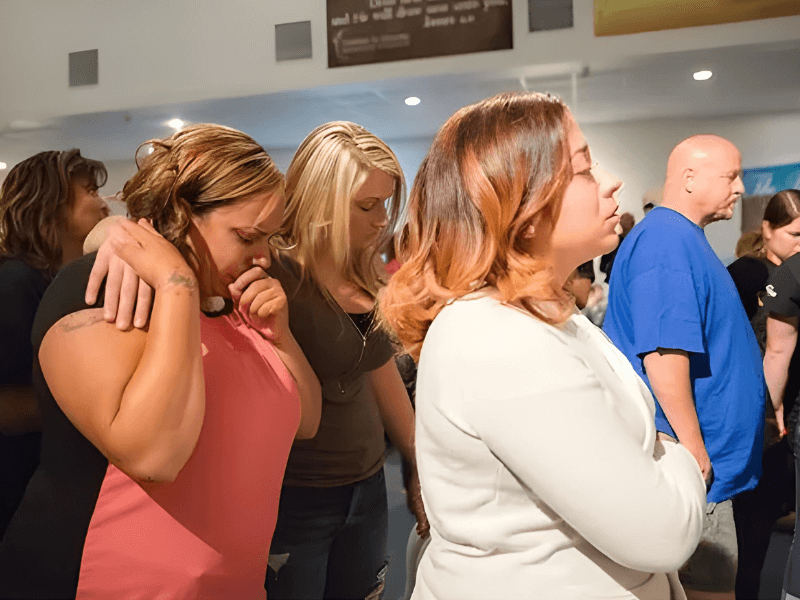
A Family Guide
What Is an Intervention? A Family Guide to Helping Someone You Love
A planned conversation where family and friends help someone see what addiction is doing and offer a clear path to treatment.
Understanding
Intervention Meaning: What It Actually Is
Most families learn about interventions from reality television. The dramatic confrontation. The tears. The resistant loved one who storms out, only to return moments later ready for treatment. Credits roll. Problem solved.
Real life doesn't cut to commercial.
If you're reading this, you're probably not looking for entertainment. You're looking for answers. You've watched someone you love disappear into addiction, and you're wondering if gathering the family together and forcing a conversation is the right move or a terrible mistake. You're terrified of pushing them further away. You're exhausted from doing nothing. And somewhere between those two fears, you're trying to find a path forward.
An intervention is an act of love disguised as a hard conversation.
An intervention is a planned conversation where family members and close friends come together to address a loved one's addiction directly. The goal is simple: help them see what their substance use is doing to themselves and the people around them, and offer a clear path toward help.
That's it. No ambush. No ultimatums screamed across the living room. No camera crews.
At its core, an intervention is an act of love disguised as a hard conversation. It's saying what has gone unsaid, naming what everyone has been tiptoeing around, and extending an invitation to change while there's still something left to save.
80-90%
agree to enter treatment
95%
of calls come from family
$3K-$5K
typical interventionist cost
6
intervention models
What Television Gets Wrong
Television needs conflict. Interventions on screen are edited for maximum drama because calm, measured conversations don't drive ratings. What you don't see is the weeks of preparation, the coaching, the letters rewritten six times because the first draft was more accusation than invitation.
Real interventions work best when they're boring to watch. When the room stays calm. When the person struggling with addiction doesn't feel cornered but feels seen. The families who approach this like a rescue mission tend to fare better than those who come in swinging.
The other thing television skips? The part where it doesn't work. The loved one says no. The family has to figure out what comes next. That happens more often than the credits would have you believe, and it doesn't mean the intervention failed. Sometimes seeds take time to grow.
Warning Signs
Signs Your Family Might Need an Intervention
Not every situation calls for a formal intervention. Some people reach a point of willingness on their own. Others respond to a single honest conversation.
But there are moments when a coordinated effort becomes necessary. When the person you love has stopped being honest with themselves about how bad things have gotten. When every conversation about their substance use turns into deflection or blame. When their health, job, relationships, or legal situation is deteriorating and they still insist everything is fine.
If your family has been having the same circular conversations for months or years with nothing changing, an intervention might be the pattern interrupt everyone needs.
It gathers the voices that matter most into one room, one moment, with one ask. If you're not sure where to start, our family guide walks through the basics of supporting a loved one through addiction.
Approaches
Types of Interventions
Not every intervention looks the same. The one you picture from television, where the whole family surprises someone in a living room, is only one model. There are at least six distinct approaches, and understanding the differences matters because choosing the wrong one can do more harm than good.
| Type | Approach | Best For | Timeline | Cost |
|---|---|---|---|---|
| Simple (One-on-One) | One trusted person has a direct conversation | Strong relationship, early-stage concerns | Immediate | Free |
| Classic (Johnson Model) | Surprise group meeting with prepared letters | Denial is strong, family is unified | 1-2 weeks prep | $3K-$5K with pro |
| ARISE | Gradual, non-secretive, person invited from start | Preserving relationship, less confrontational | 2-4 weeks | $3K-$5K with pro |
| Family Systemic | Treats whole family as patient | Deep family dysfunction beyond one person | Weeks to months | Therapist rates |
| CRAFT | Family training in communication, no confrontation | Families wanting non-confrontational path | Weeks to months | Therapist rates |
| Crisis | Emergency response for immediate danger | Violence, suicidal ideation, medical emergency | Immediate | 911 / ER |
Simple (One-on-One)
- Approach
- One trusted person has a direct conversation
- Best For
- Strong relationship, early-stage concerns
- Timeline
- Immediate
- Cost
- Free
Classic (Johnson Model)
- Approach
- Surprise group meeting with prepared letters
- Best For
- Denial is strong, family is unified
- Timeline
- 1-2 weeks prep
- Cost
- $3K-$5K with pro
ARISE
- Approach
- Gradual, non-secretive, person invited from start
- Best For
- Preserving relationship, less confrontational
- Timeline
- 2-4 weeks
- Cost
- $3K-$5K with pro
Family Systemic
- Approach
- Treats whole family as patient
- Best For
- Deep family dysfunction beyond one person
- Timeline
- Weeks to months
- Cost
- Therapist rates
CRAFT
- Approach
- Family training in communication, no confrontation
- Best For
- Families wanting non-confrontational path
- Timeline
- Weeks to months
- Cost
- Therapist rates
Crisis
- Approach
- Emergency response for immediate danger
- Best For
- Violence, suicidal ideation, medical emergency
- Timeline
- Immediate
- Cost
- 911 / ER
Simple (One-on-One)
One trusted person has a direct, honest conversation. No group. No ambush. This is often where families start, especially when the relationship is strong enough to carry the weight of a hard conversation. A father sits down with his son. A best friend says the thing nobody else will say. It doesn't require a script or a professional. It requires honesty and the willingness to follow through on whatever comes next.
Classic (Johnson Model)
This is the surprise group intervention most people recognize. The family gathers without the person knowing, each member reads a prepared statement about what they've witnessed and how it's affected them, and then the group presents a specific treatment plan. It's emotionally intense. It can be powerful. It can also backfire badly if the family isn't prepared, if someone goes off-script, or if the person feels ambushed rather than loved. The Johnson Model works best when the family has rehearsed, agreed on boundaries, and has a treatment bed ready that same day.
ARISE Model
The ARISE approach is the opposite of a surprise. The person is invited to participate from the very beginning. It moves through three escalating levels of involvement, starting with a phone call and building toward a full family meeting only if earlier steps don't work. Research shows higher family completion rates than the Johnson Model, partly because the person never feels blindsided. For families who want to preserve the relationship while still pushing toward treatment, ARISE is worth understanding.
Family Systemic
This model treats the whole family as the patient, not just the person using. It recognizes that addiction doesn't live in one person. It lives in the family system: the patterns, the roles, the unspoken agreements that keep everyone stuck. A family systemic intervention addresses all of it. This approach takes longer and usually involves a trained family therapist, but for families where the dysfunction runs deeper than one person's substance use, it can be the most honest path forward.
CRAFT (Community Reinforcement and Family Training)
CRAFT trains family members in new communication and reinforcement strategies. There's no confrontation. No surprise meeting. Instead, the family learns to stop enabling, to reward sober behavior, and to create an environment where treatment becomes the person's own idea. Research has found CRAFT to be roughly twice as effective as the Johnson Model and three times more effective than Al-Anon facilitation at getting someone into treatment. The downside is that it takes time. Weeks, sometimes months. For families in crisis, that timeline doesn't always work.
Crisis Intervention
When someone is medically unstable, suicidal, violent, or in immediate danger, the conversation shifts from “how do we get them into a program” to “how do we keep them alive right now.” Crisis intervention involves medical professionals, sometimes law enforcement, and is not something families should attempt on their own. If you're in this situation, call 911 or go to your nearest emergency room first. Treatment conversations come after safety is established.
Which type is right? It depends on the family. If you're not sure, call us and we'll help you figure it out.
Our Approach
What Actually Happens When a Family Calls Us
Those six models are what you'll find in textbooks and on clinical websites. What happens in practice, when a real family picks up the phone, usually looks different.
At Shenandoah Valley Teen Challenge, our intake process follows a framework we've used for years: listen to the family's story, respond to their need with comfort and real information, help them see how the weight of this problem has shifted onto their shoulders (when it should be on their loved one's), build a picture of what recovery could actually look like, bring the family to a place of commitment, and then help them have that direct conversation with their loved one.
Most families calling us aren't choosing between Johnson and ARISE. They're exhausted, scared, and looking for someone to tell them what to do next.
That's not a clinical model with a name and a research study behind it. It's what happens when you've walked hundreds of families through the same doorway and you've learned what actually moves the needle. The clinical models are useful context. But most families calling us aren't choosing between Johnson and ARISE. They're exhausted, scared, and looking for someone to tell them what to do next.
Step by Step
How to Plan an Intervention
If you've decided it's time for a formal intervention, the worst thing you can do is wing it. Addiction is chaotic enough. The intervention itself should be the most prepared thing your family has ever done.
Decide If You Need a Professional
Start here. If there's any history of violence, if the person has threatened self-harm, if there's severe untreated mental illness, or if they're using multiple substances that create medical risk (alcohol and benzodiazepines together, for example), get a professional interventionist involved. This is not the time to save money. Safety comes first, every time.
If the situation is serious but stable, if your family is functional enough to have hard conversations without it turning dangerous, you may be able to do this with a pastor, a counselor, or someone who has experience walking families through crisis. Most families can't afford a professional interventionist. Many pastors have never facilitated one. If that's where you are, you're not alone, and the steps below will help.
Professional interventionists typically charge between $2,000 and $10,000, with most falling in the $3,000 to $5,000 range. Insurance does not cover it.
Build Your Team (and Who to Leave Out)
You want four to six people who are important to the person, who the person likes or respects, and who can stay composed under pressure. This is not a headcount game. One wrong person in the room can derail the entire thing.
Leave out anyone the person actively dislikes or distrusts. Leave out anyone with their own untreated addiction or mental health crisis. Leave out anyone who cannot control their emotions when things get tense. Leave out anyone who might side with the person against the group or undermine the plan afterward.
If someone is important but risky, have them write a letter that someone else reads on their behalf. Their voice gets heard. The room stays stable.
One thing we tell families early in the intake process: we need sufficient cooperation from the family before we can accept someone into the program. That applies to interventions too. If the family isn't on the same page before the intervention, they won't be on the same page during it.
Research Treatment Options First
Do not hold an intervention without a specific program, with an available bed, ready to go. Bag packed. Transportation arranged. Paperwork started.
This is the mistake families make more than any other. They pour all their energy into the confrontation and none into what comes after “yes.” Then the person agrees, and everyone stands there with no plan. Addiction fills that vacuum fast. Give someone 48 hours to “think about it” and the addiction will talk them out of it every single time.
Have one plan. Not a menu of options. Not “we found three places you could look into.” One program, one bed, one departure date. Today, if possible.
At Teen Challenge, we tell families: this is our plan for life change. There is no plan B or C. That clarity matters. It removes the negotiation. It takes “let me think about it” off the table. If you need help choosing a program, start here.
Write Your Letters
Each person on the intervention team writes a personal statement. Not a speech. A letter. Something you've thought about, written down, and can read when your voice is shaking and your hands are sweating.
The letter should include: what you've personally witnessed (specific incidents, not generalizations), how it has affected you and your relationship with them, what you want for their future, and what you're willing to do to support their recovery.
This is not a guilt trip. It's not a list of crimes. It's not “remember that time you...” thrown like a weapon. It's honest, specific, and rooted in love. The goal is for the person to hear, from the people who matter most, what addiction has actually cost, and to see that there's a way out.
Rehearse
Read the letters out loud to each other before the actual intervention. This matters more than you think.
First, it catches the letters that are too angry, too vague, or too long. Second, it gives the group a chance to agree on the order: who speaks first, who speaks last, who leads the transition from letters to the treatment offer. Third, it surfaces the hard question the group needs to answer before walking into that room: what do we do if they say no?
Decide your boundaries in advance. Write them down. Because in the moment, when the person you love is crying or yelling or making promises they've made a hundred times before, you will not think clearly. The decisions need to be made now, when you can think.
Choose the Right Time and Place
Not when they're high or drunk. Not at a holiday gathering. Not in a restaurant or public place. Not when you only have 20 minutes.
Morning is usually best. The person is more likely to be sober, less defensive, and not yet buried in the chaos of the day. Choose somewhere private, comfortable, and familiar. Their living room, a family member's home, a pastor's office.
The setting should communicate: we're here because we love you and this is serious. Not: we ambushed you at Thanksgiving dinner.
Hold the Intervention
One person leads. That person opens with something like: “We're all here because we love you and we're worried. Each of us has something we want to share with you.” Then each person reads their letter.
Don't argue. Don't engage with excuses, deflections, or counter-accusations in the moment. If the person says “you're all overreacting,” the leader acknowledges the feeling and redirects: “We hear you. We'd like to finish what we came to say.”
After the letters, present the treatment option. Be specific: “We have a bed at [program name]. A bag is packed. We can leave today.” Not “we think you should look into getting some help.” Specifics. One plan. Today.
Follow Through Regardless of the Answer
If they say yes, go immediately. Not tomorrow. Not after they “get a few things in order.” Today. Drive them to the program. Walk them through intake. Don't leave space for the addiction to negotiate its way back in.
If they say no, the family follows through on the boundaries they agreed to in Step 5. This is the hardest part, and it's where most families break down. Here's a version of what we ask families to commit to before someone enters our program:
“Teen Challenge is our plan for your recovery. As your family, we offer our support, our emotional energy, and our resources for your recovery. If you choose to leave the program early, we will love you, but we will not support you financially or enable you to continue living the way you've been living. When you're ready to go back, we will support your return.”
That's our version. But this principle isn't about Teen Challenge. It applies no matter where your loved one goes for treatment. The point is that the family draws a line, together, before the intervention happens, so that everyone knows what “support” means and what it doesn't.
Template
A Sample Family Resolution You Can Adapt
Here's a template any family can use, regardless of the program:
“We love you. We have chosen [program name] as our plan for your recovery. As your family, we are committed to supporting you with our encouragement, our time, and our resources while you are in the program. If you choose to leave before completing treatment, we will still love you, but we will not provide financial support, housing, or anything that makes it easier to go back to the way things have been. When you are ready to re-enter treatment, we will be here to support that decision.”
Adapt the specifics to your situation. Some families need to name the exact boundaries: no more paying for the apartment, no more bailing out of legal trouble, no more letting them move back into the house without conditions. The more specific you are, the harder it is to negotiate around later.
A few things that make this work:
Write it down. Don't try to say this from memory in an emotional moment. Have it on paper. Read it out loud. Every person on the intervention team should hear it beforehand and agree to hold the line.
Make it about their choices, not your punishment. Notice the language: “if you choose to leave.” Not “if you mess up.” Not “if you fail.” The resolution puts the decision in their hands and names the consequences clearly. That's a boundary. It respects their ability to choose while being honest about what the family will and won't do.
Mean it. If the family writes a resolution and then caves two weeks later when the phone calls start, the resolution meant nothing. And the next time you try to set a boundary, they'll know it doesn't hold. Setting boundaries and keeping them is its own skill, and most families need support to do it well.
The goal of the resolution isn't to scare someone into treatment. It's to shift the weight of responsibility back to the person it belongs to.
For years, most families have been carrying a load that was never theirs to carry. The resolution is the moment you set it down.
If you need help figuring out what that boundary looks like for your family, reach out.
Communication
What to Say During an Intervention (and What Not to Say)
The words matter. Not because there's a perfect script, but because the wrong words can shut down a conversation before it starts.
What to Say
Lead with “I” statements. “I'm scared for you” lands differently than “you're scaring everyone.” “I've watched you lose things that matter to you” is specific and honest. “You're throwing your life away” is a verdict.
Be concrete. Don't say “you've changed.” Say “you missed your daughter's birthday last month and you didn't call.” Don't say “you're hurting everyone.” Say “your mom called me three times last week because she didn't know if you were alive.” Specific moments carry weight that generalizations never will.
Some phrases that tend to keep the door open:
- “I'm worried about your safety” instead of “you're killing yourself”
- “Can we try one next step together?” instead of “you have to go to rehab”
- “I love you and I can't keep watching this” instead of “you're destroying this family”
The goal is to speak truth in love. Not truth as a weapon. There's a real difference, and families usually know which one they're doing even if they don't want to admit it. When we talk with families about enabling, one of the first questions we ask is: do you want your family to become whole, or do you just want the problem to go away? That question applies here too. An intervention aimed at making the problem go away sounds like anger, guilt, and ultimatums. An intervention aimed at making the family whole sounds like honesty wrapped in commitment.
What Not to Say
Don't threaten. State boundaries. “If you don't go to rehab, you're dead to me” is a threat. “If you choose not to get help, I won't be able to keep paying your rent” is a boundary. The difference is that a boundary is something you will actually follow through on, stated calmly, without the emotional charge designed to punish.
Don't pile on. This isn't a trial. If six people all say “and another thing...” for 45 minutes, the person stops hearing love and starts hearing prosecution. Each person says their piece. Then the group presents the plan. That's it.
Don't bring up old wounds that aren't relevant to the current situation. If your brother borrowed $500 from you in 2019, and that's not part of the pattern you're addressing, leave it out.
Don't argue with their excuses in the moment. “I don't have a problem” doesn't require a rebuttal. “I can stop whenever I want” doesn't need a counterargument. The letters already said what needed to be said. Engaging in debate turns the intervention into a courtroom, and nobody wins in a courtroom.
When you need to speak hard truth without destroying the relationship, this is worth reading.
You Don't Have to Figure This Out Alone
We've walked hundreds of families through this exact decision. Whether you need help planning a conversation or finding the right program, we're here.
Talk to Someone TodayComparison
Professional Interventionist vs. Doing It Yourself
When a Professional Is Essential
If any of the following are true, do not attempt this without professional help: the person has a history of violence or violent threats, there's active suicidal ideation, there's severe unmanaged mental illness, or they're using multiple substances that create medical instability. Alcohol and benzodiazepine withdrawal can be life-threatening. That's not a place for good intentions and a family meeting.
What a Professional Interventionist Does
A professional typically works with the family over several days or weeks before the actual intervention. They consult with each family member individually, run preparation sessions where letters are reviewed and the plan is built, facilitate the intervention itself, arrange transportation to the treatment facility, and sometimes stay involved through the intake process.
$2K-$10K
cost range
$3K-$5K
typical range
Insurance does not cover it.
The Middle Ground Nobody Talks About
Most websites won't say this plainly: most families dealing with addiction cannot write a $5,000 check for an interventionist. And most pastors, even good ones who care deeply, have never facilitated a formal intervention.
That leaves a gap. And it's a gap we end up filling regularly. When a family calls Shenandoah Valley Adult Teen Challenge, they're not just calling about a bed in a program. They're calling because they don't know what to do next. Our intake process walks families through the same territory a professional interventionist covers: understanding the family dynamics, building cooperation, getting honest about what enabling looks like, preparing for the hard conversation, and having a clear plan ready when the person says yes.
We're not professional interventionists. We're a recovery ministry that has helped hundreds of families get from “I don't know what to do” to “he's in the program.” If your family needs help getting there, start with a conversation.
Data
Do Interventions Work? Success Rates and Reality
The short answer is yes, interventions work. About 80 to 90 percent of people who go through a formal intervention agree to enter treatment, according to the Association of Intervention Specialists. Of the 10 to 20 percent who say no initially, roughly half seek treatment on their own within one to two weeks.
80-90%
agree to treatment
~50%
of initial 'no' reconsider within 2 weeks
2x
CRAFT vs Johnson Model effectiveness
CRAFT, the non-confrontational family training model, has shown even stronger numbers. Research indicates it's approximately twice as effective as the Johnson Model and three times more effective than Al-Anon facilitation at getting someone into treatment.
Saying yes in the living room is not the same as completing a program. The intervention gets someone through the door. What keeps them there is a different conversation entirely.
Those numbers sound encouraging, and they are. But they also need context. Saying yes in the living room is not the same as completing a program. Completing a program is not the same as sustaining long-term recovery. The intervention gets someone through the door. What keeps them there, what actually produces lasting change, is a different conversation entirely. We've written about what those long-term outcomes actually look like.
There's one number from our own experience that families need to hear: 95 percent of the time, it's a family member who makes the call. Not the person in active addiction. The mom, the wife, the brother, the grandmother. The person using almost never picks up the phone themselves.
That's not a failure. That's how it works. If you're the one making the call, you're not overstepping. You're doing the thing that has to happen for anything else to change.
Caution
When an Intervention Is NOT the Right Move
Almost every article about interventions tells you how to do one. Almost none of them tell you when not to.
Don't hold an intervention when there's a history of violence or threats of violence. If the person has been physically aggressive with family members, or has made threats, a group confrontation can escalate the danger rather than resolve it. Get a professional involved or contact a crisis intervention team.
Don't hold an intervention when the person is actively suicidal. Suicidal ideation requires immediate mental health intervention, not a family meeting about treatment options. Call 988 (Suicide and Crisis Lifeline) or go to the nearest emergency room.
Don't hold an intervention when severe mental illness is unmanaged. If the person is experiencing psychosis, severe bipolar episodes, or other acute psychiatric symptoms, the mental health crisis needs to be addressed before addiction treatment is on the table.
Don't hold an intervention when polysubstance use creates medical instability. Certain combinations, particularly alcohol with benzodiazepines, can produce withdrawal symptoms that are medically dangerous. A person in this situation needs medical stabilization first.
There's a framework we come back to often in ministry. In Matthew 15, a Canaanite woman comes to Jesus begging for help for her daughter. And Jesus doesn't immediately say yes. He discerns the situation first. He tests the faith and the cooperation level before He acts.
Not everyone is ready. Sometimes the most loving thing is to wait until the timing is right and make sure that when you act, you're acting from wisdom, not just desperation.
That's not cruelty. It's wisdom. Not everyone is ready for Teen Challenge. Not every family is in a place where an intervention will help rather than harm. Sometimes the most loving thing is to wait until the timing is right, to get the right support in place first, and to make sure that when you do act, you're acting from wisdom and not just desperation.
If you're not sure whether your situation calls for an intervention or a different kind of help, talk to us. We'd rather help you find the right path than push you down the wrong one.
Next Steps
What Happens After They Say Yes
The intervention worked. They said yes. Now what?
Go to treatment immediately. Same day if at all possible. Do not give them time to go home and “get things in order.” Do not let them sleep on it. Do not wait until Monday. Every hour between “yes” and the front door of the program is an hour where the addiction will try to talk them out of it. The bag should already be packed. The transportation should already be arranged. The program should already have a confirmed bed.
Every hour between “yes” and the front door of the program is an hour where addiction will try to negotiate its way back in.
For the person entering treatment: The first few days will be hard. When the drugs or alcohol wear off and they find themselves somewhere unfamiliar, away from everything they know, a wave of emotions hits: anger, guilt, homesickness, fear. That's normal. It doesn't mean the intervention was a mistake. It means recovery is doing what recovery does. The initial discomfort passes. What comes after it is what matters.
For the family: Your work is not done. In fact, it's just starting.
Set boundaries and keep them. The commitment you made during the intervention, to support their recovery but not to enable a return to old patterns, has to hold. That's harder than it sounds. There will be phone calls where they're crying. There will be moments where every instinct in your body says to go get them and bring them home. The family's job is to stay the course and refuse to support a departure from the program.
Get your own support. Find a recovery meeting, a Celebrate Recovery group, Al-Anon, a counselor. The family needs to heal too. You've been carrying weight that wasn't yours to carry, and putting it down doesn't happen automatically just because your loved one is in a program.
At Teen Challenge, what happens after intake isn't just between us and the student. We send quarterly progress reports to the family. We provide family training. We offer support through the entire process. And if the person leaves the program early, our commitment to the family doesn't end. We stay available, we help the family hold to the resolution they made, and we're there when the person is ready to try again.
Because the goal was never just to get someone into a program. The goal is a quality turnaround. For the person and for the family. If you need help understanding what that looks like at Teen Challenge, start here. For the practical side of what treatment costs, we cover that here.
When They Say No
What to Do If the Intervention Doesn't Work
Here's the part no one wants to talk about: sometimes they say no. Sometimes they walk out. Sometimes they agree in the moment and change their mind by morning.
This does not mean you failed.
An intervention plants seeds. It puts words to things that have been swallowed for years. It draws a line that says “we love you and we're not pretending anymore.” Even when the immediate answer is no, something shifts. The person now knows, clearly and undeniably, what they're choosing and what it's costing.
In the meantime, the family has work to do regardless of the loved one's decision. Setting boundaries. Getting support. Learning that loving someone and enabling someone are not the same thing. If you're struggling with that line, you're not alone. Most families are. Learning how to help an addict without losing yourself in the process is one of the hardest things you'll ever do.
Perspective
You're Not Manipulating. You're Loving.
Some families hesitate because an intervention feels like a setup. Like coercion dressed in nice clothes. And if the approach is adversarial, that concern is valid.
But consider the alternative. Saying nothing while someone you love destroys themselves and everyone around them is not kindness. It's avoidance. Letting addiction run its course unchallenged is not respecting their autonomy. It's abandoning them to a disease that has hijacked their decision-making.
An intervention done well is one of the most loving things a family can do. It says: we see you, we love you, and we refuse to watch silently while you disappear.
Faith doesn't require us to be passive. The father in the prodigal son story didn't chase his son into the far country, but he also didn't pretend everything was fine. He watched. He waited. And when his son turned toward home, he ran to meet him. An intervention is not manipulation. It's standing at the end of the driveway with the light on, calling out into the dark.
Get Started
Taking the Next Step
If your family is considering an intervention, you don't have to figure this out alone. We've walked alongside hundreds of families navigating these exact decisions. We can help you think through your options, connect you with the right resources, and support you regardless of what your loved one decides.
Interventions don't come with guarantees. But doing nothing guarantees nothing changes.
If you're ready to talk through next steps, we're here to help. Hear more on our podcast.
Common Questions
Frequently Asked Questions About Interventions
What is an intervention?
+
An intervention is a planned, structured conversation where the people who love someone struggling with addiction come together to address the problem directly. It is not an ambush or an attack. It is an act of love where family and friends share how the addiction has affected them and present a specific path to treatment. The goal is to break through denial and help the person see what everyone around them already sees.
Do interventions work?
+
They can. Research shows that a significant majority of people who go through a formal intervention do agree to enter treatment. But sometimes the person says no in the moment and enters treatment weeks or months later because the intervention planted a seed they could not shake. Sometimes the intervention does not change the addicted person at all, but it changes the family. They stop enabling. They set real boundaries. That shift alone can be the thing that eventually brings the loved one to a breaking point.
How do you do an intervention for someone with a drug addiction?
+
Start by getting the family on the same page. Decide together what treatment option you will offer and have it lined up before the conversation. Each person writes a letter sharing specific ways the addiction has affected them, focusing on love and concern rather than blame. Choose a calm setting. Keep it focused. Present the treatment plan at the end. And decide in advance what your boundaries will be if they say no.
What do you say during an intervention?
+
Speak from your own experience. Use I statements. I have watched you pull away from everyone who loves you. I am scared I am going to get a phone call that you are gone. Avoid accusations, ultimatums delivered in anger, or bringing up every wrong thing they have ever done. The most powerful thing you can say is the truth about how their addiction has affected you, delivered with tears instead of rage. End with a specific offer of treatment.
What happens if an intervention fails?
+
Redefine fails. If your loved one says no, the intervention still accomplished something. You broke the silence. You named the problem out loud. You drew a line. Now the harder work begins: following through on the boundaries you set. Not rescuing them from consequences. Getting support for yourself. Many people enter treatment not because of a single dramatic moment but because the family finally stopped making addiction comfortable.
Should you hire a professional interventionist?
+
It depends on your situation. If your loved one has a history of violence, if the family dynamics are deeply fractured, or if previous attempts at confrontation have gone badly, a professional interventionist can provide structure, safety, and expertise. For less complex situations, a well-prepared family working with a counselor or pastor can be just as effective. The key is preparation, not credentials.
Can you do an intervention for someone who does not think they have a problem?
+
That is actually the most common scenario. If your loved one openly acknowledged they had a problem and were willing to get help, you probably would not need an intervention. The whole point is that denial has become a wall, and a coordinated effort by the people they trust most has a better chance of getting through than one more solo conversation that ends the same way.
What are the different types of interventions?
+
The main types include simple (a one-on-one conversation), classic (the Johnson Model, where the family surprises the person with prepared statements), ARISE (a gradual approach where the person participates from the start), family systemic (which addresses the whole family dynamics, not just the person using), CRAFT (which trains family members in new communication strategies without confrontation), and crisis intervention (for situations involving immediate safety concerns). The right approach depends on the family dynamics, the severity of the addiction, and whether there are safety risks involved.
What is the success rate of interventions?
+
Approximately 80 to 90 percent of people who go through a formal intervention agree to enter treatment, according to the Association of Intervention Specialists. About half of those who initially say no end up seeking treatment within one to two weeks. However, agreeing to treatment is the beginning of recovery, not the end. Long-term outcomes depend on what happens after the person enters a program.
How much does a professional intervention cost?
+
Professional intervention services typically cost between $2,000 and $10,000, with most families paying in the $3,000 to $5,000 range. This usually covers initial consultation, family preparation, the intervention itself, and coordination with a treatment facility. Insurance does not cover intervention services. Some families work with a pastor or experienced counselor as a more affordable alternative.
Who should NOT be at an intervention?
+
Do not include anyone the person actively dislikes or distrusts, anyone with their own untreated addiction, anyone who cannot control their emotions during a tense conversation, or anyone who might undermine the group plan afterward. If someone is important but could be a risk in the room, have them write a letter that another team member reads on their behalf.
When is an intervention NOT appropriate?
+
An intervention may not be the right approach when the person has a history of violence, is actively suicidal, has severe unmanaged mental illness, or is using multiple substances that create medical instability (such as alcohol combined with benzodiazepines). In these situations, a mental health professional or crisis intervention team should be involved before any family-led effort. Safety always comes before treatment planning.
What is the difference between the Johnson Model and the ARISE model?
+
The Johnson Model is a surprise group intervention where the family gathers without the person knowing, reads prepared statements, and presents a treatment plan. The ARISE model is non-secretive and gradual, inviting the person to participate from the beginning and escalating through levels of involvement only if needed. The Johnson Model is faster and more emotionally intense. ARISE tends to have higher family completion rates because the person is never blindsided. Both have research supporting their effectiveness.
What happens after someone agrees to go to treatment at an intervention?
+
Ideally, they go to treatment the same day. The family should have a bag packed, transportation arranged, and a specific program with a confirmed bed ready before the intervention takes place. Giving someone time to think about it creates space for the addiction to talk them out of going. After the person enters treatment, the family work continues: maintaining the boundaries set during the intervention, getting their own support through counseling or recovery groups, and preparing for what reintegration will look like after the program.
Ready to Take the Next Step?
Whether your family needs help planning a conversation, finding the right program, or just figuring out what to do next, we're here.
Talk to Someone Today
Justin Franich
Justin Franich is a Teen Challenge graduate who overcame a meth addiction and has been clean since 2005. He spent over a decade leading Christ‑centered recovery programs and now serves as Executive Director of Shenandoah Valley Adult Teen Challenge, helping families find the right path forward and supporting people as they rebuild life after addiction.
Read my story →This content is free. The work behind it isn't.