After Recovery
Who Am I Without the Drugs? Finding Identity After Addiction
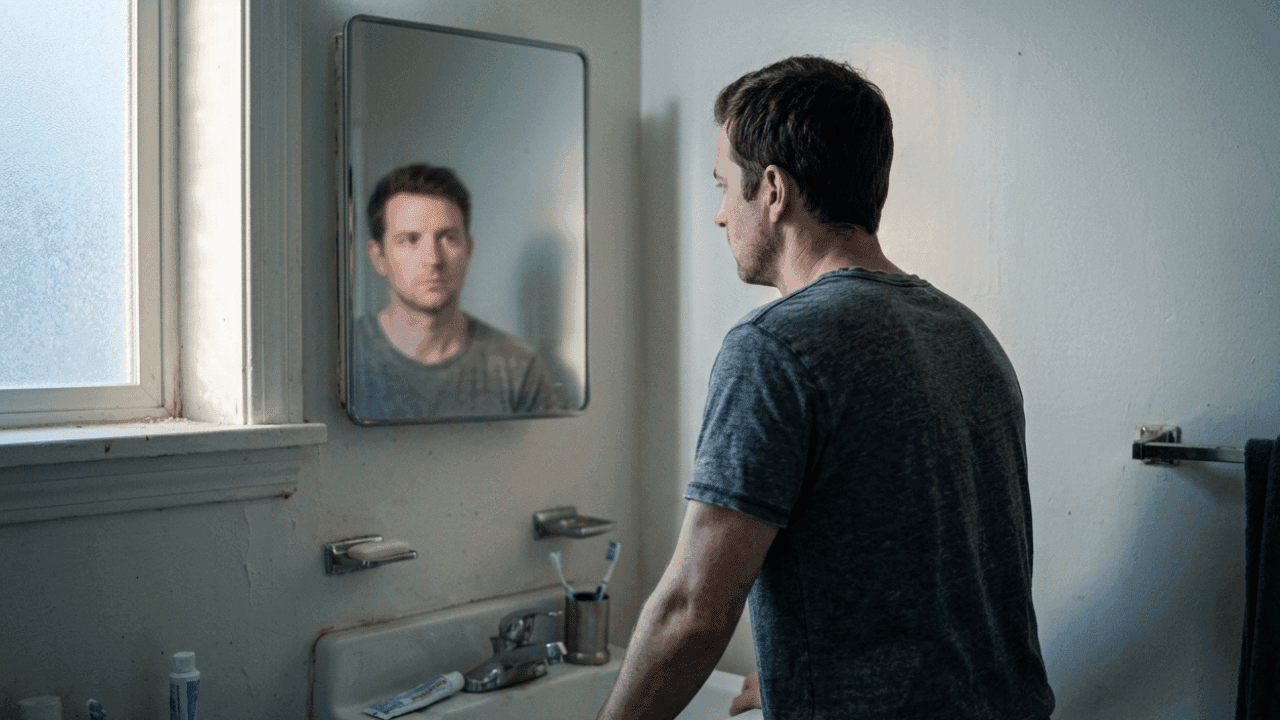
John Selby sat across from me in my studio a few months back and said something that landed harder than he probably intended: "When you first mess up as a Christian, you feel like you're not worthy of God. Like you're less reluctant to go to Him."
He wasn't talking about relapsing. He was talking about the everyday failures. The short temper. The selfish moment. The thought you can't shake. For a man who spent years using, those small failures can feel like the leading edge of a total collapse. Because in addiction, every mistake was a catastrophe. And in recovery, your brain hasn't fully recalibrated.
If you're clean today but still dealing with an identity crisis after getting sober, you're standing in the most common gap nobody talks about. The drugs gave you a role. Hustler. Party guy. The one everybody called when they wanted to score. That identity was destructive, but it was clear. You knew who you were and where you fit.
Sobriety took the role away. And what's left can feel like a vacuum.
Why Sobriety Creates an Identity Vacuum
Addiction doesn't just hijack your brain chemistry. It builds an entire operating system around itself. Your friends, your schedule, your language, your goals, your sense of belonging, all of it reorganizes around the substance. When you remove the substance, you don't automatically get a replacement identity. You get emptiness.
Jeff Johnson spent 28 years in addiction before finding freedom through Christ. He went into Teen Challenge with a simple plan: learn how to live without getting high, then go back to welding. That's it. But God had a different conversation with him inside that program, one that restructured his entire sense of self. Jeff ended up leading a network of faith-based recovery programs across Texas and the South.
Not everybody gets that clarity quickly, though. Some men leave recovery programs with a new relationship with Christ and absolutely no idea what to do with the next 40 years. Getting clean wasn't the hard part. Building a life on the other side of it is.
The Lie: "I'm Just a Cleaned-Up Version of the Old Me"
John Selby wrestled with this publicly. He'd walked through Teen Challenge and come out the other side still fighting the feeling that the old him was the real him.
I told him I understood. Even though I knew I was a new creation, there were moments over those first 10 years where I still felt like the old Justin on the inside. I know a lot of that was the lie of the enemy, but it was a persistent one. The feeling that the drug version of me was more authentic than the Jesus version, that the sobriety was a performance and eventually the mask would slip.
The feeling is real. The conclusion is a lie. You feel like the old version of yourself because your body remembers, your neural pathways remember, your relational muscle memory remembers. But feeling like the old you and being the old you are not the same thing.
"Therefore, if anyone is in Christ, he is a new creation; old things have passed away; behold, all things have become new" (2 Corinthians 5:17, NKJV). That's not wishful thinking. It's a statement about what already happened the moment you surrendered to Jesus. The old person died. The new one is standing in his place. Your feelings haven't caught up with the facts yet.
Three Identity Anchors for Men in Recovery
1. Your Identity Comes from Whose You Are, Not What You Did
John said it simply: "It's not really about who you are, but whose you are. Ultimately, you are a child of God."
That sentence is easy to nod at and extraordinarily hard to live. Because the world identifies you by your resume, your record, your reputation. And your resume has gaps. Your record has charges. Your reputation preceded you home from rehab.
But the gospel says your identity is established by adoption, not performance. God didn't look at your cleaned-up behavior and decide you were worth claiming. He claimed you while you were still a mess. And that claim is irrevocable.
When you screw up (and you will), it doesn't reset your standing. John put it this way: "The longer you have that relationship with Him, you know that you're not that powerful to mess that up. We're not that powerful to screw up the calling that God has on our life. We can prolong it. We can quench the Holy Spirit. But we can't destroy it."
2. Purpose Doesn't Require a Pulpit
One of the biggest traps for men leaving faith-based programs is the assumption that if God saved them from addiction, their purpose must be in full-time ministry. Jeff Johnson pushed back on that: "A lot of people have this misconception that ministry is simply behind a teaching pulpit or a worship leader on the platform. We raise up ministers all the time that minister in the wood shop or the marketing office."
Jeff was a welder. God redirected him into leading recovery programs. But his point is that a welder who loves Jesus and serves his family and tells the truth at work is doing ministry. A construction worker who shows up sober and reliable every day is preaching a sermon his coworkers will never hear from a stage.
Your past wasn't wasted. God doesn't waste anything. But "not wasted" doesn't automatically mean "turned into a career in recovery ministry." Sometimes redemption looks like a steady paycheck and showing up for your kid's basketball game.
3. The Tree Doesn't Get Cut Down Because One Apple Goes Bad
John shared an illustration that stuck with me. He said it took him a long time to learn that "just because one apple goes bad doesn't mean you have to cut down the whole tree."
In recovery culture, there's an intense focus on counting days. And I celebrate sober anniversaries. They matter. But the shadow side of day-counting is that when you stumble, even in small ways, it feels like you've returned to day zero. Like the whole tree is rotten because one piece of fruit fell off.
Setbacks in recovery don't erase progress. They're one bad apple. The tree is still standing. The roots are still deep. More fruit will grow.
The identity shift here is moving from "I'm an addict trying not to use" to "I'm a son of God learning to walk in freedom." One of those identities centers on avoidance. The other centers on becoming.
Finding Your Place After the Program
Ashley Marner found God and a new identity through a faith-based program, and he talked about how jarring the transition was. Inside the program, your identity is clear: you're a student, you have a schedule, people know your story, you belong. Outside the program, you're a guy with a gap on his resume and a testimony that most people don't know how to respond to.
What actually helps during the transition:
Find a church that goes deeper than Sunday. You need a body of believers who do life together during the week, not just people you wave at across the lobby. Christian recovery meetings can bridge that gap if your church doesn't have a recovery-specific community.
Get around men who know your story. Not men who will coddle you. Men who will call you out when your behavior starts drifting. Ashley described having mentors who "called me out on whatever I had going on. I was like, 'Man, why would they do that?' But they cared enough to call me out."
Build something. A garden. A business. A relationship. A ministry. Anything that requires you to show up consistently and produce fruit over time. Identity isn't just discovered. It's built through faithful repetition. One yes at a time.
Stop performing. Sobriety alone isn't freedom. If you're white-knuckling your way through each day and wearing a smile that doesn't match what's underneath, you're performing a version of recovery that will eventually collapse. Real identity in Christ includes the mess. Jesus didn't ask you to pretend to be fixed. He asked you to follow Him while He does the fixing.
The Question That Changes Everything
When the drugs gave you an identity, it was based on what you could do, what you could provide, what role you filled in the ecosystem of addiction. When Jesus gives you an identity, it's based on a relationship that doesn't change when you fail.
You are not a reformed addict. You are not a cleaned-up version of your worst self. You are a son of the living God, seated with Christ in heavenly places, learning to walk in the reality of what's already true about you.
That doesn't feel true every day. Some mornings you'll wake up and the old man will feel very close. I still have those mornings. The difference now is I know what to do with them. I get up early, I open my Bible, I sit with the Lord before I do anything else, and I let Him remind me who I am before the world gets a chance to tell me otherwise.
Do the same thing tomorrow. And the next day. The identity gets built one morning at a time.
Need Help Now?
If you're sober but still searching for who you are in Christ, reach out to us at SVTC or call 540-213-0571. We work with men every day who are working through the identity gap between addiction and freedom. You can also explore freedom after addiction or read about God's peace versus the world's peace when sobriety still feels restless.
Listen to the Full Conversations
- "Unveiling Your True Self: A Conversation with John Selby" on identity, fatherhood, and the long road to believing who God says you are.
- "From Addiction to Ministry: How God Gave Him a New Identity" with Ashley Marner on accountability and mentorship shaping his sense of self after recovery.
- "Finding Purpose After 28 Years of Addiction: Jeff's Story" on going from welding to leading recovery programs across multiple states.
Justin Franich
Justin Franich is a Teen Challenge graduate who overcame a meth addiction and has been clean since 2005. He spent over a decade leading Christ‑centered recovery programs and now serves as Executive Director of Shenandoah Valley Adult Teen Challenge, helping families find the right path forward and supporting people as they rebuild life after addiction.
Read my story →Still rebuilding? You're not alone.
I send weekly encouragement for people walking through the hardest season of starting over.
You can unsubscribe anytime.
Related Articles

When Recovery Hurts More Than Addiction
Nobody told me recovery might hurt worse than addiction. At 3 AM with drug dreams and racing thoughts, I was mad at myself, mad at everyone, and angry at God. The pain almost broke me before I realized it was actually healing me.

How to Move Beyond Your Broken Past
Struggling with a lack of hope while dealing with a loved one's addiction? Discover how God can transform your broken pieces into a beautiful masterpiece and why accepting Christ's forgiveness is the first step toward moving forward.

I Got Clean, But That Wasn't the Hard Part
A personal account of early addiction, the moment of collapse that led to help, and how identity and discipleship shaped life after getting clean.

Setbacks in Recovery: What to Do When Progress Stalls
Setbacks happen in recovery. A setback doesn't mean failure-it means you're human. Here's what to do when progress stalls, whether you're the one struggling or the one watching someone you love.