Don Wilkerson: The Co-Founder of Teen Challenge on Transformation, Relapse, and What Recovery Really Means
with Don Wilkerson

About This Episode
Pastor Don Wilkerson co-founded Teen Challenge with his brother David Wilkerson in the late 1950s, and has spent over six decades on the front lines of addiction recovery ministry. In this conversation, Don walks through how Teen Challenge began on the streets of Brooklyn reaching gang members, how heroin transformed those same gangs into addicts with nowhere to go, and how addiction eventually went mainstream across every community in America. He shares the distinction between getting clean and being truly transformed, why the biblical word for recovery is really "transformation," and what he's seen separate those who stay free from those who relapse. Don also gets honest about the dangerous myth that relapse is a normal part of recovery, the role families play in either reinforcing healing or triggering setbacks when a loved one comes home from treatment, and the powerful story of his own brother Jerry, a Wilkerson who became an alcoholic and eventually found freedom through the same program the family built. Don also talks about his books including "The Don," "First Steps," the "Ministry Worker's Handbook," and the Teen Challenge Study Bible.
Key Takeaways
- ·Getting clean and being transformed are two different things. Sobriety alone doesn't produce lasting freedom.
- ·Teen Challenge started on the streets of Brooklyn helping gang members, then shifted to drug addicts as heroin wiped out the gangs in the early 1960s.
- ·Addiction has gone mainstream. What was once an inner-city problem now reaches every community, every social class, and every family structure in America.
- ·The myth that "relapse is part of recovery" is dangerous, especially in the age of fentanyl where one relapse can be fatal.
- ·Families play a critical role in reentry. How a family receives someone back from treatment can either reinforce healing or trigger relapse.
- ·Finding purpose and staying connected to the body of Christ are the most consistent markers of long-term freedom.
- ·Don's own brother became an alcoholic despite growing up in the Wilkerson ministry family. He eventually entered Teen Challenge and was restored to his wife and children.
Listen to This Episode
About Don Wilkerson

Pastor Don Wilkerson is the co-founder of Teen Challenge (now Adult & Teen Challenge) and Times Square Church. He joined his brother David Wilkerson in New York City in the late 1950s, answering a phone call that would shape the rest of his life. Beginning in 1971, Don served as Executive Director of the Brooklyn Teen Challenge center for 16 years, where he was instrumental in developing the residential discipleship program and biblical curriculum that became the standard across Teen Challenge centers worldwide. In 1987, he and David co-founded Times Square Church in Manhattan. In 1995, Don founded Global Teen Challenge and served as its Executive Director for 13 years, helping plant centers in over 100 countries. He returned to lead Brooklyn Teen Challenge in 2008 and now serves as President Emeritus of Adult & Teen Challenge. Don is the author of numerous books including "First Steps," "The Cross is Still Mightier Than the Switchblade," "The Don," "Notes from the Flagship," and he published the Teen Challenge Study Bible. He resides in Virginia.
Show Notes
- •Don Wilkerson is co-founder of Teen Challenge (now Adult & Teen Challenge) and Times Square Church. He currently serves as President Emeritus of Brooklyn Teen Challenge.
- •"The Cross and the Switchblade" by David Wilkerson tells the origin story of Teen Challenge and has sold over 50 million copies worldwide.
- •Books by Don Wilkerson mentioned in this episode: "The Don," "First Steps," "Notes from the Flagship," and the Teen Challenge Study Bible.
- •Learn more about Don's work at wilkersonoutreachprojects.com
Read Transcript
Justin Franich: Hey everybody, this is Justin Franich, and I want to thank you again for tuning in to the podcast. We really appreciate your time and your support as you continue to tune in week after week. This week I'm coming at you with another one of our anchor conversations, where we interview folks that have either a transformation story, or they've been involved in this field for a while with a passion and a heart to help those struggling with drug and alcohol addiction.
Tonight I'm privileged to have Pastor Don Wilkerson with me. Pastor Don is the co-founder of Teen Challenge, the co-founder of Times Square Church. He's the author of several books, including one focused on helping nonprofits and church ministries grow called "Notes from the Flagship," a recovery book called "First Steps," and he recently published the Teen Challenge Study Bible, which is an incredibly encouraging study Bible for anybody finding their way out of addiction. Pastor Don, thank you so much for coming on the call.
Don Wilkerson: Yes, sir. Glad to do so. God bless you. Thanks so much.
Justin: As we jump in tonight, maybe you can take a few minutes and share some of the origin story. You know, how God initially prompted you to minister to those struggling with drug and alcohol addiction. Teen Challenge has such a rich history of helping addicts and such a long-standing period of success. For those who maybe don't know your story or the history of Teen Challenge, can you dive into that?
Don: Yes. Well, I followed in the footsteps of my brother David. The story of how all this was started is when he felt called to New York to help some gang members. He wrote that story that became a worldwide bestseller called "The Cross and the Switchblade." Many people over the years have read that. It was a very dramatic way of God putting my brother in a place where a ministry was birthed to gangs and then later to drug addicts. My call came on the telephone. When I was finishing up my ministry training, he called me and told me about the ministry he was starting and that he would like me to join it. It was kind of like a Macedonian call. I've often told people, it doesn't matter how the call comes to you, it matters how you answer it. So I answered that call from my brother and joined him, and the ministry developed from there.
Justin: Can you describe a little bit about those early days on the streets? Heroin back in the 50s was extremely prevalent. As I think about what's happening in America now with the opioid epidemic, are you seeing any similarities to what our country is facing now as you did back in the 50s when you guys were on the streets in New York?
Don: We would have never thought in those beginning days that addiction would go mainstream. We started with the gangs, and the gangs turned to drugs and literally wiped out the gangs over a period of time. The early 60s, the same young men we were trying to help as gang members, we had to begin to help them as drug addicts. There was no place for them to go. I think there was one hospital in America, a federal hospital in Kentucky, where you could go to be detoxified. The drug addicts from New York City went down there. They called it "KY." That was probably the only place. So we started working with them, and then in the late 60s and 70s the drug problem began to spread across America among the middle class.
Today it's kind of shocking to me to see small areas, small towns. It's everywhere. It used to be those who came into our program back in the early 60s were from the inner city, often minorities. But then that began to change. Today we have college students, college graduates, men and women who had working careers and then got hooked on opiates. We have church people, Christians, all walks of life being affected by the drug problem.
Justin: I think I read an article from back in the day where you guys were sounding the alarm that this drug problem was going to begin to infiltrate many of the rural communities. And it's certainly unfortunate that we've seen that start to transpire over the last 50 years.
Don: Yes. It became easier and easier for people to get drugs, especially drugs that are normally used for genuine medical purposes but are now being abused. My brother especially, he was an evangelist who traveled across the country and told people, "Look, it's coming to your area." That's exactly what happened. We started in Brooklyn back in the late 50s and early 60s. Then Teen Challenge spread to major cities. Now I think there are some 250 centers across the country, in small cities and rural areas. It's at epidemic proportions today.
Justin: When you see an individual come into Teen Challenge or maybe they hear an inspiring message at church and they know they've got a problem, what are some of those first steps? What are the most important things somebody needs to do when they're ready to step out of addiction to set themselves up for success?
Don: Well, they need to be desperate, first of all. To really, really want it. Not just to be clean, but to have a total new life. I share with the students in our program: it's one thing to be clean, it's another thing to be pure. And blessed are the pure in heart, for they shall see God. We are not just a drug rehabilitation program. We are a discipleship program. And the cure comes by surrendering to Jesus Christ. That can come on day one. For some it comes later. Some when they come in, they have known the Lord, maybe they went to church, and they give their heart back to the Lord. They surrendered to Christ again, but they knew they had to get into a program.
There are some who come under duress. They come to please a mother or a wife, to please a loved one. And they can be a challenge. But when they come in, they not only hear the gospel, they see the gospel. They see people just like themselves who are worshiping the Lord, who have accepted Christ. Their influence and example and testimony is so powerful that most of them realize, "Look, if I'm going to be in this program, I need to be in Christ."
If they're just there to get clean, all well and good, but most of them, when they leave having had that motive just to get clean, they relapse and they go back to the same thing again.
Justin: That's an important distinction, especially when it comes to Christian discipleship. Relapse is a topic that's on everybody's mind in the addiction space. Those of us who've been in addiction before, we're constantly thinking about how to prevent relapse from happening. What are some things you've seen in those who've been successful long-term, who've gone from that place of just getting clean to really becoming disciples of Christ?
Don: Well, they find a new connection. They have to leave their old connections and their old sources of trying to cope with their life and their problems. That new connection is to God on a personal basis. Developing a desire for the Word, prayer, making prayer a daily habit, and then finding what God's will is for their life and following that. Being connected to the body of Christ, be it a church or a ministry.
There was an article some years ago in Time magazine about us, and there was a criticism that we were trying to make preachers out of all of them. When I would share that in churches I would say, "That person who made that accusation, he's absolutely right. We do try to make preachers out of them." I don't mean preachers in the sense of it being their profession, but in terms of sharing their faith and helping others. Even in the 12 step program, one of the steps is you start reaching out and helping other people.
One of the reasons some relapse is that they don't find their place in God and in society. What God wants to do with their life doesn't mean they have to be a preacher or a pastor or work in a rehab ministry. But they know that what they're doing, they feel that they're in God's will. In some cases, building a new family or bringing their family back together, being a testimony. Many that come, their parents do not know the Lord. We've seen many families totally revolutionizedby the transformation of one person. The prodigal goes back and becomes a priest, as it were, in the house to lead the family to Christ.
It's really about getting involved in what God wants to do with their lives. Some of them, that can take a year, two years. Some struggle longer. But they've got to keep connected in some way with spiritual leaders, be it a pastor or whatever it might be.
Justin: You mentioned some of the AA principles too. We always use accountability and spiritual mentors in the Christian space, but AA talks a lot about the value of having a sponsor, having somebody to connect to. It's vital to have that accountability around you. If there was a common myth around the recovery world that you'd want to debunk, what would that be?
Don: They define addiction now as a disease. And if it is a disease, it's an acquired disease. The problem with the disease concept is that if you relapse, you blame it on the disease. In Brooklyn Teen Challenge, we don't even bring up the concept of disease, because most of them know that it wasn't the disease, it was their choices that they made.
The disease concept guarantees the medical community a lifetime of clients. The other thing is, and I'm realistic enough to know that there is a percentage of relapse even among some who have gone through the program, strong in the Lord, strong in their commitment to the program and to Christ. Then they go out and face challenges and they relapse. But one of the teachings of some in the secular rehab world is that relapse is a part of recovery. Now we use the term "recovery" because that's the term people understand, but the biblical word is transformation. "All things pass away. Behold, all things become new."
Most of those who do relapse and come back for restoration, they don't blame it on anybody except themselves, except the choices that they made. That goes back to accountability.
Justin: I keep going back to that idea that relapse is a part of recovery. It's not just a myth, it's a dangerous myth. Especially in the day we're living in with fentanyl being cut into heroin. It's more dangerous than it's ever been. That one relapse can be it.
When I went to Teen Challenge, it was almost 15 years this week I'm celebrating my freedom date and my new life in Christ. I never once went back. God got ahold of me and He delivered me. I'm very grateful and thankful to Jesus for that. But let's say someone is listening to this and they've recently relapsed and they're broken and not sure what to do. What would you say to them?
Don: I would say to them that today is the first day of your life if you make the right choices. Do whatever you have to do to go into recovery, whether it be finding somebody locally to help you, a pastor, some kind of local ministry, or going back into a residential program. Today is the first day of your life. But today could also be the first day of your death if you make the wrong choice. That's why the whole concept of relapse being normal is so dangerous.
What I wish I knew is, among those who overdose, those who died, how many of them were relapsing? Maybe they went into a secular program. Maybe they went into a 12 step. Maybe they went into a faith-based program and they relapsed and overdosed. In the last year, those who came into Brooklyn for any period of time, I know of at least three or four or five who relapsed and died, they had an overdose. We who work in this ministry, that's the sad thing we know: it is going to happen.
Sometimes people relapse with a reason. Something very difficult happened in their life, or they had an issue when they were in the program and they never fully dealt with it. That issue comes back to haunt them, and they go back to drugs. But there are many other cases. They go back because of stupidity. They put themselves in a compromising position. They hang out with some of the old crowd. They say, "Well, I'm going to go back and win my friends to the Lord." Only do that if you're under the covering of a ministry or other people going with you. A lot of it just happens because of stupidity. And sometimes it happens because the family does not receive them back in a way that brings healing.
I know parents have a hard time trusting a son or daughter that comes back. The wife having difficulty. We understand that. But if they signal to that person that they don't trust them, if they do things or say things that make them feel like they're still the drug addict, that can be the reason they relapse.
Justin: You mentioned the stupidity, hanging out with old circles, trying to go back and rescue all your friends. I had an interesting experience about a year ago. When I got home from Teen Challenge, I decided I had to start fresh. I cut everybody off. I loved a lot of the people from my past, but I knew my new relationship with Christ was important, and if it was going to be successful, I was going to have to start fresh. There were several people I wanted to reach out to, but I resisted and chose to hit my knees in the prayer closet for them instead.
About a year ago I ran across an old friend on Facebook. It had been 14 years at that point. I thought, maybe I should send a message. And the response I got, you could tell they were almost protecting themselves because they weren't quite sure about me yet either. They said, "Doing good. I'm doing the church thing now. And family." I kind of laughed because I understood their response. But then the Lord really spoke to me, and I almost started crying because He showed me the fruit of my prayers from 14 years ago. God's arms were long enough to reach them without me having to go there.
Don: That's good. One of the bad motives of going out to reach somebody is guilt. Thinking, "Well, if I help somebody, God's going to be pleased with me." I do believe helping others is a part of recovery, but it can't be done singularly. It's got to be done within the context of ministry, especially if somebody is new coming out of the program. They're not strong enough yet to be subjected to the temptations, even when the motive seems to be pure. Underneath it all, the enemy is trying to lure them back.
Justin: If you had a time machine and you could go back to the early days when you first started ministering to those with life-controlling issues, what would future Pastor Don go back and tell the Pastor Don from the very beginning?
Don: Oh, that's a great question. I would say wanting to be more of a friend to them, not a buddy. There is a distinction there. A friend, meaning building more of a relationship with them. One of the things I do when someone is completing the program, it's often at that point that I begin to develop a personal relationship with them. I always love to have a student in the car with me or in the van going somewhere, and just socialize and talk to them about everyday things. I wish I could have done more of that, but it's hard when you've got 40 or 50 people you have to watch over. So I had to wait until near the end of the program.
I remember a fellow one time came to me and said, "Brother Don, I see you come in and out of this. I wish I could get to know you more." And I said, "Listen, when you finish this program and you need me, I'll be here for you." But I wish I could have maybe started that earlier. I don't know how I would have done that, especially to not make it look like I'm favoring a certain student. But on the other hand, Jesus had his inner circle. He was closer to Peter, James, and John than the other disciples. So I think there could have been a way to overcome that.
And being more spontaneous. Being more spontaneous spiritually. Praying for people. Someone going down the hall and just stop them and pray for them. I wish I could have been more spontaneous spiritually. I've never been asked that question before. I'm going to be thinking about that once we finish this interview.
Justin: I'm glad I could bring a different question. So I noticed on your Facebook you recently put a book out called "The Don." Can you take a few minutes and talk about that?
Don: It's sort of different. I had Covid-19. I got it early in March. I went to New York City and got exposed to it. I came back and two weeks later I came down with a very serious case. April 1st I went to the hospital. I was just in bad shape. I was fortunate to go to a small-town hospital, Culpeper, Virginia. The doctor came in and asked if I wanted to take the malaria drug, which was very controversial at the time. I took it, and one of the problems I had was I'd lost my sense of smell and taste. I didn't want any food, they had to give me liquid intravenously. I took that drug. The next day I woke up and said, "I can taste." I took a taste of the juice I hadn't touched. One day later I went home, and I was quarantined for the next 14 days.
During that period, I decided I wanted to tell some life story to my five grandkids. So I sat down and wrote it. One of the young graduates who worked for me for six years, she started calling me "The Don." I never asked her why until I started writing the book. I decided I was going to call it "The Don" and I asked her, "Why did you call me that?" She said, "Because you and your brother led a good gang. You were the Don for the drug addicts." So I wrote the book for my grandkids and then decided to open it up for other people. It's from my early childhood all the way through the years at Teen Challenge. It's kind of like an autobiography. An easy read, a fast read, a simple read, and a lot of stories.
Justin: My sister picked up on "The Don" too, when she was in Brooklyn Teen Challenge.
Don: Yeah, I always took it as a term of respect. Not like they were calling me a mafia character. It was a term of affection and a term of respect.
Justin: I appreciate that. As we wrap up, if you have any parting words for families. There's a lot of despair and hopelessness when families are walking through addiction with loved ones. Sometimes they can't see the light at the end of the tunnel. They never planned for their children or grandchildren to become addicts. What would you say to encourage families walking through this battle?
Don: Based upon my experience, I would say you've got to have hope. You've got to keep hope. I know it's an overused word, but when it comes to this kind of problem, families need to know that there are places to go where their son or daughter can get help, if they want it. You can't force them. You can't threaten them. They have to want it. Sometimes they have to get worse before they get better. If you're a Christian family, then you pray.
It's not the responsibility of the parents to change them. If something happened in the family that was the cause of the addiction, maybe some mistakes that were made, the family needs to go before God and realize that God forgives them. They are not responsible for their son or daughter being on drugs. There may have been some contributing factors, but at the end of the day, God made us free-will agents to make our choices. As I often say, we make our choices and then our choices turn around and they make us, for better or for worse.
I'm one of five in my family. People who know the story know David Wilkerson, who was an icon in the Christian world. We grew up in a minister's home, but I had a brother who became an alcoholic. He was a working alcoholic, married, four children. It got so bad. For years he maintained a job, but finally he ended up practically homeless. All we could do was pray and pray. My mother said to me one time, "Don, Jerry is going to come back to God, and he's going to go to Teen Challenge." I said, "Mother, I believe he'll come back to God, but with the name Wilkerson, he'll never come to Teen Challenge." She said, "You just wait and see what God is going to do."
And that's exactly what happened. He came to one of our rallies, came to the altar, we put him in the program, he did six months, and then returned back to his wife and family. So I know there's hope. I know there's hope. I've seen entire families revolutionized when one member of the family was transformed. So as difficult as it is, let your faith hold you up when you see the worst in your son or your daughter.
Justin: Amen. Thank you so much. I really appreciate you taking the time. For those of you listening, if you aren't subscribed yet, hit the subscribe button and share your feedback. If you've got a recovery story, if you've been transformed by Jesus, we're focusing on the Jesus factor in this whole thing. If you've found a relationship with Christ and you're living free from addiction, reach out to me. I'd love to interview you. There are a lot of people out there who need to connect with this hope. Thank you again for tuning in, and thank you, Pastor Don.
Don: Amen. God bless you. Much success with the podcast.
Justin: Thank you so much. God bless.
If this helped, there's more where it came from.
I send weekly encouragement. Scripture, reflection, and honest conversations about faith and recovery.
You can unsubscribe anytime.
Justin Franich
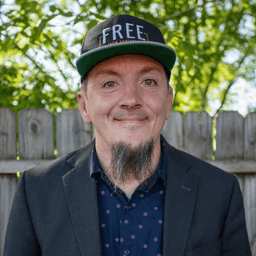
Justin Franich is a Teen Challenge graduate who overcame a meth addiction and has been clean since 2005. He spent over a decade leading Christ‑centered recovery programs and now serves as Executive Director of Shenandoah Valley Adult Teen Challenge, helping families find the right path forward and supporting people as they rebuild life after addiction.
Read my story →